

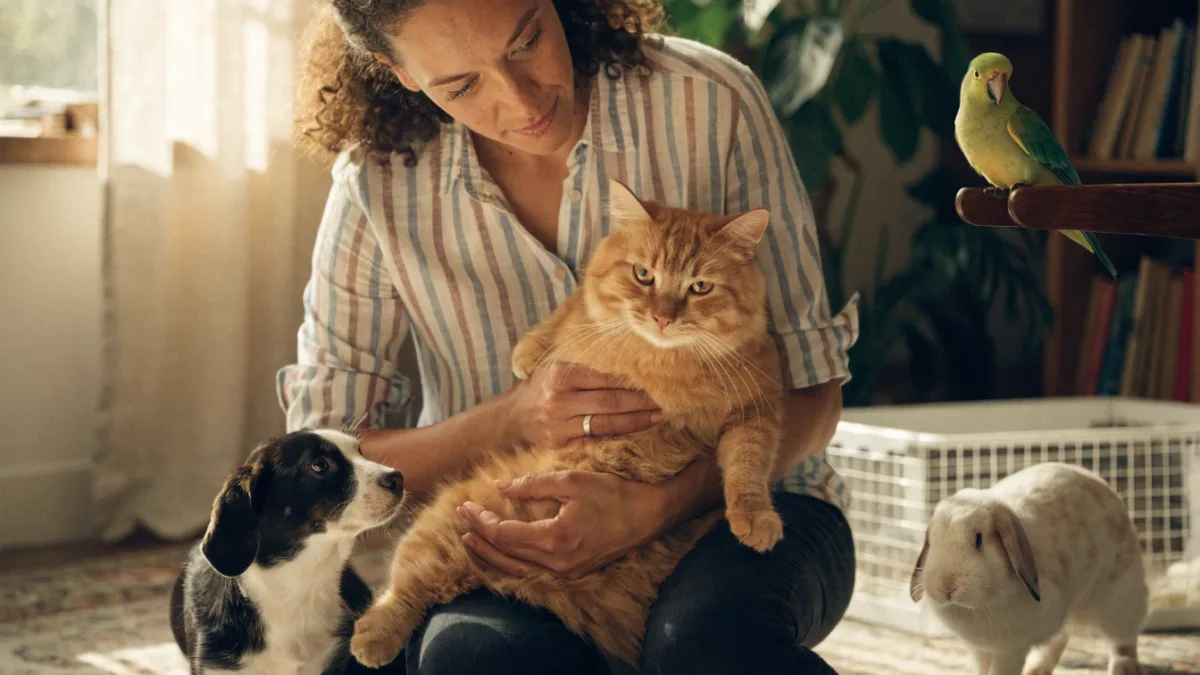
Let me set the scene. You’re finally taking that much-needed vacation. Your bags are packed, your out-of-office reply is set, and you are completely stressed out of your mind because you have to leave your home in the hands of a stranger.
I’ve been there. Last year, I booked a week away and thought I had the perfect pet sitter lined up. I have a dog, Barnaby, who is a certified goofball, a senior cat named Biscuit who requires daily medication, and a leopard gecko named Gordo who lives in a highly specific temperature and humidity gradient. The sitter seemed great on paper. She loved dogs! She had a flexible schedule! But when she walked in and saw Gordo’s terrarium, she physically took a step back and asked, “Does that thing bite?”
That was the exact moment I realized that finding care for a multi-species household is an entirely different sport than finding a dog walker. Approximately 60% of pet owners have multiple animals, but finding someone who can confidently manage the chaotic, beautiful reality of a multi-species home requires a very specific vetting process. Here is how to find your unicorn.
The “Cross-Species” Challenge: It’s Not Just About Feeding
The biggest mistake people make is assuming that all pet care professionals are interchangeable. They are not. A fantastic dog walker might be completely terrified of, or inexperienced with, feeding a pet snake, administering subcutaneous fluids to an elderly cat, or understanding the delicate respiratory systems of free-flight birds.
When you mix species, you introduce complex behavioral and biological variables. A sitter must understand household predator-prey dynamics. For example, if you have a dog with a high prey drive and a household rabbit or ferret, the sitter needs to know exactly how to manage their physical separation. It’s not enough to just “keep an eye on them.” When owners are away, normal household routines can get disrupted, and animals act differently. A sitter who primarily works with dogs might misread a cat’s stress signals or accidentally leave a door ajar, creating a dangerous situation.
If your home includes exotic pets—like reptiles, amphibians, or parrots—the stakes are even higher. These animals require highly specific husbandry. A sitter who doesn’t understand the critical importance of UVB lighting or precise humidity levels for a reptile can inadvertently cause severe, sometimes fatal, health issues in just a matter of days.
Where to Actually Find Trusted Multi-Species Pros
Finding the right person often means looking outside the standard search results. The global pet care services market is booming, meaning there are a lot of options out there. Here is where you should focus your search:
1. The Vet Tech Side-Hustle
This is arguably the gold standard. A notable percentage of veterinary staff, specifically vet techs and assistants, supplement their income by pet sitting. For a multi-species household, particularly one with animals that have medical needs or complex care requirements, vet techs are lifesavers. They already know how to safely handle different species, administer medications without stressing the animal out, and spot the subtle, early signs of illness that a layperson would miss.
2. Local Professional Networks
Your local veterinary clinic, groomer, or local animal rescue are incredible resources. You can also check [1] for tips on what to look for. Often, vet clinics have a bulletin board of trusted vet techs or experienced sitters who are known to the staff. Getting a recommendation directly from the people who handle animal care for a living is infinitely better than a blind internet search.
3. Curated Online Platforms
There is an ongoing debate in the animal care community regarding large tech platforms like Rover or Wag. Critics rightly argue they sometimes prioritize quantity over quality and their background checks aren’t always rigorous enough for specialized care. However, proponents point out that these platforms offer transparent reviews and convenience. If you use a platform, look for specialized services. There has been a recent surge in niche pet-sitting businesses that exclusively care for reptiles, avians, and pocket pets alongside traditional pets. You can often find these specialized pros on [2] by aggressively filtering for “exotics” or “multi-pet” expertise and reading through their specific reviews.
4. Veterinary Pet Sitting Professionals
If your home setup is incredibly complex, you might want to skip the general public entirely and look for professional services that specifically employ veterinary professionals. Organizations like [3] connect pet owners with sitters who have formal veterinary training, ensuring your dog, cat, and exotic pets are all evaluated through a medical lens.
The Vetting Process: Putting Them to the Test
Once you have a candidate, you cannot skip the vetting process. A few direct messages are not enough. Here is my non-negotiable checklist for a multi-species sitter:
- Schedule a mandatory meet-and-greet: Do this well before your trip. Watch how the sitter interacts with all the different species in your home. If they are nervous around the bird, or overly rough with the cat, cross them off the list immediately. Trust your gut.
- Check 3 to 4 verifiable references: Industry standards dictate that a reputable sitter should easily provide these. Specifically ask previous clients if they also have multi-species households. A glowing reference from someone with one easygoing Golden Retriever doesn’t mean the sitter can handle a high-energy terrier, a grumpy senior cat, and a terrarium that needs misting twice a day.
- Verify liability insurance and bonding: This is particularly important when multiple animals are interacting in your home. If the dog knocks over a birdcage, or the cat destroys a expensive piece of furniture, you want to know that the sitter is professionally insured and bonded.
- Discuss in-home sitting vs. drop-ins: Experts overwhelmingly agree that having a sitter come to the multi-species home is the safest, least disruptive option. Transporting multiple species to a sitter’s home or a boarding facility is highly stressful for the animals, especially cats and exotics who are deeply territorial and prone to stress-induced illness. Keeping them in their own environment maintains their routine and minimizes panic.
The “Don’t Play Vet” Rule
I have strong opinions on this: a pet sitter is not a veterinarian. Some sitters overstep their boundaries by offering medical advice or administering complex medications without proper training. If you have a pet with a serious medical condition, talk to your vet about what a sitter is legally and safely able to do. For fragile animals like birds or exotics, a sitter lacking veterinary training can easily mis-medicate an animal or miss subtle signs of distress. Make sure your sitter knows exactly who to call (your specific emergency clinic) and has a signed consent form on file at the clinic allowing the sitter to bring your pet in for treatment while you are away.
The Bottom Line on Responsible Pet Care
Finding the right sitter for a multi-species household takes time, patience, and a willingness to ask uncomfortable questions. It might cost a bit more to hire someone with specialized veterinary or exotics experience, but the peace of mind is worth every penny.
Ultimately, how we care for our pets—especially the non-traditional ones—reflects our broader respect for animals. The exotic pet trade has a massive impact on global wildlife populations, and many reptiles, amphibians, and birds suffer in captivity simply because their owners—and by extension, their caretakers—do not understand their complex biological and environmental needs. By taking the time to thoroughly vet a pet care professional who truly understands the natural history and husbandry of every animal under your roof, you aren’t just keeping your pets safe. You are upholding a standard of ethical, responsible animal stewardship that these incredible creatures entirely depend on.
Sources
- VCA Animal Hospitals' pet sitter guidelines — vcahospitals.com
- care platforms — care.com
- Vet Pet Sit — vetpetsit.net