

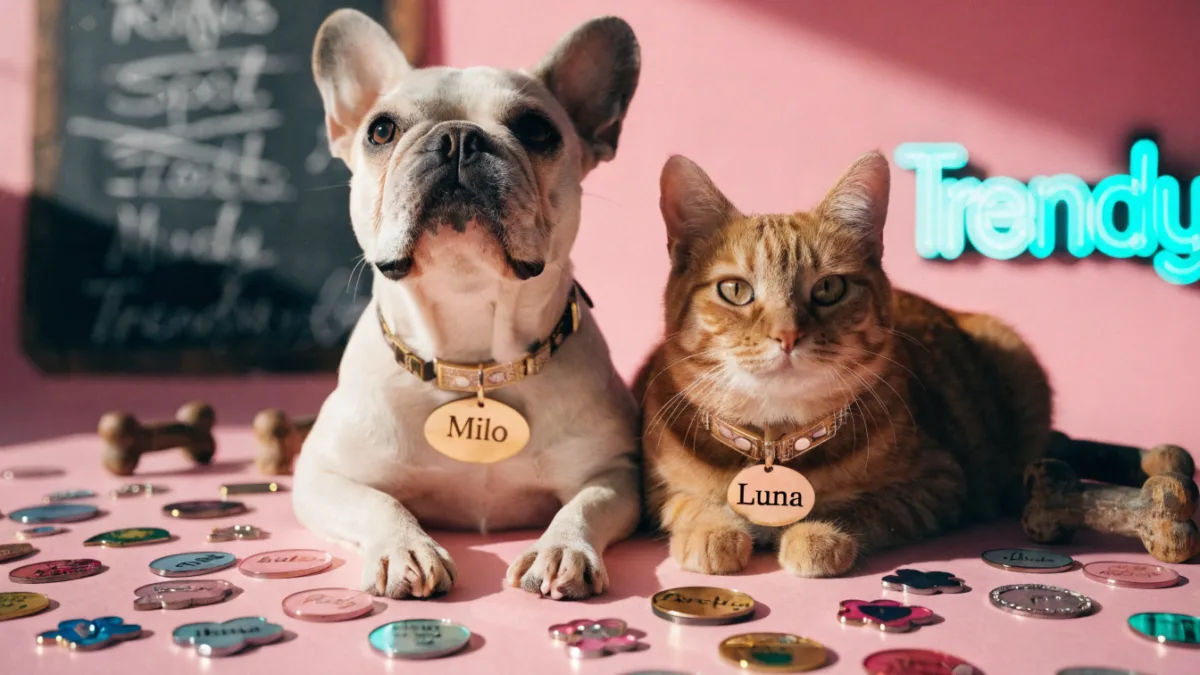
Picking a name for a new pet is a high-stakes operation. You’re staring at this tiny, fuzzy creature, trying to figure out if they look more like a “Barnaby” or a “Pickles,” knowing full well you’ll be yelling this word out the back door or across the living room for the next fifteen years. It’s a massive commitment. And according to,[1] the names we choose are rarely entirely original. Instead, they are a massive, collective reflection of what we’re watching, who we’re obsessing over, and how we view the animals that sleep in our beds.
The Pop Culture Pipeline
If you’ve ever met a dog named Loki or a cat named Khaleesi, you already know that pop culture runs the pet naming pipeline. When a blockbuster movie drops or a viral TV show takes over the cultural zeitgeist, you can practically set a timer for when those character names will start showing up at the local dog park.
We don’t just love these characters; we want to live with them. If a movie features a scrappy, loyal sidekick, you can bet thousands of newly adopted puppies will bear that name by the following weekend. The same goes for celebrity names and viral internet animals. We absorb the media, and it gives us a mental shortcut to a name that feels relevant, clever, or emotionally resonant. It’s not necessarily a lack of creativity—it’s just that when a name is already floating in your subconscious, it feels like fate when a new kitten happens to match the vibe.
The Humanization of Pets: From “Fido” to “Freddie”
There was a time when pets had strictly “pet-sounding” names. Think Fido, Rex, Fluffy, or Spot. They were utilitarian, slightly distant, and clearly separated the animal kingdom from the human family.
That era is essentially over.
We are firmly in the age of pet humanization, and the shift in nomenclature proves it. Our pets aren’t just animals that live in our houses; they are our dependents, our emotional support systems, and our silent roommates. Giving them human names is a way of elevating their status in the household hierarchy. It feels appropriately dignified.
This shift is heavily backed by data.,[2] found that 21% of pets are named after non-famous humans. We aren’t just naming them after movie stars; we’re naming them after grandpa, our favorite aunt, or a beloved childhood friend. Human names like Oliver, Leo, and Henry have surged in popularity recently, topping the charts for both dogs and cats. Vintage, classic names are having a massive moment, making it entirely possible that your golden retriever and your neighbor’s toddler share the exact same name.
Dogs vs. Cats: The Great Naming Divide
While the human-name trend bridges the gap between dogs and cats, the species you’re naming often dictates entirely different strategies. How we name dogs is fundamentally different from how we name cats, and it usually boils down to our expectations of them.
The Canine Approach
Dogs are often given strong, solid, human names—Max, Charlie, Bella, Cooper. Because we generally take dogs out into the world, we tend to want names that sound approachable and warm to strangers. However, physical appearance still plays a massive role. According to Dr. Herzog’s research, 20% of dogs and cats are named based purely on their physical appearance.
If you have a massive, shaggy dog, the temptation to name him Bear is apparently scientifically irresistible. Big dogs get names like Titan or Moose, while small dogs frequently end up with cute, almost diminutive names like Peanut or Gizmo. We project an immediate personality onto a dog based on its size and coat, and we name them accordingly.
The Feline Approach
Cats, on the other hand, tend to attract a completely different naming energy. While they do get their fair share of human names (my own cat, Miso, is technically named after soup, but she carries herself with the dignity of an aging queen), cats are the primary beneficiaries of “thematic” naming.
Recently, there has been a massive surge in mystical and celestial names. Luna, Nova, Orion, and Stella routinely top the lists. I think this happens because cats move through the house like tiny, aloof aliens. They are nocturnal, their eyes reflect light in the dark, and they routinely knock things off counters with zero remorse. Calling a cat “Luna” or “Nebula” just makes sense when you’re watching them stare at a blank wall at 2:00 AM. We respect their independence by giving them names that feel a little magical, a little mysterious, and slightly above human concerns.
The “Name Fatigue” Debate
If you’ve ever worked in a veterinary clinic, a doggy daycare, or an animal shelter, you are intimately familiar with the “Overused Name” debate.
“If one more kitten named Bella walks through that door, I’m going to lose my mind.”
That is a direct quote from a vet tech friend of mine, and it highlights a very real divide in animal care circles. On one side, you have the people who genuinely love top-tier names. They are popular for a reason—they are phonetic, pleasant, and easy to say. On the other side, you have animal care professionals who experience intense “name fatigue” from seeing endless variations of Bella, Luna, and Max.
It sparked a genuinely fascinating [3] where users debated why anyone would choose to give their pet the equivalent of a “John” or “Jane.” Some argued that popular names are a lack of imagination, while others pointed out that standardizing names helps pets recognize them faster.
There is also a debate over whether it is better to name an animal after a pop-culture icon or stick to a traditional, non-famous human name. My personal take? Name your pet whatever you want. If you want to name your dog “Max,” do it. Yes, he will be the third Max at the dog park, but dogs don’t have an ego about this. They don’t know they have a common name. They just know that when you say it, it means dinner is ready.
Does Your Pet Actually Care?
At the end of the day, you might wonder if the name matters to the animal at all.
As it turns out, it does. Animal cognition research shows that pets are entirely capable of learning and recognizing their own names. They understand the specific phonetic pattern and pitch you use when addressing them. This makes the choice of a name an incredibly important factor for bonding and training.
When choosing a name, it’s not really about whether it’s the most unique name in the world or the most trendy. It’s about picking a sound that your pet can easily recognize, and one that you feel comfortable shouting in public. Because whether your pet is named after a 19th-century king, a sci-fi villain, or a type of Asian soup, the only thing that truly matters is how you say it.
The naming trends will continue to shift. Next year, a new movie will drop, a new celebrity will rise, and the top ten lists will reshuffle. But regardless of what pop culture dictates, the most important naming trend is the one happening in shelters and rescues. Millions of dogs and cats are waiting for homes right now, and whether you decide to call them Leo, Luna, or something completely bizarre, their lives change the moment you make them yours. The best name any animal can have is “family,” and finding the perfectly trending moniker is just the cherry on top of a lifelong bond.
Sources
- the recently released 2025 naming reports from Rover — facebook.com
- A 2018 study by Dr. Harold Herzog — wellbeingintlstudiesrepository.org
- Reddit thread recently — reddit.com