

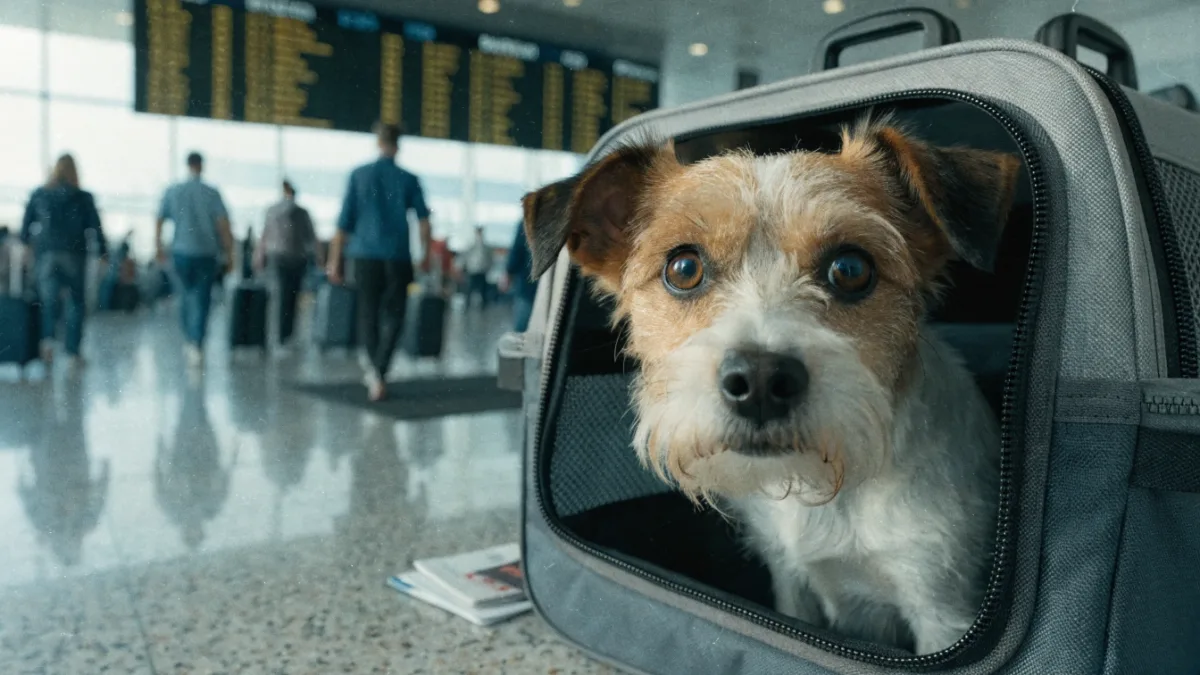
The last time I tried to shove my 12-pound tuxedo cat, Mochi, into a soft-sided travel carrier for a simple vet visit, she performed a gravity-defying backflip that would make an Olympic gymnast jealous. Taking her on a commercial flight? I’d need heavy medication, and she’d probably need a priest.
But sometimes, you have to fly with your pets. Whether you’re moving across the world or navigating a major life transition, air travel with an animal is a logistical puzzle wrapped in a mountain of paperwork. If you’ve started looking into airline policies, you’ve probably realized the entire system feels like it was designed to break your spirit. Between weight limits, breed bans, and shifting international laws, here is the honest, messy reality of navigating the friendly skies with your dog or cat.
In-Cabin vs. Cargo: The Great Divide
Let’s get right to the part everyone worries about: where does your pet actually sit? The answer depends entirely on their size, and it dictates the entire trajectory of your travel plans.
The Under-Seat Life
If you have a small dog or a cat, you can usually bring them in the cabin as a carry-on. They stay in an airline-compliant carrier under the seat in front of you. It sounds cozy until you realize you have to contort your own legs around a vibrating, anxious furball for four hours.
To qualify for this VIP treatment, your pet usually needs to be at least 8 to 10 weeks old and fully weaned. You’ll pay a fee—typically between $95 and $125 each way—and yes, it is almost always non-refundable. Airlines also strictly cap the number of pets allowed in the cabin, usually around five to seven per flight. It operates on a first-come, first-served basis, meaning you can’t just rock up to the gate with a cat and hope for the best. You have to call ahead and secure that spot the second you book your own ticket. You can check out specific airline policies, like,[1] to see exactly how their caps work.
The Cargo Hold
If your dog is too large to fit comfortably under a seat, cargo is often the only option. Let’s be brutally honest: the cargo hold is where most pet owners’ nightmares live. There is massive, valid public outrage regarding flying pets in cargo. Extreme tarmac temperatures, rough handling, and sheer stress have led to pet injuries and deaths.
Because of this, many animal welfare organizations strongly advise against putting pets in cargo unless it is absolutely necessary. If you have a brachycephalic (flat-faced) breed like a Pug, French Bulld, or Persian cat, cargo is basically a hard “no.” These pets already struggle to breathe, and the stress and temperature fluctuations of a cargo hold can be fatal. Most airlines flat-out ban them from flying in cargo entirely.
There is some hope on the horizon, though. After high-profile tragedies—including the horrifying 2018 incident where a puppy died in an overhead bin—airlines are being forced to do better. United completely overhauled its PetSafe program, and Delta recently announced a specialized cargo program utilizing climate-controlled vehicles and dedicated handlers. It’s a step toward easing traveler anxiety, but if you have a flat-faced pet, I highly recommend looking into alternative ground transportation.
The Death of the Emotional Support Peacock
Remember a few years ago when people used to bring literal peacocks, squirrels, and completely untrained pigs onto airplanes under the guise of “emotional support”? It was a wild, chaotic time that ruined things for the rest of us.
Thankfully, in late 2020, the US Department of Transportation changed the rules. Airlines are no longer required to recognize emotional support animals (ESAs). Today, only fully trained service dogs fly in the cabin completely free of charge, and they are not subject to standard carrier size restrictions or pet fees. I’m incredibly opinionated about this: it is the right call. It keeps the cabin safer and protects the legitimacy of actual service animals. If your pet is a pet, you pay the fee, and they stay in their carrier.
Decoding the Fine Print: Gear, Weights, and Limits
Once you figure out where your pet is flying, you have to wade through the gear requirements. Do not just show up with a cardboard box and a prayer. The rules are strict, and the gate agents will enforce them.
- Carriers: For the cabin, look for a soft-sided carrier that has enough flex to slide under the seat while being rigid enough to protect your cat from getting stepped on. For cargo, you absolutely need a hard-sided, IATA-compliant kennel. No matter where they fly, outfit the carrier with highly absorbent bedding (puppy pads are your best friend) and a spill-proof water bowl that attaches to the door.
- The Math: Most major airlines allow a maximum of two pets per person. But here’s the catch: if you bring two pets, you must purchase two seats, and those seats must be adjacent to one another. You can check out community discussions like this [2] to get a sense of how people manage the logistics.
- International Weight Limits: If you’re flying internationally, prepare for strict math. Many international carriers enforce a combined weight limit for the pet and the carrier. Often, the total cannot exceed 8 kg (about 17 lbs). If your medium-sized dog tips the scales, you are forced to either fly them in cargo or leave them behind.
And before you even think about packing their favorite toys, you need a Certificate of Veterinary Inspection. This health certificate is almost always required and usually must be issued by a vet within 10 days of your travel. Talk to your vet about this early—do not leave it until the last minute.
International Headaches and Changing Rules
If you think domestic travel is tricky, international flights are the final boss of pet logistics. The rules are incredibly dense and vary wildly depending on where you land.
Places like Hawaii, the UK, and Australia have strict rabies-free protocols. This often means mandatory quarantines, specific types of microchipping, and lengthy titer testing—a blood test that measures rabies antibodies that can take months to complete. You can’t just decide to move to London on a whim with your unvaccinated rescue pup.
However, the winds of change are blowing, and international travel is getting slightly easier for pet owners. Historically, the UK had a notorious rule that all pets had to fly as cargo. Recently, airlines like Virgin Atlantic and British Airways updated their policies to allow small dogs and cats to fly in the cabin on certain routes. It marks a major, welcome shift for transatlantic pet travel. If you’re navigating a complex international move, joining groups like the [3] community on Facebook is a lifesaver for getting up-to-date, country-specific advice from people who have actually done it.
Also, keep an eye on the calendar. Every year, without fail, airlines roll out “summer heat embargoes” from May to September. During this time, they simply refuse to transport pets in cargo to prevent heatstroke on the tarmac.
Leave Wildlife Out of Your Luggage
While we’re talking about flying animals, there is a darker side to the aviation industry that needs addressing: the illegal wildlife trade. While we are obsessing over health certificates and paying exorbitant fees to keep our domesticated companions safe and by our sides, smugglers are using commercial flights to traffic wild, endangered animals.
The role of the U.S. Fish and Wildlife Service and international treaties like CITES (Convention on International Trade in Endangered Species) is crucial in intercepting the illegal transport of wild animals. These animals are torn from their natural habitats, stuffed in inhumane, hidden conditions, and sold into the exotic pet trade.
We go to the ends of the earth—and spend hundreds of dollars in airline fees—to keep our dogs and cats safe because we love them. Wild animals deserve that same dedication to their freedom. If you love animals, channel that passion into supporting conservation efforts, and leave wild animals exactly where they belong: in the wild.
Flying with a pet is not for the faint of heart. It requires patience, deep pockets, and an uncanny ability to read the fine print. But watching Mochi finally emerge from her carrier in a new home, blinking and confused but completely safe, makes the logistical nightmare worth it. Just remember to call the airline early, invest in a top-tier carrier, and maybe pack a stress-relief treat or two for yourself. You’re going to need it.
Sources
- American Airlines' pet travel guidelines — aa.com
- Quora thread on flying with pets in the USA — quora.com
- Tips for flying internationally with pets — facebook.com