

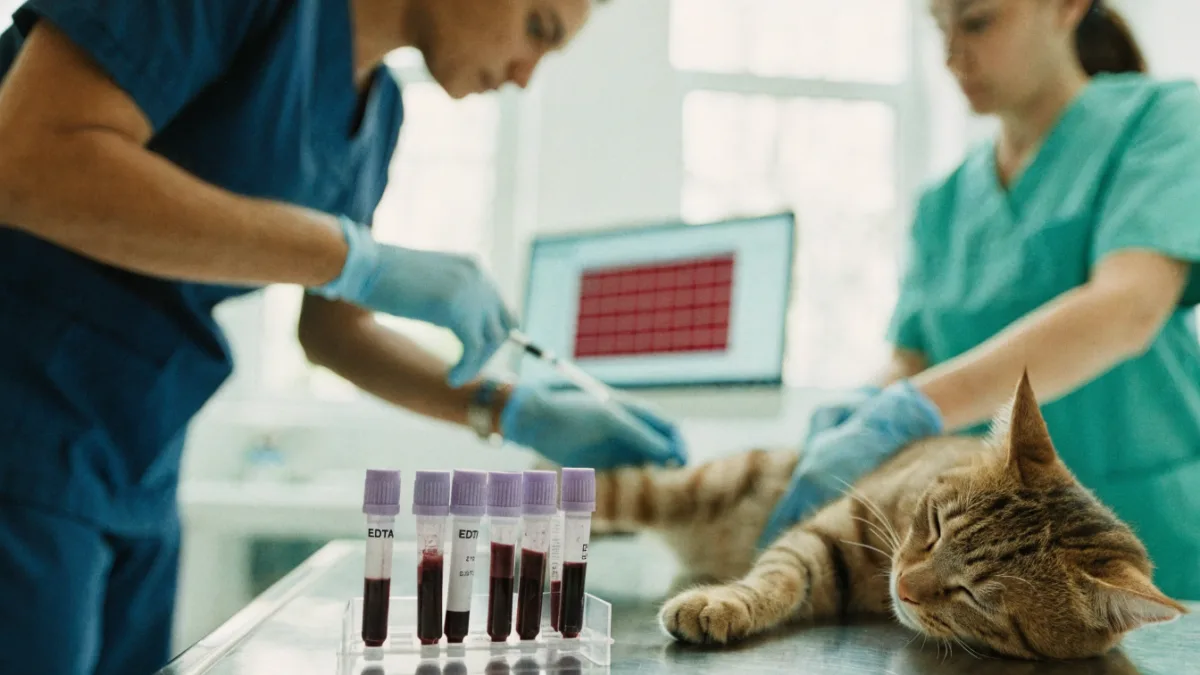
When Marcus, a nine-year-old Labrador Retriever, came in for his annual wellness exam last spring, his owner, Karen, almost declined the bloodwork. “He’s acting completely normal,” she told me. “Eating great, playing fetch, no complaints.” I’m glad she trusted me when I said let’s run it anyway. Marcus’s CBC — that’s his Complete Blood Count, the panel that measures red blood cells, white blood cells, and platelets — came back showing a white cell count through the roof. Further testing confirmed early-stage lymphoma. Because we caught it before Marcus showed a single symptom, we started treatment immediately, and today, eight months later, he’s still chasing tennis balls in Karen’s backyard. That’s what annual bloodwork does. It pulls back the curtain on what our pets can’t tell us.
Why “Looking Fine” Isn’t the Same as Being Fine
Here’s something I explain to clients all the time: dogs and cats are evolutionary survivors. In the wild, showing weakness made you prey. So our companion animals have inherited an extraordinary ability to mask pain, discomfort, and even serious illness. By the time a pet starts vomiting, stops eating, or becomes lethargic, disease is often already advanced.
I think about Bella, a six-year-old domestic shorthair cat whose owner brought her in for what seemed like a routine visit. Bella’s owner mentioned offhand that the cat had been “slightly less playful” lately. Nothing dramatic. No vomiting, no weight loss. But something about the way she described it made me want to dig deeper. Bella’s CBC revealed severe anemia — her red blood cell count was dangerously low. She had a condition called immune-mediated hemolytic anemia, where the body’s own immune system destroys its red blood cells. If we’d waited another few weeks, Bella might have collapsed. Instead, we started immunosuppressive therapy right away, and she recovered beautifully.
The.[1] come from catching these hidden stories before they become emergencies. Your pet doesn’t have a way to tell you “my kidneys are working at 60%” or “my white blood cells aren’t dividing properly.” Bloodwork speaks for them.
Understanding the Baseline: Why “Normal” Isn’t Universal
Every lab report comes with a reference range — a set of numbers that theoretically represents what’s normal for the species. But here’s what many pet owners don’t realize: those ranges are broad averages. A German Shepherd’s normal kidney values might look different from a Poodle’s. A lean, athletic Border Collie will have different red blood cell parameters than a stocky, sedentary Bulldog.
That’s why the concept of a baseline matters so much. A baseline is a snapshot of what is perfectly normal for your specific pet when they’re healthy. Once I know what Marcus’s kidney values look like when he’s thriving, I can spot a meaningful shift the following year — even if both results technically fall within the lab’s “normal” range.
Here’s a useful analogy. Imagine you step on the scale and it reads 160 pounds. Is that good or bad? You can’t really answer that question without knowing what you weighed last month, last year, and the year before that. Trend data tells a story that a single data point never can. Bloodwork works the same way.
“By the time a pet shows obvious signs of sickness, a disease may already be in an advanced stage. Annual bloodwork catches what the eye can’t see.”
What a CBC Actually Tells Us
Let me break down what you’re actually paying for when a CBC panel gets run. I think understanding the components helps owners feel confident about the investment rather than wondering if it’s just a money-making add-on.
Red Blood Cells (Erythrocytes)
Red blood cells carry oxygen throughout the body. When we measure them, we’re looking at the total count, the size of the cells, and how much hemoglobin they contain — hemoglobin being the protein that actually binds and transports oxygen. Low red blood cell numbers indicate anemia, which can stem from blood loss, poor production, or destruction by the immune system. High numbers can suggest dehydration or, less commonly, a bone marrow disorder.
White Blood Cells (Leukocytes)
White blood cells are the immune system’s foot soldiers. A CBC breaks these down into several types — neutrophils, lymphocytes, monocytes, eosinophils, and basophils — each responding to different threats. Elevated white blood cells typically mean the body is fighting infection or dealing with inflammation. Abnormally low counts can signal immune system suppression or bone marrow problems. When Marcus’s lymphocyte count was sky-high, that was the red flag that led to his lymphoma diagnosis.
Platelets (Thrombocytes)
Platelets are responsible for blood clotting. Without enough of them, a pet might bruise easily, bleed excessively from minor cuts, or develop spontaneous internal bleeding. Platelet disorders can be inherited, immune-mediated, or secondary to other diseases. Catching a low platelet count before a pet needs surgery — even a routine dental cleaning — can prevent catastrophic bleeding complications.
The Real Cost Conversation
I understand the skepticism. You bring in a perfectly healthy pet, and the vet hands you an estimate that includes bloodwork on top of the exam, vaccines, and parasite prevention. It’s natural to wonder whether the [2]
But let me reframe this. Treating a pet in crisis is almost always exponentially more expensive — and emotionally devastating — than catching a problem early. A single night in an emergency hospital can cost several times what an entire year of preventive bloodwork would run. When we detect kidney disease early through routine monitoring, we can often manage it with diet and medication for years. When we catch it late, after the pet has collapsed, we’re talking about hospitalization, IV fluids, intensive care, and sometimes outcomes we can’t reverse.
I’ve also changed my mind on something over the years. Early in my career, I was more casual about annual bloodwork for young, healthy patients. I’d recommend it, but I didn’t push hard if the owner declined. After seeing too many cases where a “fluke” finding on a routine panel turned out to be something serious — and after losing a few patients whose diseases we found too late — I now firmly believe that annual bloodwork is non-negotiable preventive care, not an optional upgrade.
How Fast Your Pet Is Really Aging
Here’s a fact that sometimes catches owners off guard: pets age roughly five to seven years for every one of our human years. When you skip a year of bloodwork for your dog or cat, from a medical standpoint, that’s like a person skipping doctor visits for half a decade.
A lot can change in twelve months. A thyroid panel that was perfectly normal last January might show early dysfunction this January. Liver enzymes that were within range last year might be creeping upward. Without that annual check-in, we lose the ability to intervene during the window when treatment is easiest, cheapest, and most effective.
For senior pets — typically those over age seven — I recommend bloodwork every six months rather than annually. The aging process accelerates in the golden years, and a lot can shift in just six months of a senior pet’s life.
A Word on At-Home Testing
You may have seen advertisements for mail-in, at-home biomarker tests for pets. These products have grown in popularity, and I understand the appeal — they’re convenient and often less expensive than an in-clinic visit. But here’s my honest assessment: while they may offer some screening value, they cannot replace a proper [3] where blood is drawn by a trained technician, processed promptly, and interpreted alongside a physical exam by your veterinarian.
Blood samples degrade over time. Mailing a sample means it sits in transit, potentially affecting accuracy. And a number on a report means very little without clinical context — without someone who knows your pet’s history looking at the whole picture. Diagnostic labs are also increasingly using artificial intelligence to read blood smears and speed up results, which is an exciting development, but that technology lives in professional settings, not in your mailbox.
My guidance is this: if cost is the barrier, talk openly with your veterinarian. Many clinics offer wellness plans that bundle bloodwork into affordable monthly payments. Some communities have nonprofit clinics or vaccine-and-wellness events that include discounted bloodwork. The goal is to get it done, however that works for your situation.
The Bottom Line
Annual bloodwork is one of the most powerful tools we have in veterinary medicine. It’s proactive rather than reactive. It replaces guesswork with data. And most importantly, it gives your pet a voice when they can’t speak for themselves.
I’ll leave you with this thought. When Karen brought Marcus in that day, she had no idea anything was wrong. She was planning to decline the bloodwork to save a little money. That single test gave her nearly another year — and counting — with her best friend. You can’t put a price on that. Annual bloodwork isn’t an upsell. It’s a love letter to your pet, written in the language of prevention.
And while our dogs and cats may not face extinction — the conservation conversation belongs to their wild cousins like the African wild dog and the Iberian lynx, both of which are threatened by habitat loss and human conflict — the same biology that makes our companion animals so resilient also makes them masters of disguise. They won’t tell us when something is wrong. It’s up to us to look deeper. A simple blood draw once a year is the least we can do for the creatures who give us everything they have.
Sources
- lifesaving benefits of annual bloodwork — bayviewpets.com
- additional cost is truly necessary — petmd.com
- in-clinic CBC panel — clearcreekanimalhospital.com