

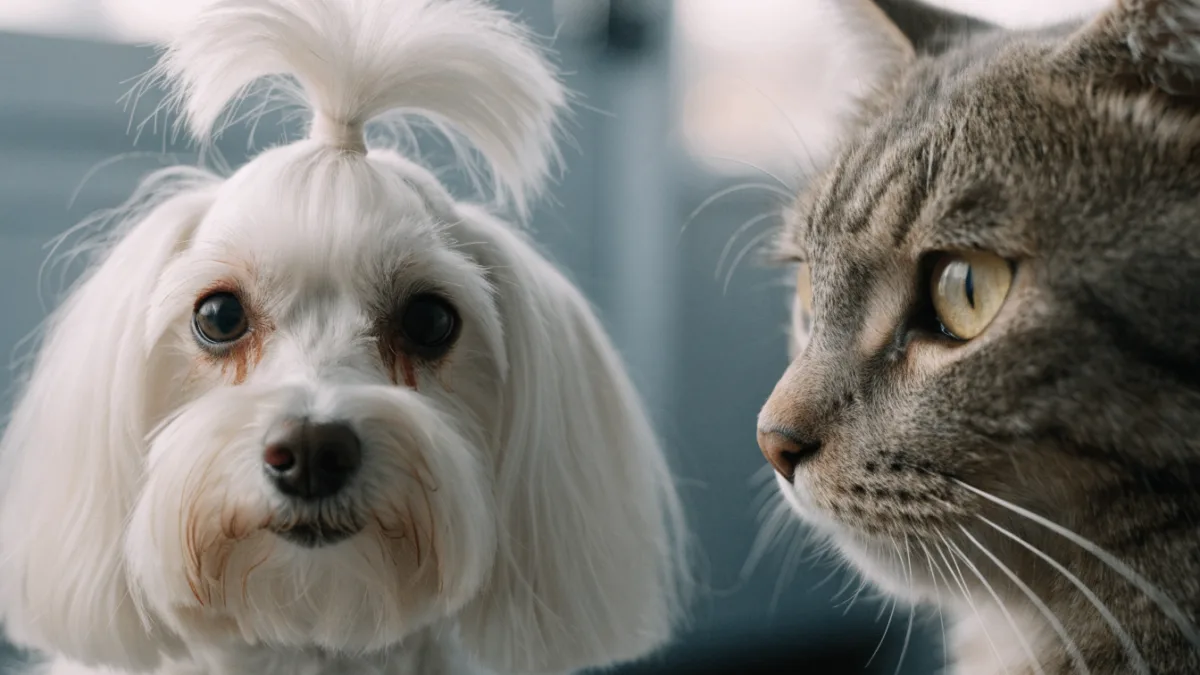
Just last week, I had back-to-back appointments that perfectly captured one of the most common misunderstandings in pet care. First, I saw Leo, a four-year-old Bichon Frise. His owner, Mark, was incredibly frustrated. “I’ve tried every wipe on the market, but these rusty streaks under his eyes won’t go away,” he told me, holding Leo’s face up to the light. An hour later, I saw Cleo, a six-year-old Domestic Shorthair cat. Her owner, Sarah, had rushed her in because Cleo was hiding under the bed, her left eye swollen shut with a thick green discharge.
Both owners were dealing with eye issues, but their perspectives couldn’t have been more different. Mark saw a cosmetic nuisance; Sarah recognized a medical emergency. The truth is, [1] are absolutely vital to the overall health of both dogs and cats. Tears aren’t just saltwater; they are a complex fluid responsible for flushing away debris, delivering nutrients to the cornea, and maintaining clear vision. When something goes awry with tear production or drainage, the body is sending a signal. Let’s talk about the great eye health divide—why we tend to brush off canine tear stains while panicking over feline conjunctivitis, and why both deserve our careful attention.
The Canine Dilemma: Unpacking Epiphora (Excessive Tearing)
If you share your home with a light-coated dog—think Maltese, Poodles, or Bulldogs—you’re probably intimately familiar with those stubborn reddish-brown streaks creeping down from their eyes. We call this epiphora, which is simply the medical term for excessive tearing. But here’s the catch: those stains rarely appear for no reason.
Tear stains are actually a symptom of an underlying issue causing either an overproduction of tears or a problem with tear drainage. The rust color comes from porphyrins, iron-containing molecules excreted in the tears that turn brown when exposed to light and air. While many owners view this as a mere grooming headache, treating it shouldn’t start with over-the-counter wipes. It must begin with a veterinary diagnosis.
To resolve tear stains effectively, we need a two-pronged approach: actively cleaning the existing stains off the fur, and proactively supporting internal eye health for healthier, more efficient tear production. But first, we have to figure out the root cause. Is it an allergy? A low-grade bacterial or yeast infection on the skin? An anatomical defect, like eyelashes rubbing against the eye (distichiasis) or a blocked tear duct? Until we rule these out, we are just painting over a rusty pipe.
The Feline Threat: Recognizing Conjunctivitis
Now, let’s look at the feline side of the exam room. When a cat’s eyes aren’t right, owners usually notice immediately. Cats are masters at hiding illness, so when a cat starts squinting, pawing at their face, or hiding in a dark closet, we know they are in significant discomfort.
Clinical signs of conjunctivitis—inflammation of the pink tissue (conjunctiva) lining the eyelids and covering the white part of the eye—are hard to miss. Both dogs and cats can get conjunctivitis, but it is particularly common and highly contagious in cats, especially in shelter environments or multi-cat households. If your cat is squinting, if the tissue around their eye is red and swollen, or if you see an abnormal green or yellow discharge, it’s time to call your vet immediately.
“The difference in how we view these two conditions is striking. We chase perfect fur in dogs, but with cats, we are often fighting to save the eye itself.”
Left untreated, feline conjunctivitis—often caused by feline herpesvirus or chlamydia—can lead to severe corneal ulcers and permanent vision loss. Unlike the chronic, slow burn of a dog’s tear stains, acute conjunctivitis is a medical issue requiring urgent, targeted care.
The Great Divide: Shifting from Reactive to Proactive
For a long time, the standard approach to canine tear stains was purely reactive. In fact, I’ve changed my mind on this over the years. Early in my career, it wasn’t uncommon for groomers and even some veterinarians to rely on low-dose antibiotics, like tylosin or tetracycline, hidden in a dog’s food to clear up those rusty streaks. Today, we recognize that using antibiotics for what is largely a cosmetic issue contributes to antimicrobial resistance—a massive global health threat. It’s a band-aid, not a cure, and it disrupts the dog’s microbiome.
Thankfully, modern veterinary medicine is experiencing a massive shift toward proactive ocular health. Rather than relying on harsh chemical removers or unnecessary medications, we are looking at the whole animal. We recognize that gut health, immune function, and liver efficiency are deeply connected to eye health. If a dog’s body is inflamed, their eyes will often tell the story.
Supporting Eye Health From the Inside Out
When we’ve ruled out infections and anatomical defects that might require surgical intervention—such as opening a blocked tear duct or correcting droopy eyelids—we can turn to holistic and natural remedies. Supporting a dog’s system internally can dramatically reduce the inflammation that leads to excessive tearing.
If you’re looking to support your dog’s eye health naturally, look for supplements containing these active ingredients:
- Milk thistle and dandelion: These herbs are excellent for liver support and detoxification. A healthy liver processes toxins efficiently, which can reduce the load on other elimination pathways, including tears.
- Olive leaf: Known for its natural antimicrobial properties, olive leaf extract can help keep low-grade, opportunistic bacteria and yeast at bay on the facial fur.
- Chlorophyll: Often included in holistic supplements, chlorophyll is fantastic for neutralizing odor and naturally counteracting the dark staining of porphyrins.
- Colostrum and probiotics: The gut-eye connection is real. Probiotics support a healthy gut lining, reducing systemic inflammation. Colostrum provides immune-boosting antibodies, addressing allergic responses that often manifest as watery eyes.
Disclaimer: Always consult your veterinarian before introducing new supplements into your pet’s routine, as they can recommend the correct dosage based on your animal’s specific weight and medical history.
Bridging the Gap: What Every Pet Owner Needs to Know
Whether you are caring for a teary-eyed Maltese or a squinting tabby, the goal is always the same: preserving the comfort and function of their eyes. [2] shouldn’t be ignored, wiped away with unregulated chemicals, or treated casually with antibiotics. Similarly, feline conjunctivitis shouldn’t be met with a wait-and-see approach.
Diagnosis is always step one. If your dog develops tear stains, book an eye exam. We need to check for corneal scratches, assess their tear duct function, and evaluate their eyelid anatomy. If your cat comes into the room squinting with goopy eyes, keep them isolated from other pets and get them to the clinic right away.
Our pets rely on their senses to navigate their worlds, and their eyes are the windows to their overall systemic health. By looking past the cosmetic annoyance of a rusty face and recognizing the subtle signs of eye discomfort, we can catch minor imbalances before they become major medical crises. The eyes truly have it—and by paying attention to what they’re trying to tell us, we can keep our furry companions seeing clearly and living comfortably for years to come.
Sources
- tear production and good ocular hygiene — ivcjournal.com
- Tear stains on dogs and cats — revivalanimal.com