

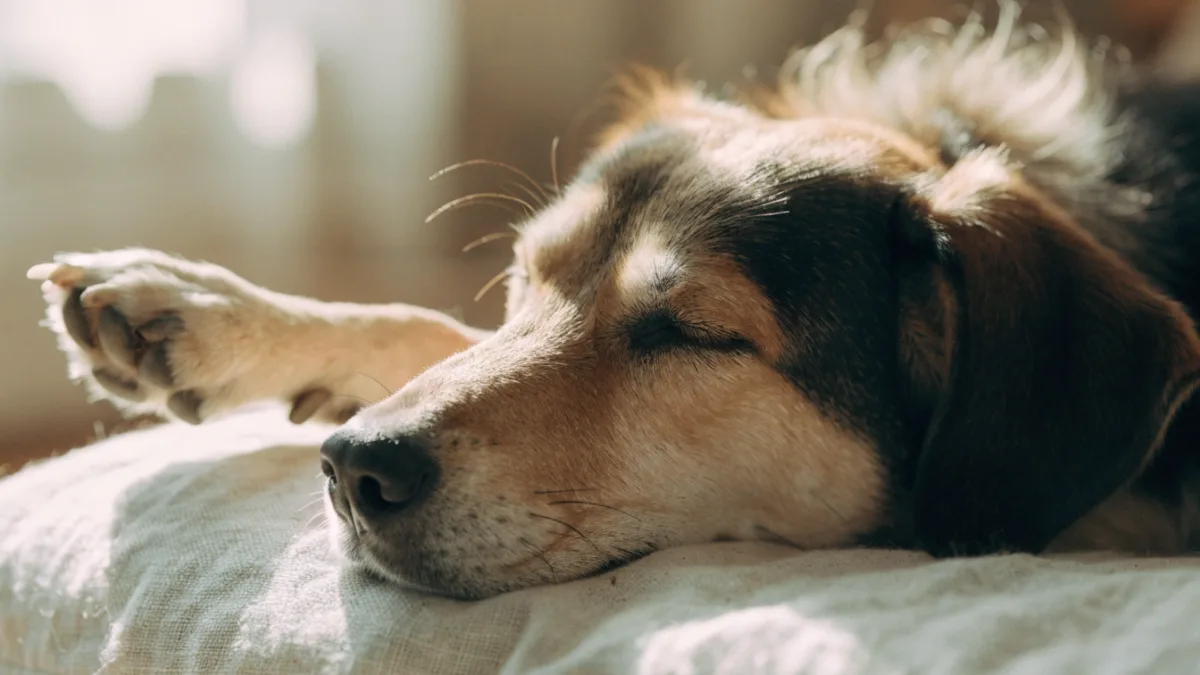
The other night, Mochi was curled into a perfect croissant on my chest, purring herself to sleep, when her whiskers started going absolutely haywire. Left, right, left left left — like she was tracking something invisible across the room. Her paws flexed. Her tail swished once, twice. I held my breath, completely transfixed. Was she dreaming? And if so, what on earth was happening in that little cat brain? Then she let out a tiny chirp — the one she uses when she spots a bird through the window — and I nearly melted. I’ve spent more time than I care to admit watching my pets sleep, and I know I’m not alone in this particular obsession. Every pet owner has witnessed that magical, slightly absurd moment when their dog starts paddling their legs like they’re swimming through air, or their cat’s ears flatten and unflatten in some private feline drama. It’s hilarious. It’s endearing. And it turns out, it’s also a window into something genuinely extraordinary happening inside their heads.
The Science of Pet Dreams
Here’s where it gets really cool. Dogs and cats experience REM sleep — that’s Rapid Eye Movement sleep, the same dreaming phase humans go through. During REM, the brain is wildly active, almost as active as when awake. But here’s the catch: the brain stem temporarily paralyzes the major muscle groups to prevent us — and our pets — from physically acting out whatever’s happening in the dream.
Except — and this is the part I love — the paralysis isn’t perfect. Little muscle movements break through. Those leg twitches, those lip smacks, those whisker flicks? That’s dream action leaking through the neurological barrier.
Recent veterinary neuroscience research using fMRI (functional Magnetic Resonance Imaging) on dogs has confirmed something pretty remarkable: the hippocampus — the brain’s memory center — behaves identically in sleeping dogs as it does in sleeping humans. That means your dog isn’t just twitching randomly. Their brain is actively replaying memories and experiences. They’re genuinely dreaming, processing the day the same way we do.
What’s Playing in Their Dreams?
So what are they dreaming about? The short answer: probably Tuesday.
Both dogs and cats process daily events through their dreams. That squirrel your dog lost at the park? Replaying it. That spot on the wall your cat stared at for forty minutes? Working through it. The mail carrier? Oh, absolutely.
For dogs, those running motions likely map to chasing — squirrels, rabbits, balls, whatever gets them excited during the day. Lip-smacking and chewing? Probably dreaming about food, which, knowing most dogs, occupies most of their waking thoughts anyway. Yips, whines, and what dog owners affectionately call “silent barks” — where their mouth opens and moves but barely any sound comes out — are all part of the canine dream vocabulary.
Cats are different, because of course they are. Their dream behaviors mirror their hunting instincts: whisker twitches track invisible prey, ears flick and flatten as if listening for movement, paws swipe at absolutely nothing. Their dreams are lighter and more frequent because, as predators, cats evolved to stay semi-alert even at rest. Which explains why my cat can go from dead asleep to fully operational in approximately 0.3 seconds when she hears a cabinet open.
Reading the Sleep Signals
One of the most fascinating things about watching pets sleep is learning to read their specific dream “language.” Dogs and cats have distinctly different sleep signatures, and once you know what to look for, it’s like having subtitles.
Canine Dream Signs
- Leg paddling: Running, chasing — the classic “dream rabbit” pursuit
- Barking, yipping, or whining: Vocal dream participation, sometimes barely audible
- Lip-smacking and chewing motions: Food dreams, or reliving that treat they absolutely stole off the counter
- Tail wagging: Dreaming about someone they love, or a very exciting smell
Feline Dream Signs
- Whisker twitching: Tracking prey in the dream — those whiskers are highly sensitive sensory organs
- Ear flicking and flattening: Listening, reacting to dream stimuli
- Paw swiping: Pouncing practice, even in sleep
- Tail swishing: That classic cat concentration mode — they’ve locked onto something
- Chirping: The sound cats make when they spot birds, which apparently carries into the dream world
Small Dogs, Big Dreamers
Here’s a fact that genuinely surprised me: small dogs dream more frequently than large dogs. A small dog might enter a dream state every 10 minutes, while a large breed could have an hour-long gap between dreams. Researchers think this relates to brain size and neural processing speed, though the exact mechanism isn’t fully understood.
Puppies and kittens, though, are the real heavy dreamers. They twitch significantly more than adult animals, and it’s not just because everything about them is extra. It makes complete sense when you think about it — puppies and kittens are processing massive amounts of new information every single day. Every smell, every texture, every social interaction is brand new. Their brains are building neural pathways at an extraordinary rate, and all that processing and consolidation happens during sleep. Those little bodies twitching like they’re having a personal dance party? That’s brain development in action.
Cats in general sleep an impressive 15 hours a day on average, with kittens and senior cats clocking up to 20 hours. That’s a lot of dream time. And their REM cycles tend to be shorter and more frequent than dogs’, meaning they cycle through dreams faster — more dreams, less time in each one. Very on-brand for a species known for having short attention spans while awake.
Should You Wake a Dreaming Pet?
This is where I’m going to be direct: no. Don’t do it.
Animal behaviorists strongly advise against waking a pet mid-dream, and for good reason. When dogs are startled awake during REM sleep, they can experience something called sleep inertia — their brain hasn’t fully transitioned from dream-state to wakefulness, and they may react defensively before they even realize what’s happening or who’s touching them. A dog who would never dream of snapping at you while awake might bite if suddenly jolted from a deep dream. It’s not aggression. It’s disorientation.
I know it’s hard. When Mochi is whimpering in her sleep, my instinct is to scoop her up and whisper that she’s okay. But here’s the thing — pets process their experiences through dreams the same way we do. We don’t know if they have nightmares exactly, but we do know that dream-sleep serves a critical function in memory consolidation and emotional processing. Interrupting that isn’t doing them any favors.
Let them ride it out. I promise they’ll wake up eventually.
Twitches vs. Seizures: Knowing the Difference
Okay, this is the part where I want to be really clear about something, because it’s one of the most common sources of confusion and worry I hear from pet owners.
Normal sleep twitching is intermittent, relatively gentle, and usually involves specific body parts — a leg, the face, the whiskers. Your pet’s breathing stays relaxed. If you call their name or gently touch them, the twitching pauses or stops as they shift sleep stages or briefly wake.
A seizure looks completely different. During a seizure, you’ll typically see rigid, violent, full-body shaking. There may be loss of bowel or bladder control. Your pet won’t respond to their name or your touch. The episode doesn’t stop when you try to gently rouse them.
If you ever suspect your pet is having a seizure rather than dreaming, don’t hesitate — call your veterinarian or an emergency animal hospital right away. I’m not going to walk you through what to do in that situation in an article, because this is a “talk to your vet” scenario, full stop. They know your pet’s history and can give you specific guidance.
What We’re Still Learning
Here’s something that genuinely keeps me up at night (ironic, given the topic): while neuroscientists agree that animals dream, there’s still real philosophical debate about what those dreams actually look like to the dreamer.
Are they visual, like human dreams? Are they primarily emotional — feelings without pictures? Are they scent-based, given how much of a dog’s world is smell? A dog’s olfactory system processes information vastly differently than ours. Do they dream in smells the way we dream in images?
We don’t fully know yet. But the more we learn, the more clear it becomes that our pets’ inner lives are rich, complex, and far more sophisticated than humans historically gave them credit for. The recent surge in augmentative and alternative communication tools — sound buttons and similar devices that let pets “talk” in limited ways — has only deepened public fascination with animal cognition. People are realizing their pets aren’t just cute. They’re thinking, remembering, processing, and apparently dreaming in ways that mirror our own.
The Takeaway
Watching your pet dream is one of those small, ordinary miracles of sharing your life with an animal. Those twitches and chirps and silent barks aren’t random neurological noise — they’re glimpses into a mind that’s working hard, processing the day, building memories, and yes, probably rehashing that one really good squirrel chase from last week.
And here’s what I keep coming back to: if dogs and cats dream — if they have rich internal experiences while they sleep — that tells us something profound about the inner lives of animals everywhere. Not just our pampered pets curled up on our couches, but the ones in shelters waiting for homes. The ones in the wild navigating increasingly fragmented habitats. The ones we’ll never personally know but whose cognitive and emotional capacities aren’t so different from the sleeping dog at our feet.
If a dog can replay the memory of a good walk, if a cat can practice pouncing on dream-mice, if a puppy’s brain can busily wire itself for a lifetime of learning — that’s a level of sentience worth taking seriously. Worth protecting. Worth advocating for, whether that means supporting your local animal shelter, backing conservation efforts for wild habitats, or simply treating every animal you encounter with the dignity their rich inner life deserves.
Understanding that animals dream isn’t just a fun cocktail party fact. It’s a reminder that they experience the world in ways far more complex than we often assume. And the least we can do is pay attention.
Now if you’ll excuse me, Mochi is asleep on the couch and her paws are twitching again. I’m going to go quietly observe a tiny miracle.