

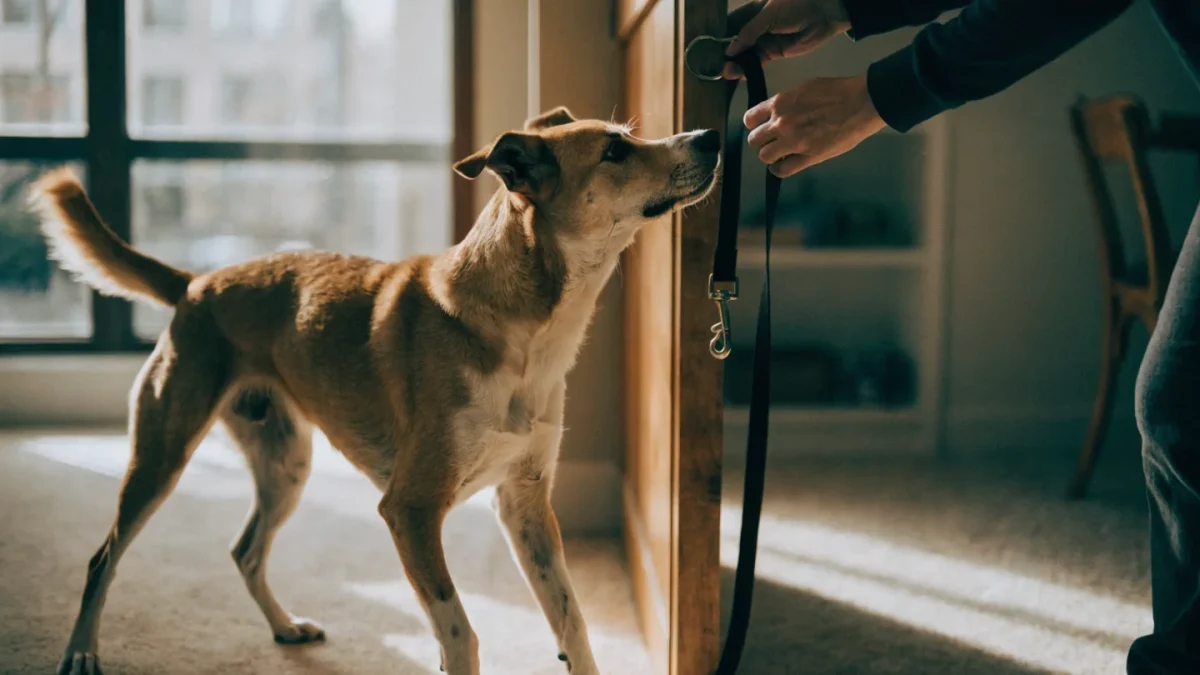
Pavlov's dogs drooled when the bell rang. They didn't decide to drool — the response was automatic, triggered by the association that had formed between bell and food.
Your dog does the same thing constantly. The leash comes off the hook and they spin. The carrier comes out and they disappear under the bed. Your work shoes go on and they get excited (or anxious, depending on whether work shoes predict walks or departures).
None of this was formally trained. It happened through classical conditioning — automatic association formation that's been operating since the day you brought the dog home.
How It Works
A neutral stimulus (bell, leash, carrier) is paired repeatedly with an unconditioned stimulus that naturally produces a response (food produces salivation; an exciting destination produces excitement; something scary produces fear).
After enough pairings, the neutral stimulus alone produces the response. The bell predicts food reliably enough that the anticipation of food (salivation) fires at the bell.
The critical difference from operant conditioning: this is involuntary. The dog is not choosing to be excited by the leash. The association formed automatically, without conscious intent from either the dog or you.
Why This Matters for Training
You're always doing classical conditioning. Every time you do something around your dog, associations are forming. If training sessions are always preceded by you opening a specific bag, that bag will produce anticipatory excitement. If you have the habit of frowning and sighing before asking for something hard, your body language during difficulty becomes a cue for "this is going to be unpleasant."
It explains emotional responses. A dog that gets anxious when you pick up your keys has formed a classical association: keys → departure → distress. The anxiety at the keys is a conditioned emotional response — it's not a deliberate behavior, it's an emotion triggered by association.
It's the mechanism behind desensitization and counter-conditioning. To change a fear response to a stimulus, you change the association: car = vet (fear) becomes car = dog park (excitement). This is classical conditioning deliberately applied. See counterconditioning and desensitization.
Clicker loading uses classical conditioning. You click, you treat. You click, you treat. After 15-20 pairings, the click reliably predicts treat, and the click itself begins to produce a pleasurable anticipatory response. That conditioned emotional response is what makes the click useful as a marker. (See also: the science of operant conditioning.)
Operant vs. Classical — Both Are Always Running
In any training session, both types of conditioning are operating simultaneously. The treat is a consequence for the behavior (operant), but your presence, the location, the equipment, and the clicker are all being conditioned (classical) in parallel.
Understanding both gives you a clearer picture of what your dog is actually learning beyond the specific behavior you're working on.