
Here's the honest truth about loose-leash walking: it takes longer than people want it to. Not because it's complicated — the mechanics are simple — but because you're undoing a training history where pulling worked, and that takes time.
But it does work. Every dog I've trained to walk on a loose leash got there with the same basic principle.
Why Dogs Pull
Dogs pull because it works. That's the entire explanation.
Dog tightens leash → owner follows → dog gets closer to whatever they want. That's a clear, consistent reward history. The dog has been reinforced for pulling thousands of times by the time someone tries to fix it.
Your job is to install an equally clear, consistent lesson in the other direction: tight leash = no progress. Loose leash = progress.
The Method
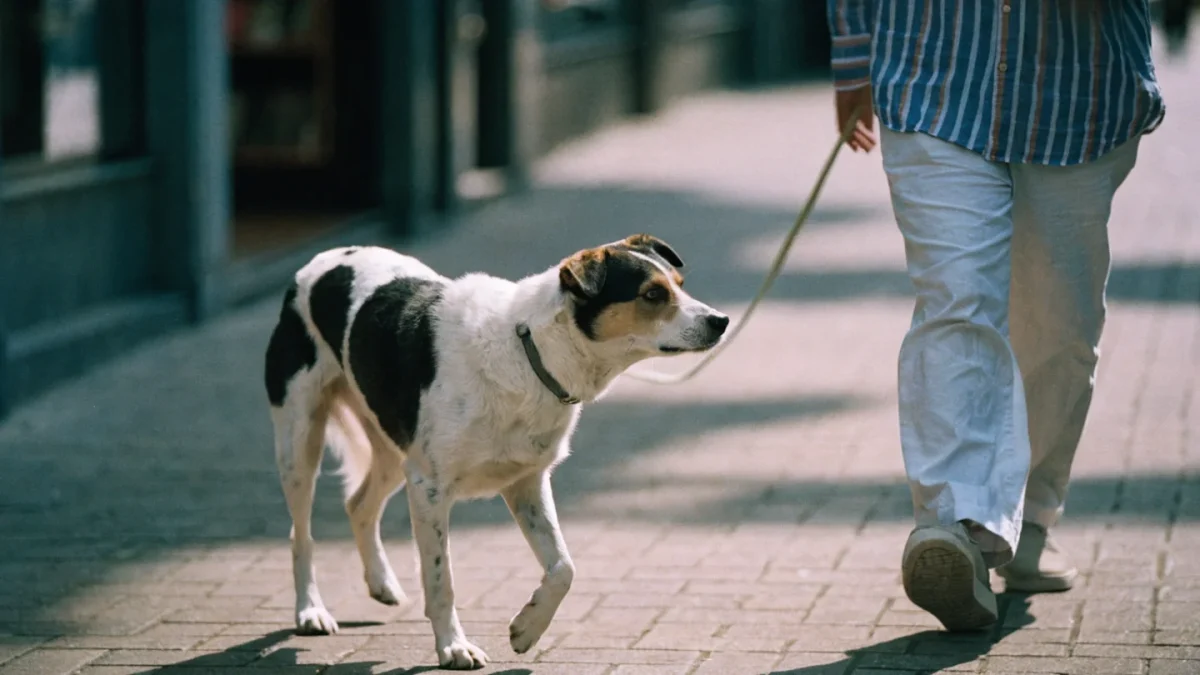
Stop when the leash goes tight. Immediately. Every time. Not eventually, not when you've had enough — the moment tension hits the leash.
Don't pull back. Don't say anything. Just stop.
Stand still and wait. Your dog will eventually look back, step toward you, or reduce the tension. The leash goes slack. Take a step forward.
If the leash goes tight immediately again, stop again.
Mark and reward the good stuff. Don't only use this method as a correction for pulling. Also mark and treat moments of loose-leash walking proactively — especially when your dog is next to you with a relaxed leash near a distraction.
That proactive reinforcement speeds up the learning significantly.
Starting Simple
Don't start this training on a regular walk. Start in your backyard or a low-distraction environment where the pulling drive is lower.
Ten steps with a loose leash? Mark and treat. Your dog is learning what "the thing you want" looks like before they're in an environment that makes it almost impossible.
The Direction Change Alternative
If stand-and-wait isn't getting traction, try direction changes: the moment the leash goes tight, turn and walk the opposite direction before your dog has generated a full pull. Your dog adjusts and ends up following you in the new direction. Mark and treat for walking next to you.
Direction changes require more active management but often produce faster results for dogs that are highly motivated to get somewhere.
Realistic Expectations
For a puppy that's never developed a pulling habit: two to four weeks of consistent work to build a reliable loose-leash walk.
For a chronic puller with years of history: months. Not because the dog is bad but because the habit is deeply reinforced. Be consistent, track progress, and accept that slow improvement is still improvement.
The Front-Clip Harness Situation
A front-clip harness can help manage pulling while training is in progress — the attachment point at the chest redirects the dog toward you when they pull rather than letting them lean forward. This reduces the mechanical advantage of pulling. (See also: heel training.)
It's a management tool, not a training tool. The loose-leash walking has to be trained. But the management makes training easier while you're building the behavior.
The next walk: have treats in your hand, ready. The moment the leash goes tight, stop. The moment it goes slack, take one step forward and immediately reward if your dog is anywhere near you. That's the pattern. Do it for every single step of the walk.