
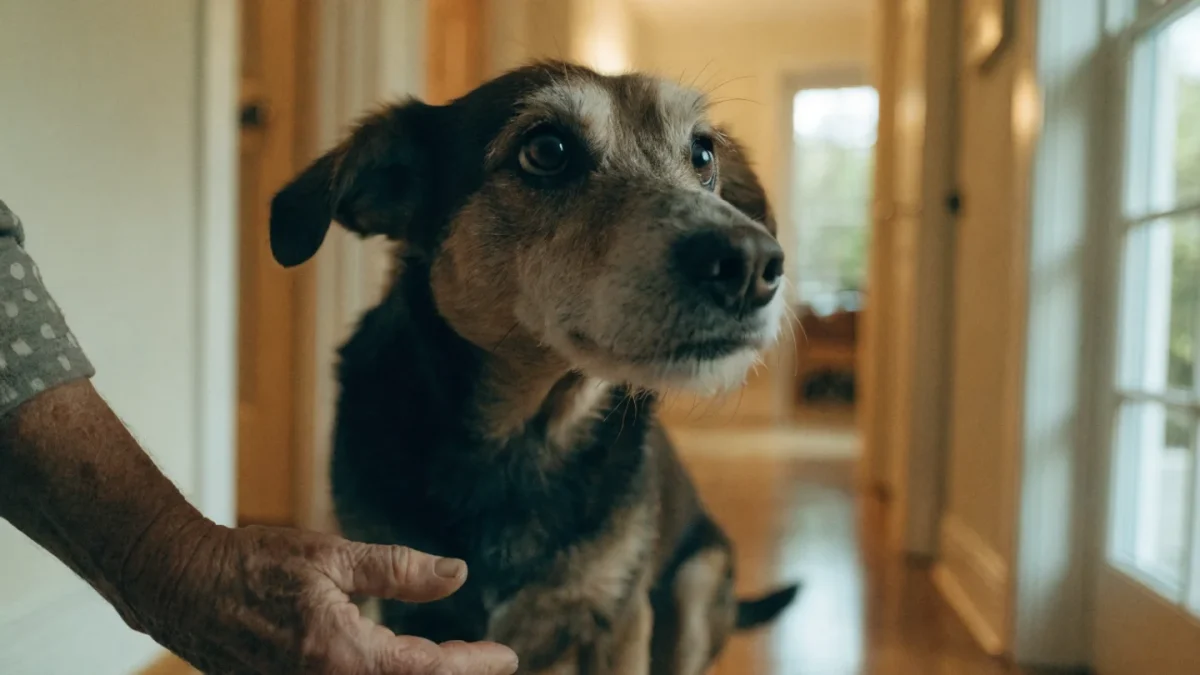
There's a moment that some senior dog owners describe when they realize something has changed: their dog is standing in the hallway at 2am, staring at the wall, seemingly unaware of where they are. Or their reliably housetrained ten-year-old has started having accidents again — not because they're sick, but because they seem to forget they need to go out.
Canine cognitive dysfunction is real, it's more common than many people know, and there are things you can do about it — not to cure it, but to genuinely improve quality of life.
What CCD Is
Canine cognitive dysfunction is a neurodegenerative syndrome in older dogs characterized by changes in cognition, behavior, and brain function. It shares some features with cognitive changes seen in aging humans — including amyloid beta accumulation and synaptic loss — though the parallel isn't exact. Research published in Frontiers in Neuroscience (2019) confirmed extensive molecular similarities between CCD and Alzheimer's disease, including 100% similarity in the beta-amyloid peptide sequence between dogs and humans.
It's progressive, not curable, but its progression can be influenced by veterinary management, enrichment, and environmental support.
The DISHA Signs
Veterinary professionals commonly use the DISHA framework for CCD assessment:
D — Disorientation: Getting lost in familiar areas, apparent confusion about surroundings, staring at walls or empty spaces, difficulty navigating around furniture.
I — Interaction changes: Reduced greeting behavior, decreased interest in social interaction with family, uncharacteristic clinginess (the opposite extreme is also possible).
S — Sleep-wake cycle alterations: Day-night reversal; sleeping through the day and being active, restless, or vocalizing at night.
H — House training regression: Previously reliable dogs starting to eliminate indoors, sometimes without apparent awareness.
A — Activity changes: Decreased activity, reduced engagement with toys or environment, or sometimes increased aimless pacing.
Not every dog will show all symptoms, and symptoms appear gradually. If you're observing two or more, a veterinary evaluation is warranted.
Diagnosis and Medical Support
CCD is diagnosed by a veterinarian, primarily through history and ruling out other medical causes for the behavioral changes (pain, thyroid dysfunction, neurological disease).
Available supportive treatments include:
- Dietary supplements with evidence for cognitive support in dogs (including phosphatidylserine-containing products, antioxidant blends, and omega-3 fatty acids — reviewed in Today's Veterinary Practice, 2020)
- Prescription medications that may reduce symptom severity in some dogs
- Antioxidant-enriched diets that may slow progression
- Environmental management modifications
The effectiveness of treatments varies by individual dog and stage. Earlier intervention generally produces better outcomes, which is another reason prompt veterinary consultation matters when you notice changes.
How Enrichment Fits In
Cognitive enrichment — activities that engage the dog's brain — cannot reverse CCD, but there is reasonable evidence that mental engagement supports brain health in aging dogs, as it does in aging humans. A large-scale study by the Dog Aging Project, which surveyed owners of over 10,000 dogs, found that dogs who exercised more and had greater enrichment showed fewer age-related cognitive decline markers.
Appropriate enrichment for a dog with CCD:
- Sniff walks and foraging activities (uses smell, the most intact sense)
- Simple puzzle toys at the appropriate difficulty level (not so hard they create frustration)
- Brief, positive, easy training sessions (reinforces positive emotional states and maintains cognitive engagement)
- Consistency in routine (reduces the cognitive burden of orienting to novel situations)
Avoid:
- Highly demanding new learning that requires significant working memory
- Overwhelming environmental novelty
- Extended exercise that exceeds physical capacity
Living With a Dog With CCD
The progression of CCD is gradual for most dogs. Many dogs with CCD continue to have good quality of life for months to years after diagnosis with appropriate support.
Quality of life monitoring becomes important: is the dog experiencing more good moments than distress? Are they still eating, engaging with familiar people, finding comfort in their environment? These are the meaningful measures.
Working with your veterinarian on an ongoing basis — not just at diagnosis — allows you to adjust management as the condition progresses and to make informed decisions about the dog's wellbeing over time.