
Dogs are mental animals. The same brain that mapped your walking routes, learned your schedule, and figured out which behaviors earn treats doesn't suddenly stop needing engagement because the dog is older. In fact, there's growing evidence that cognitive engagement in older dogs — as in older humans — supports brain health and slows cognitive decline. A large-scale Dog Aging Project study of over 10,000 dogs found a robust negative association between enrichment activity and cognitive decline markers, with more active dogs showing fewer signs of canine cognitive dysfunction.
The key is adjusting the enrichment to what your older dog can actually do.
What's Different for Senior Dogs
Senior dogs bring different capacities and different needs to enrichment:
Physical limitations: Arthritis, reduced stamina, and joint issues mean high-impact activities aren't appropriate. Enrichment that engages the brain without requiring athletic performance is the priority.
Sensory changes: Hearing and vision may be reduced. Smell, however, typically remains strong. Nosework and foraging activities — which engage primarily the olfactory system — are often well-maintained even as other senses fade.
Cognitive capacity: Some senior dogs learn new things readily; others may find new learning more challenging and stressful. Know your individual dog — if a new puzzle creates frustration rather than engagement, simplify it or try a different format.
Fatigue: Senior dogs tire more quickly. Short, positive enrichment sessions are better than long ones.
Enrichment Activities That Work Well
Sniff walks. A 20-minute walk at the dog's pace, letting them stop and sniff freely, is some of the most valuable enrichment available to a senior dog. You're not covering distance — you're letting them engage their primary sense with the environment. This is low-impact and deeply satisfying for most dogs.
Snuffle mats and scatter feeding. Hide food in a snuffle mat or scatter it in grass. Foraging for food engages the olfactory system and the problem-solving drive. Easy to adjust difficulty by spreading food more or less densely.
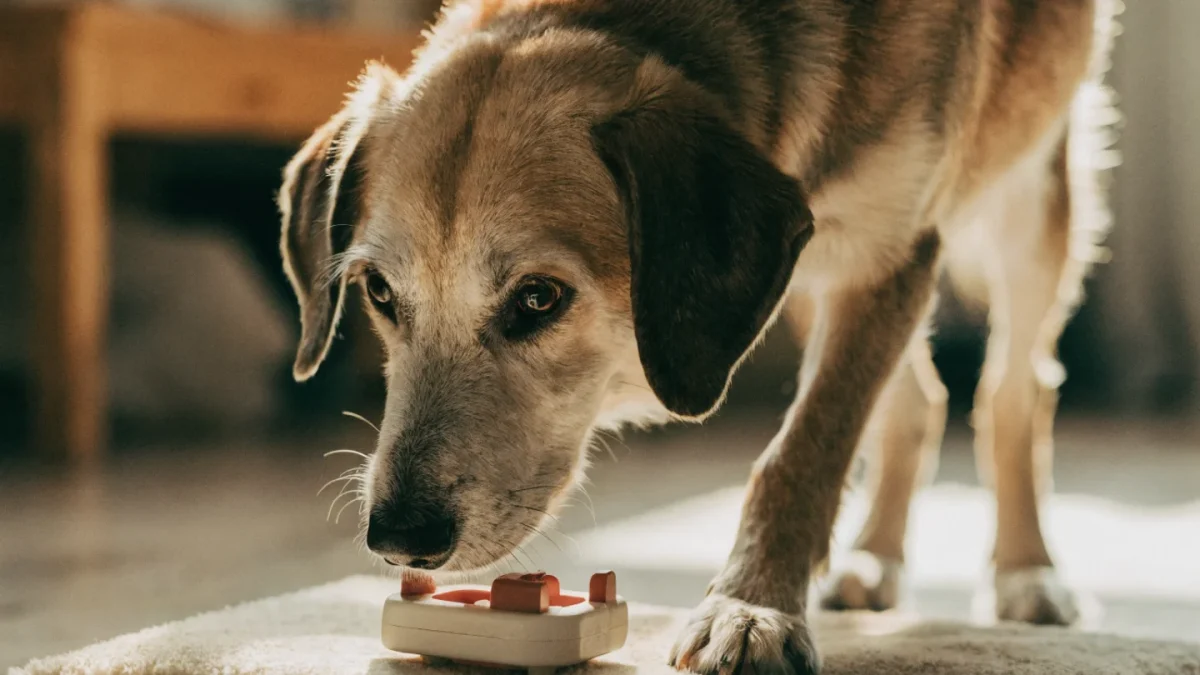
Easy food puzzles. Level 1-2 puzzle toys appropriate for the dog's current cognitive capacity. Watch whether your dog is engaging thoughtfully or getting frustrated. If they're frequently frustrated, lower the difficulty.
Nosework and simple scent games. Teaching a dog to find a specific odor targets their strongest remaining sense. Basic nosework — hide a treat in a room and encourage the dog to find it — is accessible for most senior dogs regardless of physical condition.
Brief positive training sessions. Five to seven minutes of easy, positive training — cues the dog knows well, rewarded generously, ending on success. This maintains cognitive engagement, reinforces positive emotional states, and maintains the human-dog bond.
Social interaction. Calm, positive interaction with familiar people and animals is enriching. Don't underestimate the value of simply being present with your senior dog in a calm way.
Adjusting to Current Capacity
Cognitive enrichment for senior dogs should be pleasurable, not effortful. If your dog is stressed, frustrated, or overly fatigued by an activity, it's not the right activity at the current difficulty level.
Signs you've got it right:
- Dog engages voluntarily
- Relaxed body language during and after
- No signs of frustration (pawing excessively, giving up quickly, whining)
- Dog seems settled and content after the activity
Adjust as your dog's capacity changes. An activity that was perfect at 10 may need to be simplified at 13. Following your individual dog's response is better than following any specific protocol.