

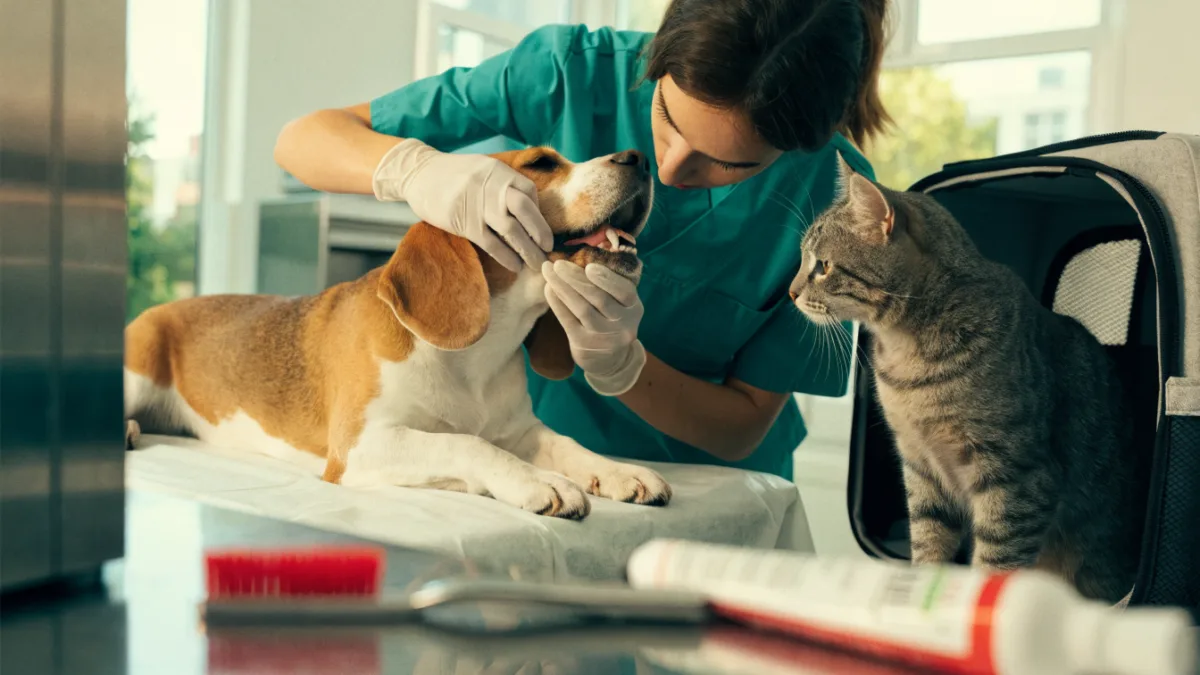
When “Bella,” a normally bouncy six-year-old Yorkshire Terrier, sat listlessly in her bed instead of greeting her owner at the door, her mom thought the dog was just having a slow day. “She’s getting older, and honestly, her breath has been smelling pretty bad lately,” she told me during our exam. “I figured it was just normal dog breath.”
It wasn’t normal aging. When I lifted Bella’s lip, I found angry, inflamed gums and a fractured molar exposing the sensitive nerve pulp. Bella wasn’t slowing down due to age; she was in agonizing pain. She had simply done what dogs and cats do best: she hid it.
It’s a scenario I see in my exam room all too often. Many pet parents view dental care as a cosmetic luxury—a way to get rid of nasty breath. But ignoring your pet’s oral health is much more than a smelly inconvenience. Neglecting those teeth opens the door to severe systemic diseases and staggering veterinary bills. Proactive dental routines aren’t just about clean teeth; they are one of the most effective ways to save money, prevent heartache, and add high-quality years to your companion’s life.
The Silent Sufferer in Your Living Room
One of the biggest challenges we face in veterinary medicine is that our patients are incredibly stoic. Because of their evolutionary instinct to hide weakness from predators, pets will rarely stop eating, even when their mouths are full of painful, rotting teeth or abscesses. As,[1] pets are often completely “unbothered” on the outside while silently suffering from severe dental pain on the inside.
By the age of three, an estimated 70% to 80% of dogs and cats show signs of periodontal disease. Periodontal disease isn’t just a buildup of yellow tartar; it’s an active, progressive bacterial infection that destroys the gums and the bone holding the teeth in place. By the time a pet shows obvious signs of distress—like dropping food, pawing at the mouth, or refusing to eat—the disease has usually progressed to an advanced stage requiring surgical intervention.
From Bleeding Gums to Failing Organs
You might wonder how a tooth infection affects the rest of the body. It all comes down to the fact that the mouth is the gateway to the body. When a pet’s gums become inflamed—a condition called gingivitis—the gum tissue becomes swollen and bleeds easily. This inflammation creates an open highway for bacteria.
Every time a dog or cat with dental disease chews, bacteria from the decaying teeth and tartar are pushed directly into the bloodstream. From there, the body’s immune system goes into overdrive trying to fight off the invading pathogens, leading to severe consequences:
- The Heart Connection: Circulating bacteria can easily lodge in the heart valves, causing a condition known as endocarditis (an infection of the heart valves). Over time, this damages the valves, leading to heart murmurs and potentially life-threatening heart failure.
- The Kidney Connection: As blood passes through the kidneys to be filtered, the trapped bacteria cause microscopic damage and scarring. This accelerates chronic kidney disease, which is especially devastating—and incredibly common—in senior cats.
Treating these systemic issues requires long-term, chronic medical care. As,[2] managing secondary organ failure is both financially and emotionally exhausting for pet owners, whereas a routine dental cleaning could have prevented the crisis entirely.
The “Predictable” Bill vs. The “Unpredictable” Disaster
Let’s talk about the financial reality. I often hear clients balk at the cost of a professional dental cleaning. But framing a dental cleaning as an “expense” is looking at it backward. [3] that you can plan for. Neglecting it turns into an unpredictable, emergency-level financial disaster.
Think of it like maintaining your car. Paying for regular oil changes is predictable and keeps the engine running smoothly. Skipping them might save you a few bucks today, but eventually, the engine seizes, and you’re looking at replacing the whole thing.
In the veterinary world, that “engine replacement” means tooth extractions, oral surgery, heavy anesthesia, and expensive antibiotics—which can easily cost thousands of dollars. To help offset this “sticker shock,” many clinics now offer monthly subscription wellness plans that bundle annual dental cleanings into predictable payments, making it much easier to budget for proactive care.
Addressing the Fear of Anesthesia
When we talk about senior pets, I frequently see owners neglecting their older dog or cat’s teeth because they are terrified of general anesthesia. It’s a completely valid fear, but it’s often based on outdated information. I’ve actually changed my mind on this over the years as veterinary medicine has evolved. Modern anesthesia protocols are incredibly safe.
Today, we require pre-anesthetic blood panels to ensure the liver and kidneys can process the medications safely. Pets are supported with intravenous (IV) fluids to maintain healthy blood pressure, and they are monitored by trained technicians using advanced equipment that tracks heart rate, oxygen levels, and blood pressure in real-time. The reality is that untreated dental disease—which constantly showers the body in bacteria—is a guaranteed, painful decline, whereas modern anesthesia is highly controlled and very safe.
Debunking Dental Myths
There is a lot of misinformation out there regarding pet dental care. Let’s clear up a few common debates.
Anesthesia-Free Dentistry (AFD)
You might see “anesthesia-free teeth scaling” offered at groomers. While it sounds appealing, veterinarians strongly warn against it. Scraping the visible tartar off a tooth only addresses the cosmetic problem above the gum line. It entirely misses the dangerous, bacteria-laden plaque living below the gum line—the exact plaque that causes bone loss and systemic disease. Furthermore, holding a pet still for this cosmetic scraping often distresses the animal, and scaling the enamel without polishing it afterward leaves microscopic scratches that actually make it easier for new tartar to grab hold.
The Efficacy of Dental Chews
Do those commercial dental treats actually work? Yes, but you have to know what to look for. I never recommend specific brands, but I always tell my clients to look for the Veterinary Oral Health Council (VOHC) seal of acceptance on the packaging. The VOHC is an independent organization that tests products to ensure they scientifically live up to their claims. If a chew, water additive, or dental diet has the VOHC seal, you can trust that it has been proven to reduce plaque and tartar.
Of course, nothing replaces mechanical brushing. Brushing your pet’s teeth daily with a pet-safe toothpaste (never use human toothpaste, as the fluoride and xylitol are toxic to pets) remains the gold standard for at-home prevention. Always check with your own vet before starting any new at-home routines or adding supplements to make sure they are appropriate for your specific pet.
The Feline Curveball: When Brushing Isn’t Enough
If you have a cat, you need to be aware of a specific, agonizing condition called Feline Odontoclastic Resorptive Lesions (FORLs). Recent veterinary literature highlights how incredibly common this condition is. FORLs occur when the cells in the cat’s body begin breaking down the tooth structure, often starting at the root. It is excruciatingly painful—imagine a cavity that goes all the way down to an exposed nerve.
Here is the tricky part: you cannot prevent FORLs by brushing. A cat can have pristine, pearly white crowns and still develop these painful resorptive lesions hidden deep beneath the gum line. This is why yearly professional checkups, including human-grade digital dental X-rays and Cone Beam CT scans, are mandatory. These advanced imaging tools allow us to see hidden root abscesses and bone loss that would otherwise go unnoticed, preventing prolonged suffering for your feline friend.
Your Action Plan for a Healthy Mouth
Dental care is an essential component of your pet’s overall wellness, not an elective cosmetic procedure. The official veterinary guideline is simple: a pet’s teeth and gums should be professionally evaluated at least once a year. For smaller breeds prone to dental crowding—like Yorkshire Terriers, Pugs, and Dachshunds—twice-yearly checks might be necessary.
Every animal, whether it’s an endangered species in the wild or a companion animal in our living rooms, deserves to live free from preventable pain. By investing in routine, proactive dental care, you are doing more than just polishing enamel. You are protecting your pet’s heart and kidneys from bacterial damage, preventing chronic pain, and making a compassionate choice to preserve the health and happiness of the creature relying on you.
“I thought her bad breath was just a dog thing,” Bella’s owner told me after her dog’s extraction surgery.
Once we removed Bella’s fractured, infected tooth and treated her gum disease, the transformation was incredible. Within days, her mom called to say that Bella was acting like a puppy again, bouncing at the door. She wasn’t “just getting old”—she had been hurting, and we finally gave her relief. That is the true value of veterinary dentistry. It saves you money in the long run, yes, but more importantly, it gives your best friend their life back.
Sources
- veterinary experts point out — libvetclinic.com
- highlighted by veterinary professionals — wellpets.com
- Routine dental care is a moderate, predictable expense — farmingtonvethospital.com