

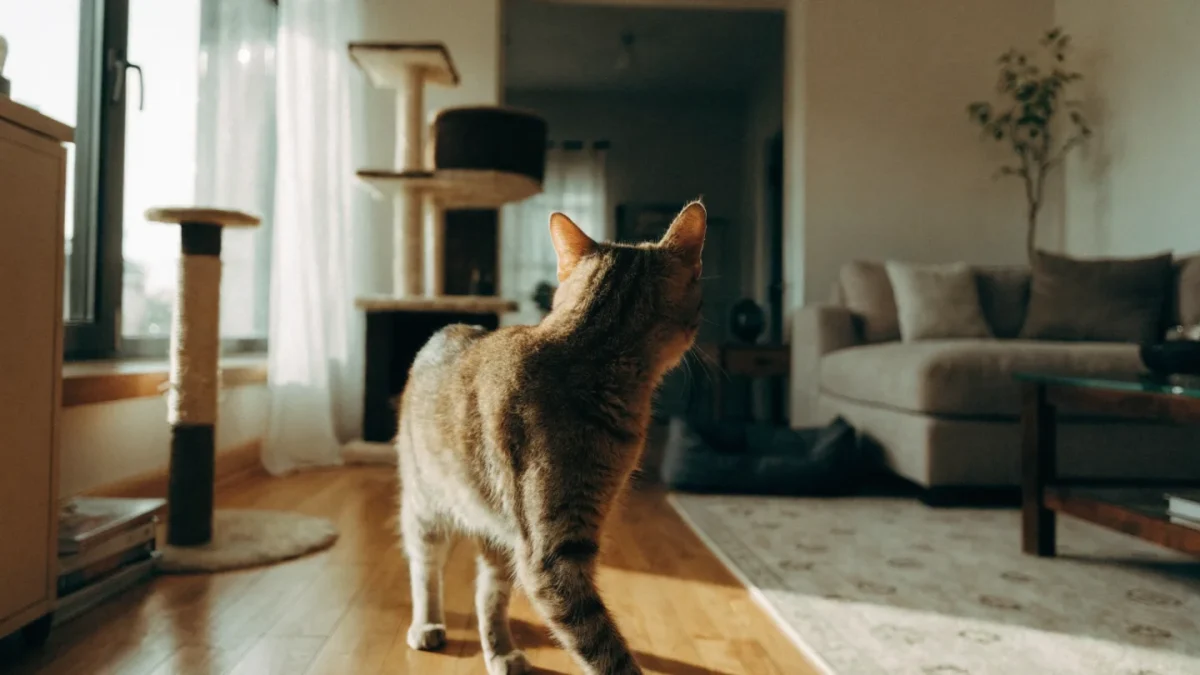
When I moved into my current apartment with Miso, Fig, and Benny, my standards were straightforward: enough space to fit all the pet furniture without it looking like I'd given up on having a home. That turned out to be a higher bar than I expected.
The cat trees alone took up approximately 40% of the mental real estate I'd allocated to apartment hunting. Where does the dog bed go without blocking traffic flow? Is there a wall that can hold a cat shelf without looking completely unhinged? Will the landlord notice that I've installed seven cabinet latches?
Three years in, I've arrived at something that actually works — a space where the pets have what they need and I still recognize my home as mine. Here's what I've learned about making any living space genuinely pet-friendly, whether you've got a studio or a four-bedroom.
The Core Principle: Design For Behavior, Not Just Comfort
A lot of pet-friendly home content focuses on pet beds, water fountains, and stylish food bowls. Those matter. But the real thing that makes a home work for pets is designing around how animals actually behave — their instincts, their territory needs, their anxiety triggers.
A cat who can't get off the floor when stressed is going to be stressed constantly. A dog who has nowhere to burn energy is going to find somewhere to put it, usually somewhere you won't enjoy. A litter box shoved in a hard-to-access corner is going to be avoided. These aren't preference issues — they're behavioral ones, and they determine whether your home is actually livable for both you and your pets.
For Cats: Think Vertical
Cats don't just use floor space. They use the entire room — or they want to. Height gives cats safety, vantage points, and a way to manage interactions with other animals (or people) without conflict. A cat who can get up high when they need to decompress is less likely to become anxious or reactive.
What vertical space actually looks like
- A cat tree or cat tower placed near a window (window access is the bonus, not the primary point)
- Wall-mounted cat shelves, which work brilliantly in small spaces because they go up instead of out
- Cleared shelf space on existing furniture — designating a bookshelf level as cat territory costs nothing
- Cat bridges or walkways for genuinely committed cat households (yes, I have seen this done in studios and it looks incredible and I respect it deeply)
The height doesn't need to be dramatic. Even getting cats three or four feet off the floor makes a real difference in how secure they feel.
Scratching posts are not optional
They're not just a nice addition. Scratching is a physical and psychological need for cats — it conditions their claws, stretches their spine, and marks territory. If you don't provide scratching surfaces, they'll use what's available, which is usually your couch.
The post needs to be tall enough for a full stretch (most cats need at least 28–30 inches), stable enough not to wobble, and placed where the cat actually spends time — not tucked in a corner where you won't see it. Both Miso and Fig have their preferred posts. Miso's is near the living room window because that's her territory. Fig's is near the hallway because that's where he likes to announce himself when I come home.
Texture matters too. Some cats want sisal, some want cardboard. If your cat is scratching the carpet but ignoring the sisal post, try a flat cardboard scratcher on the floor.
Litter box placement
The rule of thumb is one box per cat plus one extra. In a small space, that math can feel brutal — but a single box for multiple cats is one of the fastest routes to litter box avoidance.
Placement matters as much as quantity. Cats want privacy and escape routes — not a box wedged in the tightest corner of the bathroom where they feel trapped. Behind a toilet can work if there's genuine clearance. A dedicated cabinet conversion is popular for apartments. Avoid putting the box right next to the food bowl.
For Dogs: Energy Outlets and Clear Zones
Dogs need two things in a home: a place to relax that's genuinely theirs, and enough physical and mental exercise that they're not looking for creative ways to fill the gap.
The dog zone
A bed or crate in a low-traffic corner gives a dog a predictable safe space — somewhere they know is theirs where they won't be stepped over or startled. Dogs who have a designated spot tend to use it. Dogs who don't tend to be underfoot.
Benny has a large orthopedic bed in the corner of the living room where he can see the front door. This was not an accident. Beagles are scent hounds with a surveillance instinct, and giving him a spot where he can observe the comings and goings of the household keeps him calm and occupied.
Exercise as a setup issue
An under-exercised dog is not a dog who will sit quietly on their bed. They'll redirect that energy into the home — barking, destroying things, pacing. How you structure exercise depends on your living situation, but the point is that a pet-friendly home partly means having a system for energy management.
Dog parks, regular walks, puzzle feeders, indoor play sessions — what works varies by dog. But if your dog is regularly destroying things or seems restless, the solution is usually more enrichment, not more rules.
Containing the dog in a new space
If you've just moved or have a young dog in a new home, limiting their access initially while they learn the rules of the space is practical, not punitive. Baby gates and closed doors let you manage where the dog goes until they understand what's off-limits.
Room by Room: Where to Focus
Living room
This is the highest-use space and typically the most contested. Key things:
- A designated pet zone that doesn't block traffic flow
- Scratch protection on upholstered furniture if you have cats (throws, arm covers, deterrent strips on corners)
- Cord management — both for safety and because cats find cords inexplicably interesting
- Pet beds/blankets that are easy to wash, positioned where pets actually choose to lie
Kitchen
Secure cabinets at floor level — especially if your dog is counter-height or your cat is a determined opener. Keep trash behind a cabinet door. Don't leave food accessible. Benny once got into a bag of flour I left on the counter for about four minutes. The aftermath was genuinely impressive.
Bathroom
Keep toilet lids closed (some cats will drink from the toilet; it's not just a cliché). Store cleaning products and medications in closed cabinets — chemical exposure is a real risk for pets who explore. If this is where your cat's litter box lives, make sure ventilation is adequate.
Bedroom
This is personal choice territory. Plenty of people share their bed with pets without issue. Others prefer the bedroom as a pet-free zone for sleep quality reasons. What matters is consistency — if the bedroom is off-limits, it should be consistently off-limits so the rule is clear.
Flooring: The Ongoing Negotiation
Hard floors are easier to clean but can be slippery for dogs, especially older ones. Area rugs help traction but require more maintenance. Carpet holds pet hair and odor but is soft underfoot. There's no universally right answer — it's trade-offs.
Rugs with low pile are easier to vacuum and less likely to become hair traps. If you have a dog who's older or has joint issues, non-slip options on hard floors matter a lot.
If you're choosing new flooring and you have pets, prioritize scratch resistance and ease of cleaning over aesthetics — pet-caused damage to floors happens gradually and is demoralizing to notice slowly.
The Smell Question
Pet homes smell like pets to some degree. This is not fully preventable; it's only manageable. Things that actually help:
- Washing pet bedding regularly (more often than you think — weekly if possible)
- Air purifiers with HEPA filters, which capture pet dander and reduce allergens
- Enzymatic cleaners for accidents, which break down organic matter rather than just masking smell
- Consistent vacuuming — the single biggest source of pet smell in fabric-heavy rooms is accumulated hair and dander
See the full guide to odor control in pet homes for what actually works versus what just temporarily masks.
When You're Renting With Pets
Renting adds a layer of complexity — you're working within someone else's property and rules. The full guide to navigating landlords, pet deposits, and lease negotiations covers this in depth. Short version: know what you're agreeing to, document everything, and address pet-related wear proactively rather than hoping it won't be noticed at move-out.
The Real Question
The real question when making a home pet-friendly isn't "what do I add?" — it's "what does this animal actually need to feel secure and behave well, and how do I provide that within the space I have?"
For setting up your apartment for cats specifically, we go deeper on vertical enrichment, litter placement in small spaces, and managing territory when multiple cats share a small footprint.
The short version: it's almost always possible. The apartment isn't too small; the setup just needs to match the animal.
FAQ
Is a small apartment really okay for a cat?
Yes, generally — cats care much more about vertical space and enrichment than square footage. A well-set-up studio with a cat tree, scratching options, and window access will make a cat happier than a large home with bare walls and nothing to do. The size of the space matters less than what's in it.
Can a large dog live in an apartment?
Yes, with caveats. Large dogs need adequate exercise — which means daily walks and ideally access to somewhere they can move at a higher energy level. Their size doesn't automatically make them worse apartment dogs; some large breeds are actually calmer indoors than smaller, higher-energy breeds. What matters is whether their exercise needs are being met.
My cat keeps scratching the couch no matter what I do. What actually works?
Usually it's a placement issue — the scratching post isn't where the cat wants to scratch, which is where they already are. Put the scratching surface right next to the furniture they're using. Use deterrents (double-sided tape, covers) on the couch corner in the same move. Redirect, don't just prohibit. Gradual relocation of the post once the new habit is established works better than placing it where you want it from the start.
How do I control pet hair in an apartment?
Consistency matters more than any particular tool. Regular vacuuming, lint rollers on upholstery, washable covers on furniture surfaces. Pet hair isn't a problem you solve once — it's something you manage as a regular part of cleaning. A decent vacuum with pet attachments helps a lot.
What's the minimum I need to add to a rental apartment to make it pet-friendly?
At minimum: a stable scratching post (cats), a proper dog bed (dogs), and a litter box in a workable location (cats). Beyond that, it depends on your animals. A young, active cat without vertical options will be considerably harder to live with than an older cat who mostly naps. Know your pet's energy level and behavioral needs before deciding what's "enough."
How do I pet-proof without causing damage the landlord will charge me for?
Use damage-free hanging options for wall shelves (command strips rated for the weight). Use temporary deterrents that don't require drilling or painting. Protect furniture corners with removable guards. Keep carpet and flooring protected where pets spend most time. Document the state of the apartment when you move in with photos, so pre-existing damage is on record. And read what your lease actually says about pets — specifically whether you're responsible for pet-related wear.