

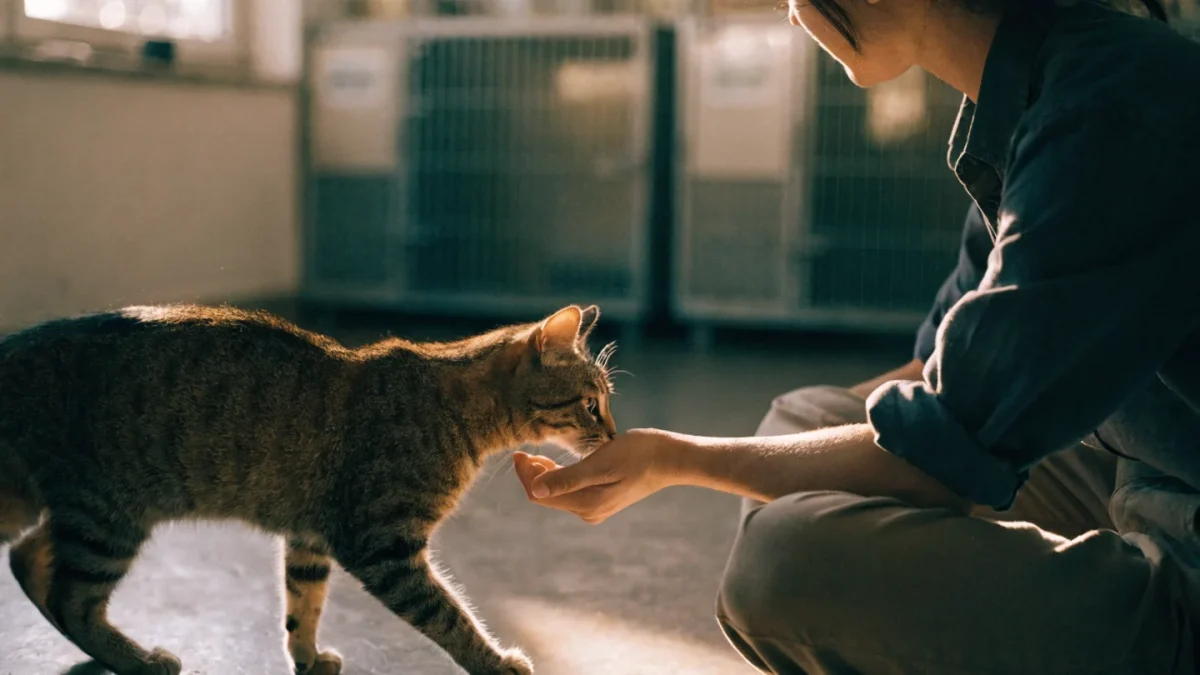
I almost walked out of the shelter the day I adopted Fig.
He was in a back room they called the "quiet room" — not because he was calm but because he'd been too stressed for the main adoption floor. A volunteer told me he'd been there three months and basically didn't let anyone touch him. She said it very neutrally, the way shelter workers learn to say things that might sound discouraging without making them sound like warnings.
I asked if I could sit in the room with him for a few minutes. He spent the whole time under a chair. I left, went home, thought about it, and went back the next day. Then the day after that. On day three he walked up to my knee and sniffed me once, then retreated. I adopted him that afternoon.
That was four years ago. He currently sleeps on my face.
The point isn't that every shelter story is like Fig's — it's that the adoption process has more nuance than "you pick a pet and take it home." This guide is everything I wish I'd known before I started, both from my own experiences adopting Fig, Miso, and Benny, and from a lot of conversations with shelter workers, rescue volunteers, and friends who've navigated this in different ways.
Before You Set Foot in a Shelter
The single most useful thing you can do before you ever walk into a shelter is get honest with yourself about your actual life — not your aspirational life.
I say this not to be a buzzkill but because I've watched friends adopt dogs who were completely wrong for their lifestyle, then struggle through the first year wondering what they did wrong. Nothing was "wrong" — the match just wasn't right.
Questions worth sitting with:
How much time do you actually have? Be specific. Not "I'll make time" — how much time does your schedule currently have for walks, play, training, and just presence? Dogs have different needs than cats, but even cats need engagement, especially younger ones.
What's your living situation? Apartment with no outdoor space, small house with a yard, shared rental where other tenants have strong opinions about animals — all of these shape what kind of pet will thrive where you live. Some shelters won't adopt certain dogs to apartment dwellers regardless of the dog's actual temperament. Worth knowing before you fall in love.
Have you rented with pets before? If you're renting, your lease matters. Get this sorted before adopting. Nothing is worse than finding your perfect animal and then discovering your landlord won't allow pets over a certain weight.
Who else lives in your home? Kids, other pets, a partner who's "fine with a cat" but not enthusiastic — all of these are part of the picture. Shelters take compatibility seriously because it affects whether adoptions stick.
What are you prepared for financially? Adoption fees are usually modest — anywhere from nearly free to a few hundred dollars, typically covering spay/neuter, initial vaccines, and microchipping. But ongoing costs add up fast: food, routine vet visits, occasional unexpected vet visits, supplies. Not trying to scare you. Just: go in clear-eyed.
Energy level and lifestyle match. This is the big one. A high-energy dog who needs two hours of exercise daily is a genuinely bad fit for someone who works long hours and likes quiet evenings. Not because that person is lazy but because that dog will be miserable. Shelters know their animals — ask them.
Finding the Right Shelter
There's no one type of shelter, and the differences matter.
Municipal shelters (city/county animal control) are typically government-run and take in strays and surrendered animals regardless of space. They often have shorter hold times and more time-sensitive adoptions. The staff are usually knowledgeable and overworked. Animals here may have less behavioral history on record simply because nobody had time to do detailed assessments.
Private nonprofits often have more capacity for individual assessment and can tell you more about a specific animal's personality. They may have stricter adoption criteria — which some people find frustrating and others find reassuring.
Foster-based rescues don't have physical facilities — animals live in volunteer homes. This means you often get much richer information about what an animal is actually like in a home environment. How does he do with other pets? With kids? Does he bolt for the door? Foster families know. I found this was the most useful setup when I was deciding between adopting a second cat.
Breed-specific rescues exist for nearly every breed if you have a preference. They often specialize in dogs pulled from high-kill shelters or owner surrenders of that specific breed.
Most areas have online databases that aggregate listings from multiple shelters and rescues. Browse them. You can filter by species, age, size, and sometimes temperament. But I'd encourage you not to get too attached to a specific animal before visiting — profiles don't capture the full picture, and the dog who looked perfect in photos might feel wrong when you meet, while the one you scrolled past might be your actual match.
What to Expect When You Visit
Walk in without an agenda if you can. I know that's hard when you've been scrolling shelter listings for three weeks, but it genuinely helps.
Let the staff guide you. They spend all day with these animals. Ask them directly: "I have [X situation] and I'm looking for something that [Y]. Who do you think I should meet?" Good shelter staff will tell you things that aren't in the listing — this dog resource guards around food, this cat does best as an only pet, this rabbit has never lived with dogs and we don't know how she'd react.
When you meet an animal:
- Don't rush it. Give them time to settle. An animal in a shelter environment is stressed — what you're seeing is not their baseline personality, especially in the first few minutes.
- Observe, don't perform. You don't need to impress them. Just be calm and present.
- Ask to see them outside the kennel. Walking a dog or sitting with a cat in a separate room gives you much more information than meeting through a gate.
- If you have kids or other pets at home, ask about meet-and-greet policies. Many shelters allow you to bring in resident pets to test compatibility before adoption is finalized. This is worth doing.
If you visit and don't feel a connection, that's okay. Come back. Talk to different staff members. Sometimes the right animal is there and you just haven't met yet.
The Adoption Application
Most shelters require an application before you can adopt. This doesn't mean they're interrogating you — they're trying to make a good match. If you approach it that way rather than as a gatekeeping obstacle, it goes a lot smoother.
Common questions include your housing situation, current and past pets, lifestyle, work schedule, how you'd handle specific scenarios (what would you do if your pet damaged furniture, what's your plan for the pet if you travel). Some ask for vet references from previous pets.
Answer honestly. This benefits you as much as the shelter. If you describe your lifestyle inaccurately to get the dog you want, you may end up with a dog who doesn't fit — and then what?
For more on what shelters actually ask and why, see a deeper walkthrough of the adoption process itself.
Some people get anxious about being "rejected" by a shelter. It does happen, and it can sting. But it's not a judgment of you as a person — it's a judgment of fit. Often you can ask why and address whatever concern came up. Sometimes a shelter will decline for a specific animal but approve you for a different one.
Adoption Fees and What's Usually Included
Fees vary enormously — from $0 during fee-waived promotions to $300+ for some rescues. Don't let a higher fee put you off automatically — it often reflects more investment in the animal's medical care and behavioral assessment.
Most adoption fees cover some combination of:
- Spay or neuter (if not already done)
- Core vaccines
- Microchip and registration
- Flea/tick treatment
- FIV/FeLV testing for cats
- Heartworm testing for dogs
- Initial deworming
Some include a free vet visit within the first 30 days or a brief trial period. Ask specifically what's covered before you finalize.
After You Say Yes: The Wait
Some shelters let you take your new pet home the same day the application is approved. Others have a waiting period — sometimes a few days for a final vet check, sometimes because the animal needs to be spayed/neutered before going home.
Use this time well. Get your house ready. Not in an anxious way — just practically.
For cats: a dedicated room to decompress in for the first few days is one of the most useful things you can do. I didn't do this with Miso. She spent three days behind my dresser and I spent three days on the floor trying to coax her out with treats. The decompression room is a kindness.
For dogs: remove things that are going to cause problems (trash cans without lids, shoes near the door, food on low counters — Benny found a full baguette on day one). Get your leash and collar situation sorted before they arrive. Confirm where they'll sleep.
You'll want food — ideally the same brand the shelter was using, at least initially, to avoid digestive upset during the transition. Ask the shelter what they've been feeding.
If you're still figuring out what supplies you need before the big day, there's a solid [pet adoption checklist](coming soon) that covers the basics without the overload.
The First Days and Weeks
I will be honest with you: the first week is often hard.
Not always. Some animals slide right in — Benny was 90% settled within 48 hours. But Fig took three months before he'd let me touch him. Miso was easier than Fig but harder than Benny — she hid for a week, then emerged and immediately started telling me what she thought of things. (Loudly.)
The shelter or rescue may mention something called "the 3-3-3 rule" — 3 days to decompress, 3 weeks to learn the routine, 3 months to feel at home. I've found it's a useful frame, not a hard timeline. Some animals move faster. Some take longer. The more traumatic the animal's background, the longer they may need.
What actually helps:
Consistent routine matters more than you'd think. Feeding at the same times, walks at the same times, same greeting when you come home. Predictability is safety for an anxious animal.
Let them come to you. This is the hard one. When you've just adopted a cat who hides under the couch, every instinct says to go to them and reassure them. But forced interaction increases stress. Sit nearby. Read a book. Let them decide when they're ready.
Don't throw a party. Tell your friends to give it a week or two before coming over to meet the new pet. I know everyone is excited. So is the pet — in the wrong direction.
Regression is normal. I've seen this misunderstood a lot. An animal who seems settled at day 5 might have a harder day at day 10 as the reality of the new environment sets in. Not a failure. Just the process.
For cats specifically, I think about what I was thinking about when I adopted Fig: the first days are not about bonding. They're about trust, and trust takes time.
Common Misconceptions About Shelter Pets
"Shelter animals are there because something's wrong with them." Some animals are surrendered because of genuinely behavioral reasons that are hard to address. But most are there because of life changes: divorce, housing change, financial hardship, allergies, a new baby. The most common reason for surrender is owner circumstance, not animal behavior.
"Older pets are harder to bond with." Genuinely not true in my experience. Benny was eight when I adopted him, and our bond formed faster than I expected — partly because adult animals have a settled personality, and partly because I think older animals appreciate stability in a way that's different from the puppy/kitten frenzy.
"You can't teach an old dog new tricks." (I had to include this one because it's just wrong.) Benny learned sit, stay, and counter-leaving-things-alone within his first month with us. The counter thing took a little longer. Okay, he still does it. But he sits beautifully.
"Rescue pets come with baggage." Some do. Some genuinely have trauma histories that require patience and sometimes professional support. But "baggage" gets used in ways that make shelter pets sound damaged when most of them are just… animals who need a home, the same as any other animal.
The Part No One Talks About Enough
There's a thing that happens somewhere around week three for a lot of new pet owners. The excitement has settled, the disruption hasn't fully resolved, and you're suddenly very aware of the responsibility you've taken on. It's sometimes called "the puppy blues" though it applies to any pet.
It doesn't mean you made a mistake. It means you're in the transition, not through it yet.
The closest I came to this was with Fig — when he'd been here six weeks and was still flinching when I walked toward him. I remember sitting on the floor of my bedroom at 11pm wondering if I'd done the right thing for him, whether I was making him more anxious, whether he'd have been better off staying at the shelter. My best friend talked me down. She said, "You're the only person who spent three days sitting in that room just to meet him."
She was right. And Fig was right. It just took more time than I expected.
Frequently Asked Questions
What if I get home and the pet seems completely different than at the shelter?
Almost always. This is normal. Shelter behavior is high-stress behavior — what you're seeing is how they cope with uncertainty, not who they are. The calmer, more settled version comes out over weeks. That said, if you see something concerning — significant aggression, extreme fear that doesn't improve — contact the shelter. Most have a behavioral support line or can recommend resources. Most shelters would rather help you work through it than see the animal returned.
Can I return an adopted pet if it doesn't work out?
Yes, and you should. I know that feels like failure, and it doesn't feel good — but every good shelter and rescue has a return policy specifically because they know not every match works. The alternative is an animal in a home that isn't right for them, which is worse for everyone. If you're struggling and have genuinely tried to work through the adjustment, the shelter is the resource, not the last resort.
Should I adopt two pets at the same time?
I have opinions on this. For cats, two kittens together is often genuinely easier than one alone — they entertain each other. But for first-time owners, or when introducing an animal to a household that already has pets, one at a time lets you actually understand each animal as an individual. You can always adopt a second pet after the first is settled.
How do I know if a shelter is reputable?
A few things I look for: staff who ask you as many questions as you ask them, visible medical records and vaccination history for the animal, a willingness to tell you about an animal's challenges (not just strengths), and a return policy. A shelter that makes the process easy with no questions asked is not necessarily a good sign — good shelters are invested in the match, not the placement numbers.
What's the difference between "fostering to adopt" and regular adoption?
Fostering to adopt is an arrangement where you take the animal home as a foster first, with the option to officially adopt after a set period. It can work well if you're unsure about a specific animal or want to see how they do in your home before committing. The downside: if it doesn't work out, you still go through the loss of returning them. Not easier, just more information upfront.
Does it matter if I adopt from a shelter versus a rescue?
Both do the same core work — caring for animals and finding them homes. The practical differences are in process, staffing, and how much behavioral information they've gathered. Rescues, especially foster-based ones, often have more detailed profiles because the animals live in homes rather than kennels. Neither is inherently better — they're different structures with the same goal. For more thoughts on this, see the piece on shelter adoption versus going through a breeder, which gets into the broader question of source.
Adopting from a shelter is one of the few things I've done in my adult life that I have never once regretted — not on the hardest adjustment days, not on the vet bills that made me briefly recalculate my life choices, not even when Fig knocked my entire coffee off the counter at 7am and watched it happen with zero remorse.
Worth it. Genuinely and completely worth it.
If you're thinking about it: go. Sit in the room. See who walks up to you.
For everything you'll need once you get home, start with everything you need to know as a new pet owner — it covers the practical side of that first year in a lot more detail.