

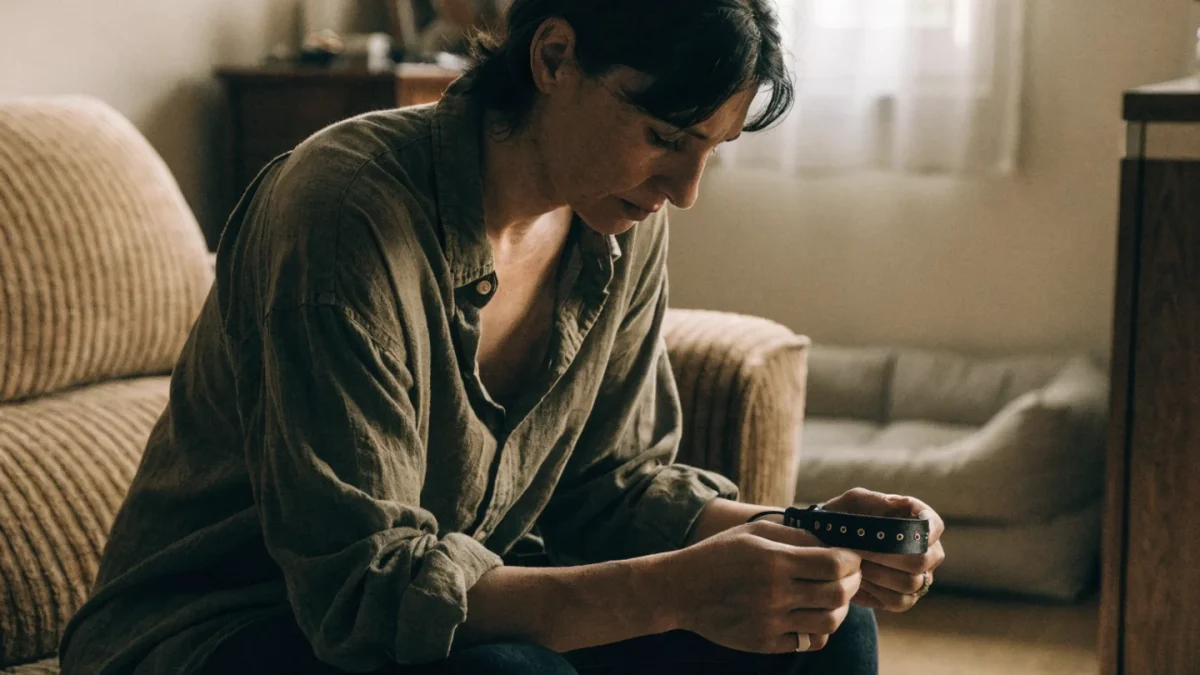
The morning after we lost our first family dog — a scrappy terrier mix named Biscuit — my mom set the table for breakfast and put down a placemat where Biscuit's bowl used to be. She realized what she'd done, picked it back up, and sat down at the table without eating. Nobody said anything. We all understood.
That was over twenty years ago and I can still picture the placemat.
If you're reading this, you might be in a similar place right now. Maybe your pet just died, or maybe it was weeks ago and you're surprised by how much it still hurts. Maybe you're bracing yourself because you know the goodbye is coming. Whatever brought you here — I'm sorry. And I want you to know that what you're feeling is exactly what grief is supposed to feel like.
This isn't a guide that's going to fix anything. Grief doesn't work that way. But it's an honest look at what happens when you lose a pet, what's normal, what might surprise you, and what's helped me and the people I've talked to who've been through it.
Why Pet Grief Hits So Hard
There's a specific kind of pain that comes with losing a pet, and it often catches people off guard. You might expect to be sad. You might not expect to feel like the floor has dropped out from under you.
Part of it is the dailiness. Pets are woven into the fabric of your routine in a way that almost nothing else is. They're there when you wake up. They're there when you eat. They greet you at the door. They follow you to the bathroom. When they're gone, every ordinary moment has a hole in it.
I think about this with Benny sometimes — my senior beagle mix who is, for now, doing just fine. But he's old enough that I've started noticing things. The way he takes longer on the stairs. The way he sometimes just stands in the kitchen looking confused. And I catch myself mentally rehearsing for something I'm not ready for. That's the thing about living with a pet whose lifespan doesn't match yours. The math is always there.
The other reason pet grief is so intense is the relationship itself. Your pet didn't judge you. Didn't hold grudges. Didn't need you to perform a version of yourself. The bond is uncomplicated in a way that very few human relationships are, and losing that kind of presence leaves a gap that's genuinely hard to describe to someone who hasn't experienced it.
What Grief Actually Looks Like
Grief isn't one feeling. It's a bunch of feelings wearing a trench coat, taking turns showing up unannounced.
You might feel:
- Sadness that sits in your chest like a weight
- Anger — at yourself, at the vet, at the situation, at nothing in particular
- Guilt about decisions you made or didn't make
- Relief, especially if your pet was suffering — and then guilt about the relief
- Numbness, like you're watching everything from behind glass
- Disorientation, reaching for a leash that's hanging by the door, listening for a sound that isn't coming
Some of these will cycle. Some will overlap. Some will show up three weeks later when you thought you were doing better. All of them are normal.
There's a well-known model of grief stages — denial, anger, bargaining, depression, acceptance — and it can be useful as a rough map, but grief doesn't actually move in a straight line. It's more like weather. Some days are clear. Some days you get hit by a storm you didn't see coming. Neither pattern means you're doing it wrong.
The First Few Days
The first days after losing a pet are strange. Your body is still on autopilot — you might still glance at the spot where their bed was, or catch yourself starting to prepare their food. Some people describe it as a kind of physical confusion, like muscle memory that hasn't caught up to what your brain already knows.
Here's what I'd say about the first few days:
Let yourself fall apart. If you need to cry at your desk, cry at your desk. If you need to lie on the floor, lie on the floor. This is not the time for composure.
Tell someone. Even if it's just one person. Even if it's a text that says "my cat died and I'm not okay." The instinct is often to keep it private, but isolation makes grief heavier.
Don't rush to clean up. Some people immediately wash the pet's bedding, put away the bowls, clear the toys. Others can't bear to touch anything for weeks. There's no right speed. Do what feels manageable, not what feels expected.
Eat something. Drink water. I know this sounds basic. But grief has a way of making you forget you have a body that needs things.
Take time off if you can. Not everyone has this option, and that's its own frustration. But if you can swing a day or two — take them. You wouldn't go to work the day after losing a family member, and that's what this is.
When Other People Don't Get It
This is one of the hardest parts of pet grief, and I'd be lying if I said it doesn't still make me a little angry.
"It was just a pet." "Can't you just get another one?" "At least it wasn't a person."
People who say these things usually aren't trying to be cruel. They just don't understand, because they haven't had the kind of relationship with an animal where the loss would break them. But understanding their intent doesn't make it hurt less when you're standing in it.
Here's what I've learned: You don't owe anyone an explanation for the depth of your grief. You don't need to justify why this hurts. And you're allowed to pull back from people who make you feel like you should be over it already.
Find your people — the ones who send a card, who ask how you're doing a week later, who say "I'm so sorry" and mean it. They exist. Lean toward them.
Taking Care of Yourself While Grieving
Grief is exhausting in a way that's hard to explain until you're in it. It's not just emotional — it's physical. You're tired. Your appetite is off. Your sleep is disrupted. You might have headaches or feel foggy.
Some things that help (not fix — help):
Routine. Ironically, the pet that just died was probably the anchor of your daily routine. Without them, mornings and evenings can feel shapeless. Try to build some structure back in — even if it's just "coffee at 7, walk at 8, eat something at noon."
Movement. A walk around the block. Not because exercise cures grief — it doesn't — but because moving your body when your brain is stuck in a loop can shift something just enough.
Writing. Some people find it helpful to write about their pet. What they were like. What they did that made you laugh. The weird little habits nobody else would know about. You're not writing for an audience. You're writing so the details don't fade.
Talking. To friends. To a therapist. To a pet loss support line. Out loud, not just in your head. There's something about saying "I miss her" that's different from thinking it.
Boundaries. You're allowed to say no to plans. You're allowed to mute group chats. You're allowed to skip the family dinner. Protecting your energy right now is not selfish — it's necessary.
If You Have Other Pets
One thing that surprised me — and that I've heard from a lot of other multi-pet households — is how your other pets might be grieving too.
When Miso lost a cat companion years before Fig came into our lives (a foster we'd had for several months), she spent about a week walking through the apartment meowing in rooms she didn't normally go into. Like she was looking for something. She eventually stopped, but for that week, her grief was visible in a way I wasn't prepared for.
Pets notice absence. Dogs may become lethargic, lose interest in food, or seek more physical closeness. Cats may vocalize more, change their sleeping spots, or seem restless. These are real responses to a real change in their social environment.
You can help by keeping their routine as stable as possible, offering extra attention without being overwhelming, and watching for signs that their behavior change is lasting long enough to warrant a vet conversation.
The strange upside to having other pets when one dies is that they give you a reason to get out of bed. You still have to feed them. You still have to walk them. Benny doesn't know that my heart is breaking — he just knows it's 7 AM and he'd like his breakfast now, please. That kind of mundane obligation can be a lifeline.
What About Getting Another Pet?
I'm not going to tell you when it's the right time. No one can, because there isn't a universal answer.
Some people need months or years before they're ready. Some people adopt within weeks and feel no guilt about it. Some people never get another pet. All of these are valid.
What I will say is this: getting a new pet is not replacing the one you lost. It never could be. A new pet is a new relationship, a new set of quirks and habits and inside jokes. It doesn't erase the grief — it exists alongside it.
The question isn't "is it too soon?" The question is "am I doing this because I'm ready to love a new animal, or because I'm trying to not feel this pain?" Both motivations are understandable. But one of them sets the new pet up for an unfair comparison.
When I adopted Fig — my black cat, former feral — it was about a year after that foster had gone. I wasn't looking to replace anyone. I was visiting the shelter for a completely different reason and he was sitting in the quiet room, not making eye contact with anyone, and something about him made me sit down on the floor and wait. That's a different story. But the point is: I wasn't on a timeline. It happened when it happened.
Memorializing Your Pet
Some people need a ritual. Some don't. Neither is wrong.
If you're the kind of person who finds comfort in marking the loss, there are a lot of ways to do it. Plant something. Frame a photo. Write a letter. Get a small piece of jewelry or art made. Donate to a shelter in their name. Create a photo album and let yourself cry while you make it.
If you're the kind of person who doesn't want any of that — who just wants to carry the memory quietly — that's equally fine. Grief doesn't require a ceremony.
The only thing I'd gently suggest is to not throw everything away right away. The collar, the favorite toy, the blanket they slept on. You might not want to see them right now, but future-you might be glad they still exist. Put them in a box. Put the box in a closet. You can decide later.
When Grief Doesn't Ease
Most people find that the intensity of pet grief softens over time. Not disappears — softens. The sharp edges round off. You can talk about your pet without crying. You can see their photo and smile instead of wince.
But sometimes grief doesn't follow that trajectory. If you're finding that weeks or months have passed and you're still unable to function — unable to work, eat, sleep, or find any moments of lightness — that's worth paying attention to. Grief that stays at its peak intensity for an extended period can sometimes indicate that the loss has triggered something deeper, and talking to a therapist who understands pet bereavement can genuinely help.
This isn't a sign of weakness. It's a sign that the love was profound and your brain needs some support processing it.
What I Know for Sure
I've lost pets. I've watched friends lose pets. I've sat in vet offices holding someone's hand while they said goodbye. And the thing I come back to every time is this:
The grief is evidence of the life you built together. Every walk, every nap on the couch, every time they curled up next to you when you were having the worst day — that mattered. It was real. And the fact that it hurts this much is proof that it meant something.
You're not being dramatic. You're not overreacting. You lost someone who loved you simply and completely, and you're allowed to fall apart for a while.
It will not always feel like this. But right now, it feels like this, and that's enough to take seriously.
FAQ
Is it normal to grieve a pet as much as a person?
Yes. Research on pet bereavement consistently shows that the grief people feel after losing a pet can be comparable in intensity to grieving a close human relationship. The depth of your grief reflects the depth of the bond, not a ranking of whose loss "counts" more.
How long does pet grief last?
There's no standard timeline. Some people feel significantly better within a few weeks. Others carry a low-grade sadness for months. The acute, all-consuming stage typically eases within the first few weeks, but grief can resurface on anniversaries, holidays, or random Tuesday afternoons when you hear a sound that reminds you of them.
Should I take time off work after losing a pet?
If you can, yes. Even one or two days can make a difference. A growing number of employers are starting to recognize pet bereavement as a legitimate reason for time off — a survey reported by the Society for Human Resource Management found that some companies now offer one to three days of paid pet bereavement leave, though it's far from universal. If taking formal leave isn't possible, see if you can work from home or lighten your schedule for a few days.
Is it okay to cry in front of my other pets?
Absolutely. Your pets aren't going to judge you for crying, and there's no evidence that your emotional state will traumatize them. Some pets may actually come closer when they sense you're upset, which can be comforting for both of you.
When should I consider seeing a therapist for pet loss?
Consider it when your grief is interfering with daily functioning for more than a few weeks — when you can't work, can't sleep, can't eat, or when the sadness feels like it's getting heavier rather than gradually easing. A therapist who specializes in grief or specifically in pet bereavement can provide tools that friends and family may not be able to offer.