

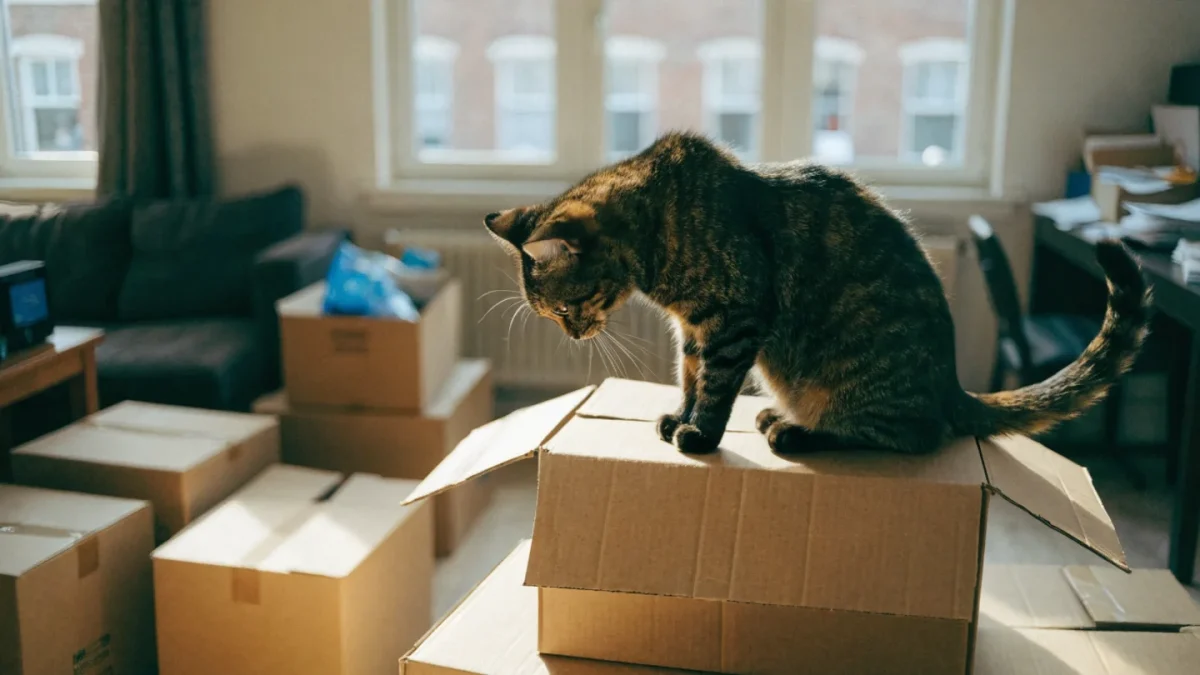
The last time I moved, I had two cats, a dog, and approximately one functioning brain cell left by the end of the week.
Miso, my tortoiseshell, spent three days wedged behind the washing machine. Fig, who had already come so far from his feral days, found a gap in the bathroom cabinet and stayed there like he was considering a new career as a plumber. Benny the beagle mix, bless him, adapted within about 36 hours because he genuinely does not care where he is as long as food and cuddles are available. It was a study in personality differences that I had neither the time nor the emotional bandwidth to appreciate in the moment.
Here's what I learned the hard way, and what I've since pieced together from talking to other multi-pet households: moving with pets doesn't have to be chaotic. But it does require actually planning for the pets — not just as an afterthought after you've booked the truck and argued about who's keeping the kitchen table.
Why Moving Is Hard on Pets (And Why That's Normal)
Pets — especially cats — are territorial creatures. Their sense of security comes from familiarity: the smells of their space, the location of their food bowl, which corner of the couch is theirs. A move strips all of that away in a single day.
Dogs tend to be more adaptable because they anchor to people rather than places. Most dogs are more stressed by their owner's anxious energy on moving day than by the physical transition itself. Cats are the opposite — they anchor to territory. The same space, over and over, is safety.
This doesn't mean cats can't adapt. They absolutely can. But understanding why they're stressed helps you support them in ways that actually work, rather than just opening the cat carrier at the new house and hoping for the best.
Phase 1: The Weeks Before the Move
Keep routines locked in as long as possible
The packing phase is when stress starts for pets, not moving day. Boxes appearing, furniture getting shifted, your own elevated anxiety — all of it registers. The single most effective thing you can do during this phase is keep feeding times, walk schedules, and play sessions as consistent as possible. Routine is the anchor when everything else is changing.
Introduce carriers and crates early
If your cat only sees their carrier when it's time to go to the vet, of course they bolt the moment it comes out. In the weeks before a move, leave the carrier out with a familiar blanket inside. Let it become part of the furniture — something unremarkable to nap near, maybe eventually inside.
This sounds so simple that people dismiss it. Don't.
For dogs, if they're crate-trained, make sure the crate is still part of daily life so it doesn't suddenly feel like confinement.
Get vet records in order
If you're moving any meaningful distance, sort out vet record transfers before you go. You don't want to be scrambling to find vaccination records when you're trying to register with a new vet in a new city. Get physical copies or request that records be sent digitally to your email, so you have them regardless of what happens.
If your pet takes regular medication, make sure you have enough supply to get through the move and the first few weeks while you find a new vet.
Update microchip registration and ID tags
This matters more than most people think about pre-move. If your pet slips out during moving day — which happens more than you'd expect, with doors propped open and strangers coming in and out — you want current contact information on their collar and in the microchip registry. Update both before you're packing boxes.
Vet visit if anxiety is a concern
If you have a pet who is genuinely anxious — not just "mildly freaked out by boxes" anxious but "this is a disaster waiting to happen" anxious — talk to your vet before moving day about options. There are anti-anxiety supplements and, for severe cases, short-term medications that can take the edge off. I'm not talking about sedating your pet into oblivion; I'm talking about getting a professional opinion on what might help a specific animal through a specific stressful event.
Phase 2: Moving Day Itself
This is the highest-risk day for pet escapes and the highest-stress day for sensitive animals. Have a real plan for where pets are and who's responsible for them.
The safest option: board them or have someone take them
If you have any flexibility here, getting pets completely out of the house on moving day — whether that's overnight boarding, a friend's house, or a family member taking them — removes the escape risk and the stress of watching strangers haul their entire world out the door. I know it's not always possible financially or logistically, but if you can swing it, it's worth considering.
If pets stay: designate a room and close the door
Pick one room — a bathroom, a bedroom — that gets emptied last. Put the pets in there with food, water, their bed, the litter box (for cats), and a sign on the door that says DO NOT OPEN in all caps. Tell the movers. Tell every single person involved. Close that door and don't open it until the truck is gone.
This sounds obvious. It still gets missed because moving days are chaotic and people forget. The sign on the door is not overreacting.
Keep your energy as calm as you can
Your dog, especially, is reading you. If you're sprinting around in a panic yelling at everyone, your dog is going to be wound up and anxious. Not because they understand what's happening, but because you're clearly alarmed and they take cues from that.
Cats are watching too — they just pretend not to be.
Have a pet essentials bag packed and accessible
Pack a separate bag — not in the moving truck — with everything your pets need for the first 24–48 hours: food, portable water bowl, medications, leash, poop bags, a favorite toy, their familiar blanket. You don't want to be digging through boxes at 10pm to find the cat food.
See the full checklist in our guide on preparing your pet for moving day.
Phase 3: Arriving at the New Home
Let cats explore one room first
This is probably the most well-established piece of cat-moving advice out there, and it's well-established because it works. Set up one room with the litter box, food and water, a bed, and familiar-smelling items — then close it off and let the cat decompress in that smaller territory before they have to process an entire unfamiliar home.
Some cats will be ready to explore in a day. Some will stay in that room for a week. Follow their lead.
Don't move the litter box around
Once you've placed the litter box in the new home, resist the urge to move it as you organize. A cat who can't find their litter box is a cat who will find somewhere else to go, and this is unfortunately one of the more common causes of litter box regression after a move.
Use familiar scents strategically
Unwashed bedding — yours, theirs — in the new space gives pets something that smells like home in a place that doesn't yet. It sounds small but it matters to animals who navigate so much of their world through smell.
You can also take a cloth and gently rub it on your cat's cheek (where their facial pheromone glands are), then rub it on furniture and doorframes in the new home. This transfers their own scent to the new space, which can help it feel less foreign. I've done this with both my cats and I genuinely think it helped, particularly with Fig.
Maintain the routine on day one
Feed at the normal time. Walk at the normal time if you have a dog. Bedtime routine at the normal time. The contents of the day feel completely different — the schedule shouldn't.
Expect a regression period
Some pets handle moves remarkably quickly. Some take weeks. The range is genuinely wide.
Cats might stop eating for a day or two, hide more than usual, or be more vocal. Dogs might be restless, have accidents in the house even if they're well house-trained, or be clingy in a way that's out of character. These are normal stress responses. Most pets are noticeably better within two to four weeks.
What you're watching for is anything that persists beyond that window or escalates — prolonged not eating, severe lethargy, signs of physical illness. Those warrant a vet call.
For setting up your new space, see our complete guide to making any home work for pets.
Specific Situations Worth Covering
Moving with a nervous or reactive cat
Fig came from a feral background and is fundamentally a cat who needs more time than average. When we moved, I gave him a full week in just one room before I opened the door to the rest of the apartment. Even then, I let him dictate the pace — propped the door open and waited for him to choose when to venture out. It took him four days to emerge into the hallway on his own terms.
Rushing a fearful cat doesn't work. It prolongs the adjustment and damages trust. The slower approach always lands better.
Moving with multiple pets
Multiple pets adds logistics and the possibility of inter-pet stress. Animals who get along fine in a familiar home sometimes have friction in a new space because territory has been reset — even animals who've lived together for years can have a brief adjustment period where they're testier with each other. Usually this resolves on its own, but watch for it.
Keep feeding stations separate, give everyone their own "safe spots," and don't expect everyone to get along perfectly on day one in the new space.
Moving in winter or extreme heat
Temperature matters for pet transport. If you're moving in very hot weather, never leave pets in a parked vehicle — even briefly. In cold weather, make sure pets aren't exposed to the elements while you're getting them in and out. Have a plan for where pets go while the door is propped open.
What to Do in the New Neighborhood
Let dogs sniff and explore the new area gradually — a few short walks in the immediate vicinity before expecting them to handle a longer route. Scent-marking their new territory is how dogs establish it as home.
Keep cats indoors for at least the first few weeks in a new home, even if they're usually indoor-outdoor. This is especially important if you've moved to a new neighborhood — you need them to establish the new house as home base before they have access to the outside. An outdoor cat who escapes too early can genuinely get lost trying to return to the old address.
FAQ
How long does it take for a cat to adjust to a new home after moving?
Most cats start to relax within two to four weeks, though some take longer — particularly cats who are naturally anxious or have a feral background. What you're looking for is a gradual return to normal behaviors: eating well, grooming, initiating contact (if they usually do), and using the litter box without hesitation. If things aren't improving after four to six weeks, or if the cat isn't eating for more than a couple of days, check in with your vet.
Should I let my dog free-roam the new house immediately?
You can, though some dogs do better with a slower introduction — particularly if they're anxious or easily overstimulated. Starting with a few rooms and expanding gradually isn't strictly necessary for most dogs the way it is for cats, but if your dog seems overwhelmed, it's fine to limit their access initially.
Is it safe to move pets in a car versus a moving truck?
Pets should always travel in the car with you — never in the moving truck. Moving trucks aren't temperature-controlled in the cargo area, and the noise and motion would be extremely distressing for any animal.
My cat stopped eating after we moved. Is that normal?
Yes, a day or two of reduced appetite is very common during the adjustment period. Keep offering food at normal times, don't switch foods in the middle of a move, and give them the quiet space they need to decompress. If a cat doesn't eat for more than 48 hours, or is also hiding and seems unwell, call your vet. Cats can develop hepatic lipidosis (fatty liver disease) from prolonged not eating.
Do I need to update my pet's microchip when I move?
Yes — and this is one of the most commonly skipped things on the moving to-do list. The microchip itself doesn't need to be changed, but the contact information in the registry does. Log in to whichever registry your pet's chip is enrolled in and update your address and phone number before or immediately after your move.
Can I use calming products to help my pet through a move?
Yes, there are various options — pheromone diffusers and sprays, calming supplements, and in some cases prescription medications for genuine anxiety. Some work better than others, and what works for one animal may not work for another. For serious anxiety, talk to your vet before the move so you have a plan in place rather than scrambling on moving day.