

I was a cat person for most of my adult life. Cats made sense to me — their independence, their boundaries, the way they communicate in subtle, readable signals once you learn the language. Dogs were a foreign country.
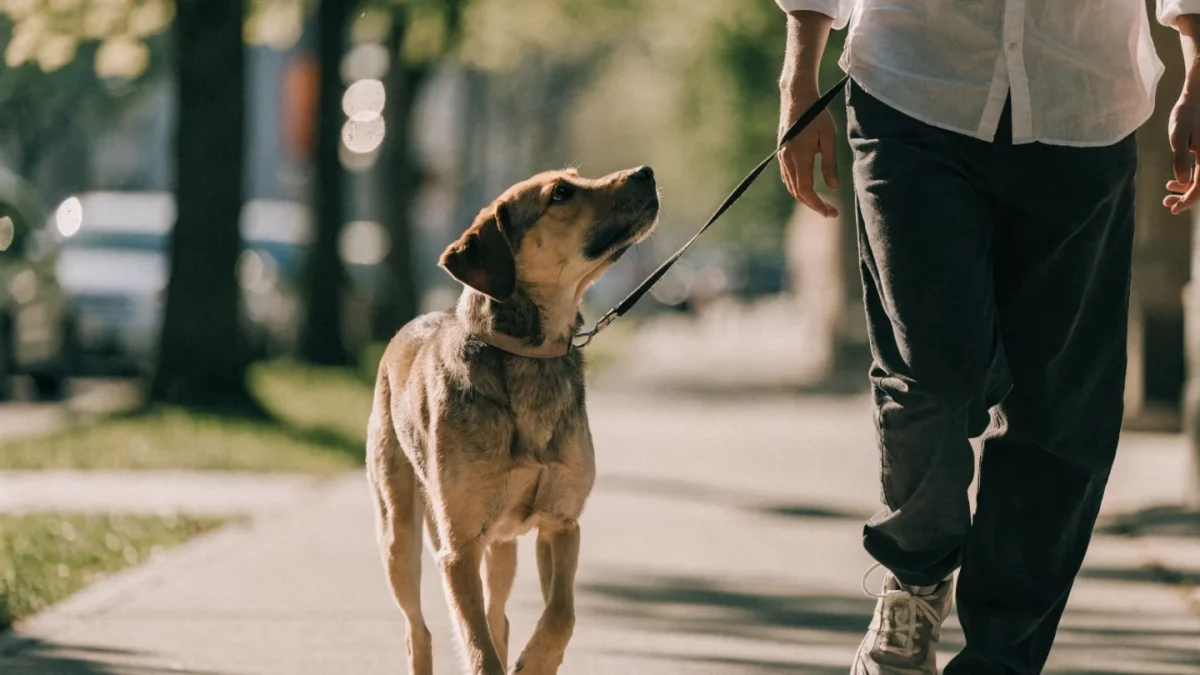
Then Benny showed up. A senior beagle mix with a face designed by evolution to make you feel guilty about anything and everything. I adopted him at eight years old, which meant I skipped the puppy phase entirely and went straight to the "sleeps 14 hours a day, steals food with surgical precision" phase. But even with a mellow older dog, the learning curve was real.
If you're getting your first dog, here's what I wish someone had told me — including the stuff that surprised me most.
Your Schedule Is Not Yours Anymore
Cats are flexible. You can leave for twelve hours and come back to a cat who is mildly annoyed but fundamentally fine. Dogs are not like that.
Dogs need to go outside. Multiple times a day. In rain, in heat, in cold, at 6 AM when you'd rather be asleep, at 10 PM when you'd rather be in bed. There's no calling in sick from dog ownership.
This was the biggest adjustment for me. I was used to my mornings being mine. With Benny, my mornings belong to him — outside first, then breakfast (his, then mine), then a walk. Every day. Not most days. Every day.
If you're someone who thrives on routine, this is actually great. If you're someone who resists structure, brace yourself.
Training Starts Immediately
I'm not a dog trainer — that's Jake's territory, and he's far better at it than I'd ever be. But I can tell you this: whatever rules you want your dog to follow for the next decade, start enforcing them on day one.
Not training doesn't work either. Not training just means the dog trains itself, and dogs are not good at choosing rules that align with human expectations. Benny trained himself to check every counter surface for unattended food. We did not teach him that. We failed to prevent it. There is a difference, and the result is the same.
Basic things to prioritize early: where the dog sleeps, how feeding works, the rules around furniture, and the fundamentals of leash behavior. Everything else can come in time.
The Expense Is Real
Food. Vet visits. Vaccines. Preventive medication (flea, tick, heartworm depending on your region). Grooming. Toys. Replacement of whatever they destroy.
And then there are the emergencies. The limping that turns out to need X-rays. The "he ate something he shouldn't have" midnight vet visit. The dental procedure you weren't budgeting for.
Dogs are more expensive than most first-time owners expect. Not impossibly so — but if you're budgeting only for food and an annual vet visit, you're going to be caught off guard.
Socialization Matters More Than You Think
A well-socialized dog is a dog that can handle the world — other dogs, strangers, children, loud noises, unfamiliar environments — without panic or aggression. An unsocialized dog is a liability and a stressed-out animal, which isn't fair to anyone.
If you're adopting a puppy, the socialization window is roughly the first sixteen weeks. That's when their brain is most receptive to new experiences. Expose them to as many different people, animals, sounds, surfaces, and situations as you safely can during that period.
If you're adopting an adult dog (like I did with Benny), socialization is still important but looks different. You're working with whatever foundation was laid before you, and building on it gradually. Go at the dog's pace. Watch for stress signals.
The Walk Is Not Optional
I need to emphasize this because it's the thing I see first-time dog owners struggle with most. Walking your dog is not just about bathroom breaks. It's about exercise, mental stimulation, and the basic fulfillment of your dog's need to explore the world through their nose.
A dog that doesn't get adequate physical activity becomes a dog that destroys things, barks excessively, or develops anxiety. The amount of exercise varies by breed, age, and individual — Benny's happy with two moderate walks a day, while a younger, more active dog might need significantly more.
If you're getting a dog, your walking shoes need to be ready.
What Changes at Home
Your furniture will take a hit. Whether it's hair, drool, scratches, or the occasional mysterious stain, your home is not going to look the way it did pre-dog. Accept this now.
Your sleep might change. If your dog sleeps in the bedroom, you're sharing space with an animal that may snore (Benny snores like a freight train), reposition frequently, or decide that 5 AM is morning. If they don't sleep in the bedroom, you may hear whining from wherever they are. Neither scenario is terrible, but both are adjustments.
Your social life shifts. You can't stay out as long, because the dog needs to go out. You can't do spontaneous overnights without arranging care. You plan around the dog in a way that surprises people who haven't owned one.
Your heart gets involved. This is the part I wasn't prepared for. The way a dog looks at you — like you are the entire point of everything — is disarming. Benny leaned against my leg on his second day in the house, looked up, and that was it. I was done for.
The First Two Weeks
They're going to be rough. Not terrible, but rough. Your dog is adjusting. You're adjusting. Nobody's sleeping well. You're second-guessing decisions. The house smells different.
This passes. Every single dog owner I know has a "what have I done" phase, and every single one of them came out the other side into something they wouldn't trade for anything.
For the broader picture, including general tips that apply whether you're getting a dog or a cat, there's a general first-time pet owner guide that covers the fundamentals. And if you're still deciding between species, the first-time cat owner guide might help you compare.
Once you've committed to a dog, check the supplies checklist for new dogs so you're not making a panicked pet store run on day two.
FAQ
How much exercise does a dog need per day?
It depends on breed, age, and individual energy level. A general minimum for most adult dogs is 30 to 60 minutes of physical activity daily, but some breeds need significantly more. Puppies need shorter, more frequent play sessions. Senior dogs need less intense but still regular movement. Ask your vet for guidance specific to your dog.
Should I crate train my dog?
Many trainers and behaviorists recommend crate training as a useful tool for house training, safe confinement, and giving your dog a secure den-like space. Done correctly — never as punishment, always positively introduced — most dogs learn to see their crate as a comfort zone. It's not required, but it makes many aspects of dog ownership easier.
What if my dog isn't adjusting after two weeks?
Two weeks is still early. The general guideline is that dogs may take up to three months to fully settle into a new home. If specific behaviors concern you — extreme anxiety, aggression, complete refusal to eat — consult your vet to rule out medical issues, and consider working with a professional trainer or behaviorist.