

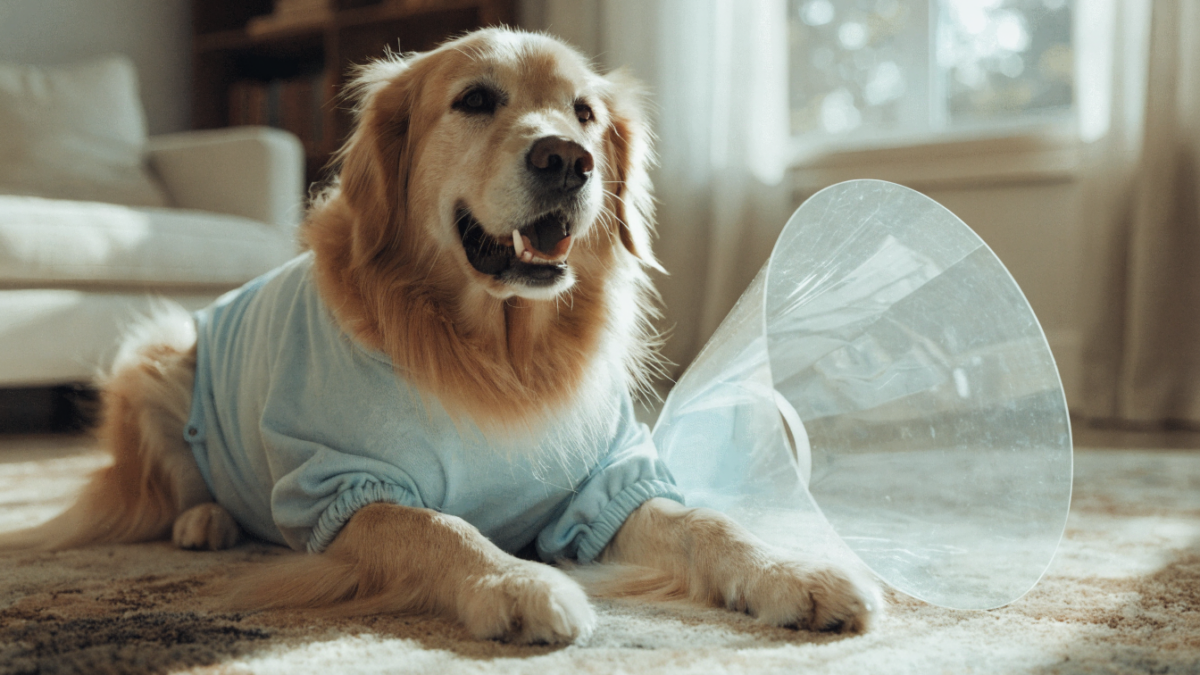
Picture a routine neuter appointment: Margaret brings her three-year-old Whippet, Chester, into a clinic with one request that has nothing to do with the surgery itself. “Please,” she says, “don’t send him home in one of those cones. He wore one after his dental cleaning and didn’t eat for two days.” The request is completely understandable. Anyone who has seen it knows the look — that hollow, defeated stare from behind a plastic wall, the frantic backing into doorframes, the food bowl sitting untouched. Chester’s story isn’t unique. Over 60% of pet owners report that their animals refuse to eat, drink, or sleep normally while wearing a hard plastic cone, and clinic staff see it week after week. But here’s the tension: that same cone is still the most effective physical barrier we have against a potentially catastrophic complication. When a dog or cat licks a surgical incision, their mouth introduces hundreds of bacteria species — including Pasteurella, a particularly nasty organism — directly into an open wound. Infections, dehiscence (that’s the medical term for a wound splitting open), and delayed healing can happen within hours. So the question isn’t really cone versus onesie. It’s about matching the right tool to the right animal, the right surgery, and the right home environment.
Why the Lick Reflex Is So Dangerous
Dogs and cats don’t lick surgical sites because they’re trying to be difficult. It’s a deep, instinctive response to pain, irritation, and the strange sensation of stitches. Their saliva actually contains initial wound-healing properties in the wild — which is why the behavior exists in the first place — but in a sterile surgical context, that same licking introduces bacteria that overwhelm the site. Take a Scottish Terrier named Angus, whose owner removed his cone for “just five minutes” so he could eat comfortably. Twenty minutes later, Angus had licked his abdominal incision open. It had to be re-sutured under anesthesia, followed by a two-week course of antibiotics. The licking reflex is that powerful, and the consequences are that fast.
This is why every recovery option — whether it’s a cone, a onesie, or something in between — exists for one core purpose: creating a physical barrier between mouth and wound. The differences lie in how that barrier is constructed and what trade-offs come with each design.
The Cone of Shame: Still the Gold Standard (With Caveats)
I’ll be honest — I used to be a cone purist. Hard plastic, sent home with every surgical patient, no exceptions. A 2023 study published in JAMA Science validated that instinct: traditional Elizabethan collars remain the most effective physical barrier, preventing access to wounds anywhere on the body. Paws, face, abdomen, tail — the cone blocks them all. They’re inexpensive, typically ranging from $15 to $40. They’re easy to sanitize with rubbing alcohol, universally available at any veterinary clinic, and foolproof when fitted correctly.
Where the Cone Falls Short
But I’ve changed my thinking over the years, and clinical experience is partly why. The cone creates real suffering for some patients. It obstructs peripheral vision, which is deeply disorienting for a species that relies on spatial awareness for emotional security. Every doorway becomes an obstacle course. Every wall collision creates a loud bang that startles an already anxious animal. I’ve watched cats press themselves into the back corners of their carriers and refuse to come out for days. I’ve seen dogs stop drinking water entirely because they couldn’t figure out how to navigate the bowl’s rim with a rigid circle around their neck.
The stress isn’t just emotional — it’s physiological. Stressed animals have elevated cortisol levels, which directly suppress immune function and can extend healing time.
So while the cone might be the most effective physical barrier, effectiveness means nothing if an animal is too distressed to rest, eat, or allow their body to recover.
Surgical Onesies: The Comfort-First Alternative
The surgical suit industry has grown by over 25% in the last five years, and I’m not surprised. Pet-specific onesies — typically ranging from $25 to $60 — work on a fundamentally different principle than the cone. Instead of restricting neck movement, they physically cover the wound with a snug, breathable fabric layer. The animal retains full peripheral vision, natural mobility, and the ability to navigate their environment normally. The anxiety reduction I see in clinical practice is striking. Dogs who refused to walk with a cone will trot happily to the door in a surgical suit. Cats who hid under beds will resume eating within hours.
Real-World Limitations
But onesies aren’t perfect, and it’s worth being upfront about that. A determined pet — particularly a bored or anxious one — can chew through fabric. There are plenty of dogs like Bess, a Labrador who gnawed through her surgical suit within three hours of arriving home and was licking her spay incision before anyone noticed. Onesies also need to be removed for bathroom breaks unless you invest in a suit with snaps or velcro closures designed for that purpose. And there’s the laundry factor — these suits absorb blood, discharge, and everyday dirt, meaning you need at least two on rotation.
The sanitation issue is genuinely important, and I don’t think it gets enough attention. A soiled onesie left on a pet becomes a warm, moist environment sitting directly against a healing wound. That’s not hygiene — that’s a potential infection factory. If you’re going the onesie route, you need to commit to checking it frequently and washing it in hot water with a mild, unscented detergent.
Matching the Gear to the Procedure
This is where the conversation gets practical. The right choice depends heavily on what kind of surgery your pet had.
- Facial, eye, or ear surgeries: The cone wins, hands down. A onesie cannot prevent access to the face, and these sites are too critical to risk.
- Spay, neuter, and other abdominal surgeries: Onesies excel here. The incision is easily covered, and the suit keeps the site clean from household dust and debris.
- Orthopedic surgeries (particularly hind limbs): Onesies work well for many cases, though you’ll want a design that accommodates any bandaging.
- Hot spots and dermatological issues: A onesie can be ideal, especially for locations the cone has trouble fully blocking.
- Pets with severe obsessive-compulsive licking: If your pet is a determined self-harmer, go with the cone regardless of wound location. Some animals will work through fabric barriers relentlessly.
The Middle Ground: Donuts and Soft Cones
If your pet genuinely cannot tolerate hard plastic but needs more than a fabric covering, there are compromise options worth exploring. Inflatable “donut” collars — which look like neck pillows — prevent many pets from reaching torso and hind limb wounds while allowing them to eat and see normally. Soft fabric cones offer a similar middle ground. Neither is as foolproof as a rigid cone, but for the right patient, they’re a reasonable balance between physical protection and psychological comfort.
What About DIY Solutions?
I hear this constantly. “Can I just use my kid’s old onesie or cut up a t-shirt?” I understand the impulse — pet-specific surgical suits aren’t cheap, and repurposing feels practical. But I’ve seen enough problems to counsel caution. Non-medical fabrics like standard cotton t-shirts stretch out, trap moisture against the skin, and can be torn off far more easily than purpose-built suits. Human baby onesies often use fabrics that aren’t designed to breathe properly against an animal’s different coat and skin chemistry. If budget is a genuine concern, talk to your veterinarian — many clinics now stock affordable disposable surgical suits, and some fear-free certified practices are offering them as a default option instead of plastic cones.
What’s New in Recovery Gear
The landscape is shifting rapidly. Modern surgical suits now feature customizable snap and velcro systems that let you roll up specific sections — useful for airing out a wound or facilitating bathroom breaks without removing the entire garment. Several brands have introduced silver-ion infused antimicrobial fabrics that actively kill bacteria at the wound site, which addresses one of my biggest historical concerns about fabric barriers. Some newer suits are even made from recycled materials, which is a small but meaningful nod to broader conservation values. The fear-free veterinary movement has also pushed many clinics to rethink their default recommendations, prioritizing an animal’s emotional experience alongside their physical healing.
I sent Margaret home with Chester last spring wearing a surgical suit — not a cone. She texted me a photo that evening of him curled up on the couch, sleeping normally, suit intact. His incision healed beautifully in ten days. That’s the outcome we’re all looking for. The cone remains a legitimate, sometimes essential tool, and I’ll still recommend it when the situation demands. But the options have expanded, and matching gear to the individual animal — their temperament, their procedure, their home environment — gives us the best chance at a smooth, comfortable recovery. If your pet is facing surgery, have this conversation with your veterinarian beforehand. Bring your questions, your concerns, and your knowledge of your own animal. You know them better than anyone, and that perspective matters in choosing the path that lets them heal — body and mind.