

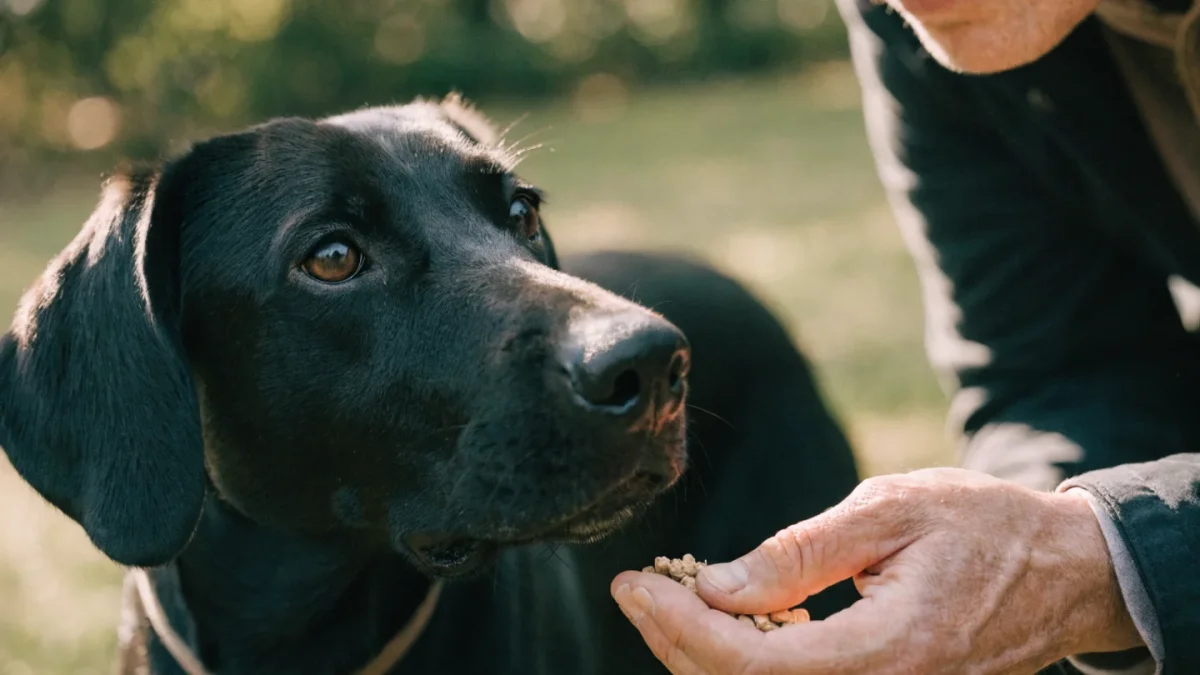
One of the most common questions I get from people who are starting positive reinforcement training: "Am I giving too many treats?"
In early learning: probably not. In advanced training of known behaviors: possibly. The answer depends entirely on what stage you're in.
Continuous Reinforcement in Early Learning
When a dog is learning a new behavior, the goal is to build a clear association between the behavior and the consequence as quickly as possible. That means high reinforcement rate — every correct response, or nearly every correct response, gets marked and rewarded.
This is called continuous reinforcement (CRF). It's not a permanent schedule — it's an acquisition strategy. The dog is learning what behavior produces the click and treat. High rates give them clear, frequent feedback.
Common mistake: pulling back on reinforcement too early because it feels excessive. If the behavior isn't solid yet, the reinforcement rate is doing necessary work.
Variable Reinforcement in Maintenance
Once a behavior is well-established — the dog performs it reliably in a variety of contexts — you can shift to a variable reinforcement schedule. Instead of rewarding every correct response, you reward some: every third time, every fifth time, every second to eighth time (variable ratio).
The result: behavior that is more resistant to extinction than continuously-reinforced behavior. This is the same principle that makes slot machines addictive — if you don't know when the reward is coming, you keep trying.
A dog that has been shifted to variable reinforcement for a solid sit will keep offering sits reliably even when no treats are visible. A dog still on CRF may hesitate when no treat is visible.
Raising Criteria and Rate of Reinforcement
There's an inverse relationship between how much you're asking of the dog (criteria) and the rate of reinforcement you should be providing. When you raise criteria — add difficulty, extend duration, introduce distractions — temporarily increase the reinforcement rate. You're asking for something harder; give clear feedback that the harder thing is the right thing. (See also: variable reinforcement schedules explained.)
As the dog gets comfortable at the new level, you can drop the rate again.
Practical Numbers
These are rough guides, not rigid rules:
- New behavior in easy context: reward 9-10 out of 10 correct responses
- Known behavior in easy context: reward 5-7 out of 10
- Known behavior in new/harder context: reward 8-9 out of 10 to start, reduce as the dog becomes comfortable
- Known behavior in maintenance: variable, 2-4 out of 10, sometimes jackpots for especially good responses
See fading treats in dog training for the process of reducing treat dependency while maintaining behavior — this is the application of variable reinforcement in the longer-term training arc.