

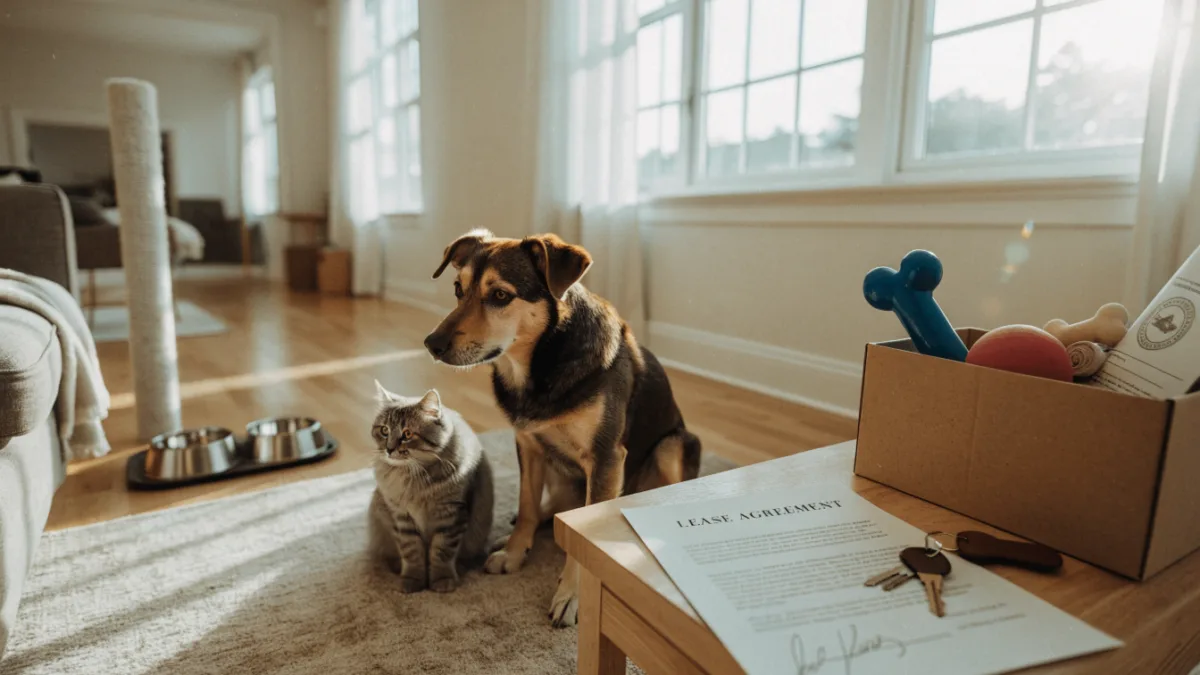
Miso, my tabby, has destroyed two sets of mini-blinds, one couch corner, and — her undisputed masterpiece — a phone charger cable she apparently decided was prey. And I’ve still gotten every pet deposit back in full, across two apartments, with a cat who treats upholstered furniture as a personal challenge. Renting with pets isn’t about luck. It’s about understanding what landlords are actually afraid of, then calmly proving your pet isn’t that. Here’s the playbook I wish someone had handed me before I hit my first wall of “no pets allowed” listings.
The Hunt: Why It Feels Like Nothing Allows Pets
If your apartment search has felt hostile, you’re not imagining it. One renter in Tennessee,[1] and found that roughly 99% of them said no pets. The frustration was blunt enough to become a whole forum thread:
Why are Tennessee landlords so against pets?
The honest answer: landlords aren’t anti-pet so much as anti-risk. They’re worried about damaged carpets, lingering odors, noise complaints, and — increasingly — insurance. Insurers often dictate which animals a property can cover, which is where breed and weight limits come from (more on that below).
Practically, this changes how you should search. Filter for pet-friendly apartments first, before you fall in love with a unit you can’t have. Read the fine print carefully: “pets negotiable” is an invitation, “cats only” is a real restriction, and “pet-friendly” can hide a 25-pound weight cap. One more thing I’ve learned the hard way: large corporate complexes usually have rigid, non-negotiable pet policies, while individual landlords who own one or two units can often be talked around. Find out who you’re dealing with before you get attached.
The Pet Resume: Slightly Absurd, Genuinely Effective
Yes, a resume. For your pet. I know how it sounds — I made one for a cat — but it works because it reframes the conversation. You’re not asking for a favor; you’re presenting evidence.
A good pet resume fits on one page and includes:
- A photo — Miso’s shows her mid-yawn, looking like she’s never harmed anything in her life, which was technically true of that particular afternoon
- Vaccination records and spay/neuter status
- Training credentials, if your dog has them — something like a Canine Good Citizen certification carries real weight with landlords
- References — a previous landlord who’ll confirm your pet caused no problems is the single most persuasive line on the page
- Your contact info and a short note about your pet’s actual daily life (indoors only, quiet, litter-box dutiful)
The [2] makes two recommendations I can confirm from experience: invite the landlord to meet your pet before signing, and be ready to offer a reasonable amount of extra rent or a refundable deposit. Miso’s landlord meeting consisted of her sleeping through the entire thing, which I took zero credit for but absolutely leveraged.
Deposits, Fees, and Pet Rent: Know What You’re Paying For
“Pet deposit” gets used as a catch-all phrase, but there are actually three distinct charges, and the difference matters a lot for your wallet:
- Pet deposit — refundable, held against damages. This is the one you want.
- Pet fee — a one-time, non-refundable upfront charge. You never see this money again, even if your pet is a saint.
- Pet rent — a recurring monthly charge, commonly around $25 per pet, though it ranges widely.
Do the math before you negotiate. $25 a month over a 12-month lease is $300 gone forever. A $400 refundable deposit comes back to you if the unit’s returned in good shape. Offering a larger refundable deposit in exchange for waiving pet rent is often a genuine win-win: the landlord gets more security, you get your money back.
Whatever you agree to, make sure it’s written into a pet addendum — the separate document attached to the lease that spells out pet rules — and read it. It may include things like flea treatment requirements or leash rules in common areas, and violating them can become a lease violation.
One legal note: pet deposit laws vary enormously by state and country, and some places cap total deposits while others barely regulate them at all, so check your local rules rather than assuming. Georgia offers a useful example of how the rules get specific: under [3] service animals aren’t classified as pets under fair housing law — so landlords can’t require an upfront pet deposit or pet rent for them — but the tenant is still fully responsible for any damage the animal causes. And a hard ethical line: passing off a regular pet as a service animal to dodge fees is dishonest, it can carry legal consequences, and it makes life harder for people with genuinely needed assistance animals. Don’t.
Breed and Weight Restrictions: Reading Between the Lease Lines
If your dog is a pit-bull type, Rottweiler, Doberman, or simply weighs more than the arbitrary 35-pound limit, you’ve probably already met this wall. It exists mostly because insurance carriers maintain exclusion lists, and landlords buy whatever policy they can afford — the restriction often isn’t even the landlord’s personal opinion.
Which means there’s sometimes room to work with:
- Ask whether the restriction comes from the landlord or their insurer. Some landlords will consider case-by-case exceptions.
- Offer references from previous landlords describing your dog’s actual behavior in a rental.
- Show proof of renter’s insurance with liability coverage that includes your dog.
- Request an in-person meeting. A calm, wiggly dog sitting politely on command does more than any letter.
What you should never do is lie about breed or weight. That’s a lease violation waiting to be discovered, it can end in eviction, and it burns the next pet owner who comes along behind you. Cats mostly escape these restrictions, though many leases cap the total number of animals per unit — check before assuming your second cat is invisible.
Damage Prevention: Protecting Your Deposit From the Inside
For the scratch-prone cat
Scratching is normal, necessary cat behavior — you’re not stopping it, you’re redirecting it. The trick is competition: place a tall, sturdy sisal post directly next to the furniture corner your cat has chosen. Cats pick scratching spots based on texture and location, so your acceptable option has to win on both. Add soft nail caps or regular trims to blunt the damage while the redirect takes hold, and put furniture protectors or double-sided tape on the spots you’re defending. As for the blinds — learn from me and buy replacement slats in advance. They’re cheap. The deduction won’t be.
For the drool-prone dog
Jake’s Newfoundland, Barnaby, approaches every water bowl like a tidal event, so I’ve seen the aftermath firsthand. The fixes are unglamorous but effective: a mat with raised edges under the water bowl, positioned on hard flooring rather than carpet. A towel stationed by the door for muddy paws, because ground-in mud is what actually kills carpets. A dedicated drool towel for after meals and drinks. And if your dog hasn’t earned unsupervised freedom yet, a crate or dog-proofed room during work hours eliminates the catastrophic damage category entirely — chewed carpet edges, gnawed door frames. How to build that routine is a training conversation, which is firmly Jake’s lane, but as pure deposit strategy, it’s unbeatable.
The paper trail
Photograph and video everything at move-in — existing carpet stains, scuffed baseboards, the works — and send it to your landlord in writing. Repeat at move-out. Clean any accidents with an enzyme cleaner, because odor is what landlords notice long after the stain is gone. Report damage promptly when it happens; a $15 repair you handle now beats a $150 deduction later. And if your lease requires a professional carpet clean at move-out, just do it and keep the receipt.
Here’s the takeaway I’d actually want you to keep: when pet-friendly housing is this scarce, every responsible pet tenant matters beyond their own lease. Landlords talk to each other, and the tenant whose cat left no trace is the reason the next renter with a tabby gets a “maybe” instead of a “no.” Your deposit is the immediate prize, but the bigger one is keeping doors open for everyone who comes after you. Miso and her replacement blinds are counting on all of us.
Sources
- counted the listings in her price range — facebook.com
- Humane World for Animals tenant guide — humaneworld.org
- Georgia's pet rent rules — hemlane.com