

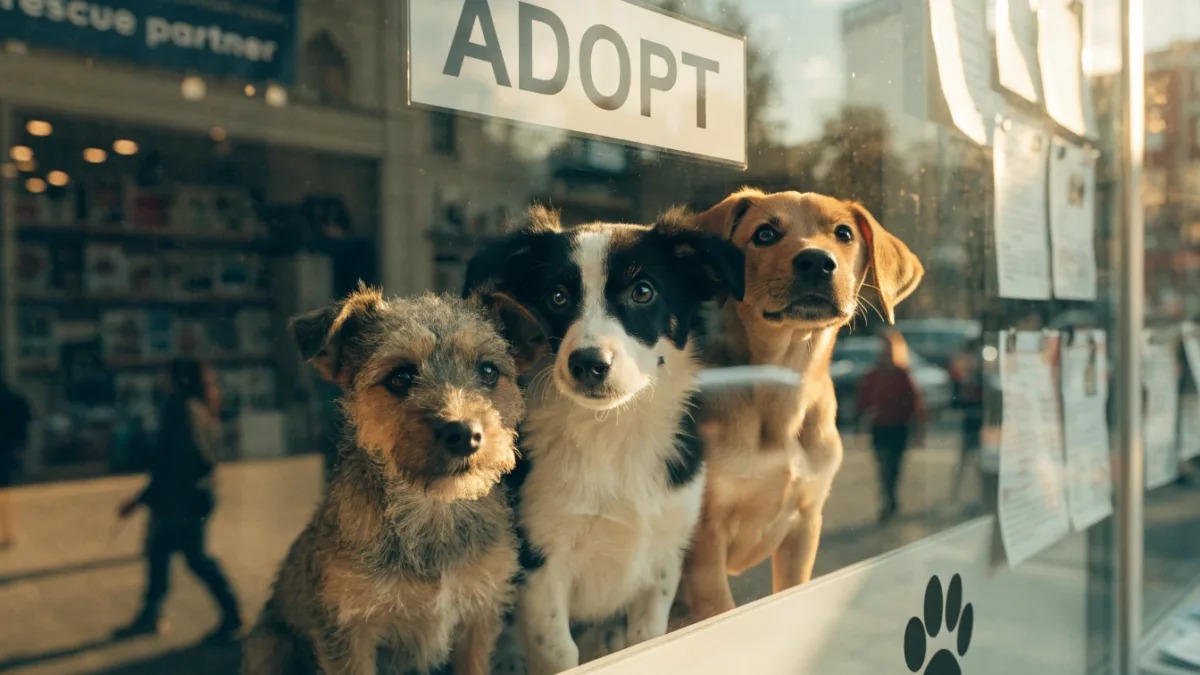
Somewhere in America right now, a golden retriever puppy is sitting in a pet store window wearing a price tag bigger than my first car. And in a growing chunk of the country, that scene is on its way to becoming illegal — not the puppy, the price tag. On December 15, 2024, New York’s ban on retail sales of dogs, cats, and rabbits finally took effect, making it the highest-profile test yet of a movement that started quietly in California back in 2017.;[1] have now passed these laws, along with more than 450 cities and counties. Here’s what the puppy mill ban laws actually do, who’s fighting them, and what changes for you if you’re in the market for a new best friend.
Where the Bans Are: A Map That Keeps Redrawing Itself
California went first — AB 485, signed in 2017, effective January 1, 2019. Since then the list has grown steadily, and honestly, keeping count has become a bit of a hobby for animal welfare reporters:
- California — first in the nation, effective 2019
- Maryland — passed 2018, effective 2020; survived a repeal attempt in 2019
- Maine and Washington — both effective 2021
- Illinois — effective 2022
- New York — signed by Governor Kathy Hochul in December 2022, [2] uniquely, it covers rabbits along with dogs and cats
- New Mexico and Vermont — both effective 2024
Delaware, Colorado, and Minnesota passed bans in 2024 as well, and more bills are pending in state legislatures — the count is genuinely a moving target, so check your own state’s latest before making plans around it.
The other half of the story is local. More than 450 cities and counties — including Los Angeles, Philadelphia, Chicago and Cook County, Boston, and Miami Beach — enacted their own ordinances first. This movement grew from the bottom up: cities proved the model could work, and states followed. The state bans are largely an attempt to standardize what had become a regulatory checkerboard, where your pet-buying options could change at a county line.
What These Laws Actually Ban — and What They Don’t
This is the most misunderstood part of the whole debate, so let’s be precise. The laws bar retail stores from selling commercially bred dogs and cats. That’s it. They do not ban breeding. They do not ban buying from a breeder. Hobby breeders who sell directly to families remain completely legal everywhere in the country. The “adopt don’t shop legislation” label is catchy, but the laws are really aimed at one specific pipeline, not at pet ownership or at people who love a particular breed.
Stores don’t close — they convert
New York offers the constructive version of this story. Stores there didn’t have to shutter; they can partner with shelters and rescues to showcase adoptable animals, with adoption fees replacing the old $1,000-to-$4,000-and-up price tags. Early evidence from California and Maryland suggests these conversions can boost local adoptions, though rigorous research is still thin — both sides of the debate are currently winning on anecdotes. Some stores have genuinely closed and owners have reported real revenue losses, which is worth saying out loud. Others report their adoption partnerships are thriving. The honest answer is that the picture is still developing.
The Puppy Mill Pipeline: Why Retail Is the Target
The supply-chain logic goes like this: an estimated 10,000 puppy mills operate in the U.S., but only about 2,000 to 3,000 are USDA-licensed. Together they produce roughly 2 million puppies a year, and the vast majority of pet store puppies trace back to these large-scale commercial operations. Under the federal Animal Welfare Act’s minimum standards, a breeding dog can legally spend her entire life in a wire cage just six inches longer than her body, bred on every heat cycle.
The industry’s defense is that stores buy only from licensed, inspected breeders. Welfare groups counter that those standards set a floor so low it’s basically the basement, and that inspection and enforcement are chronically understaffed. That dispute — whether “USDA-licensed” means “humane” — is the central factual fight underneath all the lobbying.
Then there’s the other side of the ledger. About 6.3 million animals enter U.S. shelters every year, and roughly 920,000 are euthanized, according to ASPCA figures. Advocates argue the supply of pets already exceeds demand, while Americans spend more than $130 billion annually on the animals they have. That’s a lot of commercial gravity for lawmakers to weigh.
The Lobbying War Behind the Laws
Nothing this big happens without a fight. The Humane Society of the United States, Best Friends Animal Society, and the ASPCA have driven the legislation state by state. On the other side, the Pet Industry Joint Advisory Council and Petland franchisees have led the opposition, framing the bans as government overreach that limits how families acquire pets.
The courtroom version of this fight has been one-sided so far. Pet store owners have sued — including in New York — claiming the bans violate constitutional commerce protections, and courts have consistently upheld the laws. The New York City Bar Association published a,[3] which matter-of-factly dismantled the constitutional objections.
The industry’s more effective strategy is playing out in state capitols instead: preemption. States including Wisconsin and Georgia have passed or pushed laws banning their own local governments from enacting retail sale bans — essentially a state telling its cities they can’t regulate pet store puppy sales at all. Watch this front. With no federal retail ban on the horizon (related efforts like Goldie’s Act, which would tighten USDA enforcement, have stalled in Congress), the tension between pro-ban states and anti-ban states is the next chapter of this story.
What This Means for You
Benny still slams on the brakes at the pet store window on our usual walking loop — nose to the glass, full-body wag, zero dignity. And to be clear, the puppies inside aren’t the villains here. Nobody is mad at a puppy. The argument is entirely about where they come from and who profits along the way. So if you’re pet-shopping in this new landscape:
- Check your state and local rules first. The patchwork means your options genuinely depend on where you live. (And a note for readers outside the U.S. — this is an American legislative story; other countries handle animal sales very differently.)
- Consider the animals already here. Shelters and rescues have everything from mixed-breed charmers to purebreds, and breed-specific rescues exist for nearly every breed you can name.
- If you want a breeder, vet them properly. A good one lets you visit in person, meet the mother, and see where the puppies are raised — and often has a waitlist. If someone offers to ship you a puppy sight-unseen like it’s a mattress, that’s not a breeder. That’s a distribution center.
- Know your state’s puppy lemon law. Many states have consumer protections for sick purchased animals, and if something goes wrong, get your vet involved early and document everything.
One thing these laws will never change: your right to fall in love with whatever animal suits your life. They just change the storefront.
There’s a final irony worth sitting with. Dogs and cats aren’t endangered species — they’re domesticated animals who exist in the millions because of us, which is exactly why none of the wildlife statutes protecting pandas and condors will ever apply to them. Their protection lives in commercial law and statehouse votes instead. That’s what this whole retail revolution is really about: not saving a species, but re-deciding what kind of merchandise animals are allowed to be. The best cat I’ve ever known was the shelter cat nobody else wanted, and she’s been running my house with an iron paw ever since — proof, as if I needed it, that the shelf-stock of 2018 was hiding some genuinely excellent talent. If these laws redirect even a fraction of that $130 billion toward the 6.3 million animals already waiting, that’s not a ban on pets. That’s a redistribution of second chances.
Sources
- At least eight states — facebook.com
- effective December 15, 2024 — nbcnews.com
- report supporting the ban's legal footing — nycbar.org