

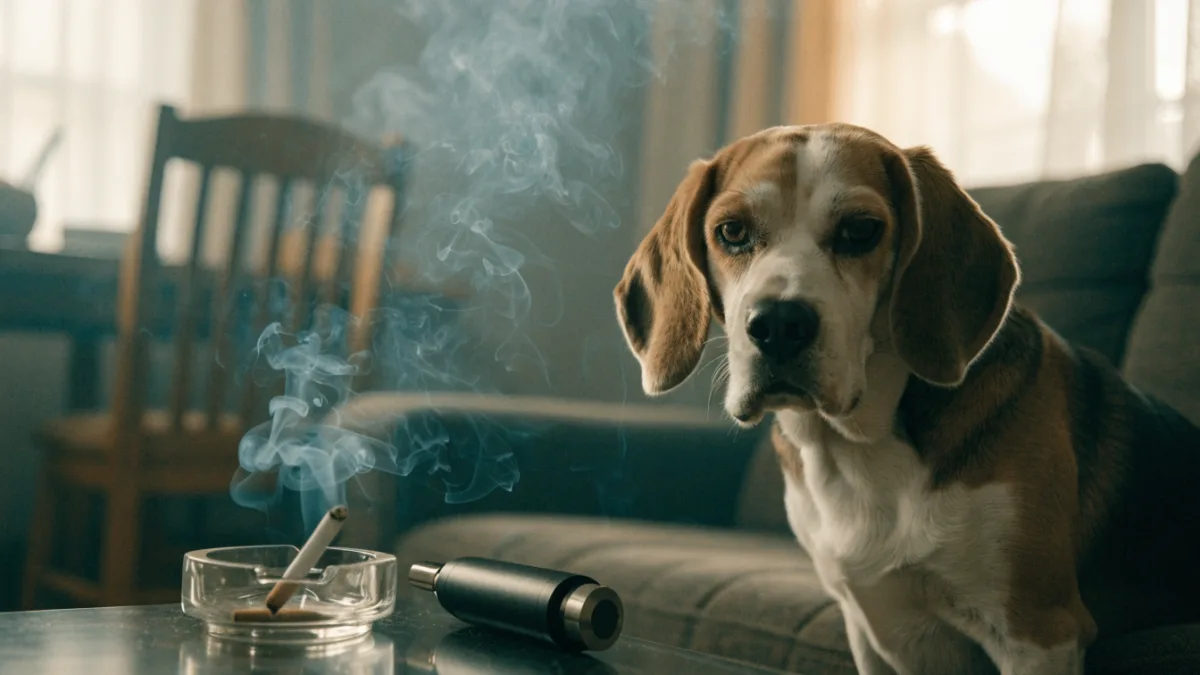
A few months ago, a sweet seven-year-old Labrador Retriever named Buster came into a clinic. His human, Mark, was worried about a harsh, hacking cough that just wouldn’t go away. We ran the usual tests—X-rays, blood work, a thorough airway exam. Everything pointed to chronic bronchitis. When I asked Mark about environmental irritants, he sheepishly admitted he was a pack-a-day smoker. “But I always smoke near the open kitchen window,” he quickly added. “And lately, I’ve switched to vaping. I figured the vapor was harmless to Buster.”
That conversation is worth repeating because it highlights a misconception that comes up all the time. Many of us know that secondhand smoke is dangerous to humans, but we rarely think about how it impacts the four-legged family members who share our floors, our furniture, and our air. Our pets have vastly different respiratory systems and grooming habits than we do, making them uniquely vulnerable to the lingering effects of both traditional cigarettes and modern e-cigarettes.
The Myth of “Airing It Out”
Mark genuinely believed that cracking a window was enough to protect Buster. I don’t blame him for thinking that—it’s a remarkably common belief. Unfortunately, ventilation is not a magic eraser.
When you light up inside, even near an exhaust fan or an open window, the smoke doesn’t politely exit the building. It settles. This is what we call third-hand smoke: the toxic, invisible residue of tar, nicotine, and heavy metals that clings to carpets, upholstery, dog beds, and even the dust on your floorboards.
Because dogs and cats live much closer to the ground than we do, they are constantly breathing in this contaminated dust. They also absorb these toxins directly through their skin. Simply smoking in another room or blowing the smoke outside doesn’t stop the particulate matter from drifting through the home and settling into the fabrics your pet sleeps on every day.
Species-Specific Dangers: How Smoke Affects Dogs and Cats
The toxins in secondhand smoke don’t affect all species equally. A dog’s respiratory anatomy and a cat’s grooming habits mean they face very different, but equally severe, health risks.
Dogs: Coughing, Mucus, and Lung Cancer
In dogs, prolonged exposure to secondhand smoke directly stimulates the cough reflex and triggers an overproduction of mucus in the airways. This constant irritation often leads to.[1] like the bronchitis Buster was developing. But it goes far beyond a simple cough.
Dogs living in smoky environments experience noticeably higher rates of eye infections, allergies, and general wheezing. Even more alarming is the definitive link between secondhand smoke and lung cancer in dogs. Pioneering studies out of Colorado State University established this connection years ago. Interestingly, the length of a dog’s nose plays a role in their risk. Short-nosed (brachycephalic) breeds like Pugs and Bulldogs are actually at a higher risk of developing lung cancer because their shorter nasal passages fail to filter out the carcinogens before they reach the lungs.
Cats: The Lymphoma Connection
If dogs are at risk from inhaling smoke, cats are in grave danger of ingesting it. Feline biology makes them exceptionally vulnerable to third-hand smoke.
Cats are fastidious groomers. When toxic smoke particles settle on a cat’s fur, they lick them off during their daily cleaning rituals. Over time, they are directly ingesting high levels of carcinogenic residue. Because of this, cats exposed to secondhand smoke are more than three times as likely to develop malignant lymphoma—a devastating and aggressive cancer of the lymphatic system—compared to cats living in smoke-free homes.
I remember treating an eight-year-old tabby named Luna for severe weight loss and lethargy. We diagnosed her with gastrointestinal lymphoma. Her owner smoked indoors and was utterly heartbroken to learn that her habit had likely contributed to Luna’s condition. The toxic load from grooming had slowly poisoned her cat’s system.
The Vaping Illusion: Is Aerosol Safer?
When e-cigarettes first hit the market, many of us in the medical community hoped they might be a safer alternative for human lungs. But as the [2] continues to evolve, my own stance has completely shifted. I’ve changed my mind on this. Vaping is not a safe alternative for our pets.
While e-cigarettes lack the heavy tar and carbon monoxide found in traditional smoke, they don’t just emit harmless “water vapor.” The aerosol you exhale contains nicotine, ultrafine particles, volatile organic compounds (VOCs), and heavy metals like lead and nickel.
These ultrafine particles are incredibly tiny, allowing them to penetrate deep into the delicate tissues of a pet’s lungs. Furthermore, because the aerosol settles quickly, these chemicals drop right onto the floor where your pets walk and sleep. The risk of ingestion is high, especially if a pet licks the furniture where vapor has settled.
Veterinary researchers are actively investigating the specific physiological impacts of e-cigarette aerosol on companion animals, with forward-looking studies—like the upcoming 2026 research by M. Cerquetella—aiming to map out exactly how these modern chemicals damage pet airways. The veterinary community is shifting away from solely studying tobacco and waking up to the reality that aerosolized chemicals create a dangerous false sense of security among pet owners.
Protecting Your Pet’s Lungs
So, what can you do? The absolute best thing you can do for your pet’s respiratory health is to maintain a strictly smoke-free and vape-free indoor environment.
There is a powerful new push in the veterinary community to educate the public on this issue, driven by [3] These initiatives frame secondhand and third-hand smoke not just as a human health issue, but as a core tenet of responsible animal welfare.
If you do smoke or vape, do it outside. But remember that the danger doesn’t end at the door. Third-hand residue clings to your clothes, skin, and hair. When you come back inside and cuddle your dog or cat, you are still transferring those toxins to their fur. To mitigate this:
- Wash your hands and change your outer layer of clothing before handling your pets after smoking or vaping.
- Wash pet bedding frequently in hot water to remove settled residue.
- Invest in high-quality air purifiers with HEPA filters to capture airborne particulate matter inside the home.
- Keep all vaping supplies locked away. E-liquid bottles and nicotine pods are highly toxic if ingested, and pets are often drawn to their sweet, candy-like scents. If you suspect your pet has chewed on a nicotine pod, contact a vet or poison control immediately—do not wait for symptoms to appear.
Ultimately, our pets rely entirely on us to curate a safe environment for them. They can’t open a window, change their own bedding, or choose to leave a smoky room. When Mark realized his vaping habit was contributing to Buster’s misery, he made the decision to take his breaks entirely outdoors and started washing his hands before playing fetch. Within a few weeks of clearing the indoor air, Buster’s cough began to subside. Our pets give us unconditional love; ensuring the air they breathe is clean is one of the most profound ways we can return the favor.
Sources
- chronic respiratory issues — petmd.com
- research on aerosol exposure in dogs and cats — pmc.ncbi.nlm.nih.gov
- campaigns like "Don't Puff Around Pets" — lung.org