

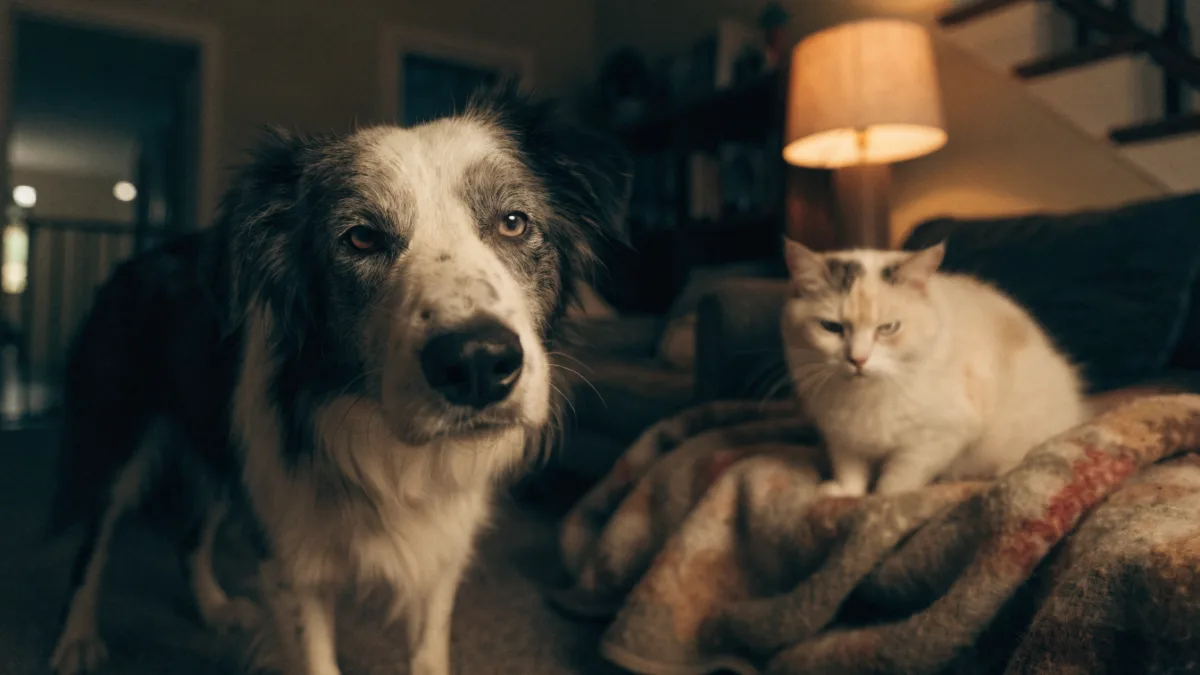
Not long ago, I got a 10:30 PM phone call from Linda, a retired teacher who shares her home with a 14-year-old Golden Retriever named Biscuit. She was near tears. “He’s been pacing the hallway for two hours,” she told me. “He walked right into the bathroom, got stuck behind the door, and just stood there staring at the wall. It’s like he doesn’t know where he is anymore.” Linda thought Biscuit had suddenly lost his vision. But when she brought him in the next morning, his eyes were fine. What we were seeing was something far more common than most pet owners realize — a classic case of sundowner’s syndrome, a hallmark symptom of late-stage canine cognitive dysfunction.
What Exactly Is “Sundowning” in Pets?
If you’ve ever cared for an elderly relative with Alzheimer’s, you may already be familiar with the term. Sundowner’s syndrome — or simply “sundowning” — refers to a state of confusion, anxiety, and restlessness that crops up as daylight fades and the house grows dark and quiet. In our companion animals, it’s one of the most visible signs of age-related cognitive decline.
Canine cognitive dysfunction (CDS) and feline dementia are neurodegenerative conditions, meaning the brain physically changes over time. Neurons die, plaque-like proteins accumulate, and the neural pathways that once fired effortlessly start to sputter. Structurally and behaviorally, these conditions are remarkably similar to Alzheimer’s disease in humans. And because advances in veterinary medicine mean our pets are living longer than ever before, we’re seeing these cases more frequently. Studies estimate that CDS affects roughly 28% of dogs between 11 and 12 years old, but that number jumps to over 68% in dogs aged 15 to 16. Feline dementia follows a similar trajectory — about 28% of cats aged 11 to 14 show signs, and more than half of cats over 15 are affected.
Those numbers still surprise people. I see it in exam rooms constantly — owners who assumed their pet’s nighttime pacing or house-soiling accidents were just “what happens when they get old.” I used to think that too, earlier in my career. But the veterinary consensus has evolved significantly. Cognitive decline isn’t just normal aging. It’s a specific, diagnosable medical condition, and there are things we can do about it.
Spotting the Signs: What Sundowning Actually Looks Like
Veterinarians use an acronym called DISHAA to evaluate cognitive function. Each letter represents a category where decline becomes visible:
- Disorientation — getting stuck in corners, staring blankly at walls, or appearing confused in familiar spaces
- Interactions — shifts in how your pet greets you, sudden irritability, or withdrawal from family members
- Sleep-wake cycle changes — the big one for sundowners. Pacing all night, then sleeping deeply through the day
- House-soiling — a previously house-trained dog or litter box-trained cat suddenly “forgetting” the rules
- Activity level changes — either a noticeable drop in movement or repetitive, purposeless wandering
- Anxiety — increased whining, howling, restless pacing, or seeming on edge for no obvious reason
Dogs vs. Cats: Different Species, Different Signals
While the underlying disease process is similar, the way dogs and cats express sundowning can look quite different, and it’s worth understanding the distinction.
Biscuit, the Golden I mentioned, showed classic canine signs. He’d pace the hallways at night, pause in doorways as if he’d forgotten which direction to walk, and occasionally let out a low, confused whine. His owner noticed he stopped responding to verbal cues he’d known for years — “sit,” “come,” “bed” — particularly after dark. Some dogs with CDS will also bark at nothing, fail to recognize familiar family members, or become anxious when left alone in a room.
Cats, on the other hand, often express feline dementia through vocalization — and I mean loud vocalization. Take a man named Ray, who brought in his 16-year-old tabby named Olive. “She starts howling at 2 AM like she’s in pain,” he said, exhausted. “I jump out of bed, run downstairs, and she’s just sitting in the middle of the kitchen, staring at me.” That nighttime yowling — deep, mournful, and seemingly random — is one of the most frequently reported symptoms in cats with cognitive decline. You might also see a cat who has used the litter box flawlessly for 15 years suddenly eliminating right next to it, or a cat who gets disoriented and can’t find her way back to her favorite sleeping spot.
Don’t Jump to Dementia — Rule Out Other Causes First
Here’s something I tell every owner who walks through my door with a pet showing these signs: before we label it cognitive decline, we need to rule out everything else. I can’t tell you how many times I’ve had a “dementia” case turn out to be something entirely treatable.
Chronic pain, particularly from osteoarthritis, is a massive contributor to nighttime restlessness. Think about it — if your hips ache every time you shift position, and the house is dark and quiet so there’s nothing to distract you, you’d pace too. A dog who can’t get comfortable isn’t necessarily confused. He might just hurt.
Vision loss is another big one. A pet whose eyesight is deteriorating from cataracts or retinal disease will seem far more disoriented at night, when there’s less light to compensate. Hearing loss can also cause sudden anxiety and vocalization — imagine suddenly being unable to hear your owner approaching, or the familiar sounds of your household. Urinary tract infections, kidney disease, liver dysfunction, and even dental pain can all mimic or worsen the symptoms of cognitive decline.
So the first step is always a thorough physical exam, bloodwork, and a urinalysis. We need to know what we’re actually dealing with before we start treating.
Environmental Adaptations: Making the Night Safe
Once we’ve confirmed that cognitive decline is playing a role, environmental management becomes one of the most powerful tools available. You can’t reverse the brain changes, but you can absolutely reshape the world around your pet to reduce confusion and keep them safe.
Lighting Is Everything
The single most effective change I recommend — and the one owners consistently tell me made the biggest difference — is strategically placed nightlights. Plug them in hallways, near food and water bowls, by the door your dog uses to go outside, and around the litter box. A confused brain struggles most when it’s plunged into darkness. Even a small amount of consistent, low-level light can anchor them spatially and dramatically reduce that lost, panicked pacing.
Redefine the Sleep Space
A cozy, confined sleeping area gives a sundowning pet a sense of safety. For dogs, this might be a low-entry orthopedic bed placed inside a small exercise pen in a quiet room. For cats, a warm bed in a room they already prefer, with easy access to their litter box and water. The goal isn’t confinement for confinement’s sake — it’s about reducing the physical space they have to navigate when their brain isn’t processing spatial information well.
Block Off Hazards
Stairs are the obvious danger. A disoriented dog at 3 AM can easily tumble down a flight of steps. Use baby gates. If you have a swimming pool, consider it a serious risk for a confused senior pet and block access entirely. And check your home for tight spaces where a pet could get wedged — behind refrigerators, between furniture, in closets. Biscuit spent three hours stuck behind a bathroom door before Linda found him. After that, she started closing interior doors at night.
Diet, Supplements, and Medical Support
There is no cure for canine cognitive dysfunction or feline dementia. I always say that upfront, because I don’t want to oversell. But “no cure” doesn’t mean “nothing we can do.” Senior pet care has advanced significantly in the past decade, and we now have strong evidence that nutritional and medical interventions can slow the decline and meaningfully improve quality of life.
Specialized “brain health” diets have become one of the most exciting developments. These formulas are rich in antioxidants, which help reduce the oxidative stress that damages aging neurons, and medium-chain triglycerides (MCTs) — a type of fat, often derived from coconut oil, that provides an alternative energy source for the brain. The aging brain becomes less efficient at using glucose for fuel, and MCTs essentially give it a backup power supply. Studies have shown improved short-term memory and cognitive function in both dogs and cats eating these diets. Omega-3 fatty acids from fish oil also show real promise in supporting brain health and reducing inflammation.
Supplements like SAMe (S-adenosylmethionine) have been studied specifically for cognitive function in dogs and are widely recommended. I’ve seen pets respond well to a combination approach — a brain-supportive diet plus targeted supplementation.
On the pharmaceutical side, there are prescription medications available. Selegiline is FDA-approved for canine cognitive dysfunction in dogs and works by altering dopamine pathways in the brain. Medication decisions, though — including dosing and whether a particular drug is appropriate for your specific pet — absolutely need to happen in consultation with your veterinarian. What works beautifully for one dog may cause excessive lethargy in another, and cats can be particularly sensitive to certain compounds.
I’ve genuinely changed my approach over the years. Early on, I was too comfortable with a wait-and-see stance — early signs of sleep cycle disruption or mild disorientation, and the advice was “let’s watch it.” Recent research has shifted that thinking entirely. Early intervention — starting dietary changes, supplements, and environmental modifications at the first sign of decline — appears to slow the disease process significantly more than waiting until a pet is in crisis. If your senior pet is showing even subtle changes in their nighttime routine or behavior, please don’t wait. Ask your veterinarian about cognitive screening.
There’s also been a fascinating rise in wearable activity trackers designed for pets. These devices monitor sleep-wake cycles and can flag disrupted patterns long before they become obvious to an owner. As a diagnostic tool, they’re proving genuinely useful for tracking disease progression and fine-tuning treatment plans.
Compassion for the Night Shift
Caring for a pet with sundowner’s syndrome is exhausting. I’ve sat with so many owners who are sleep-deprived, frustrated, and grieving the slow loss of the companion they once knew. Linda told me, during one of our follow-up visits, “Sometimes I look at Biscuit and he looks right through me. Like he’s forgotten we grew old together.” That grief is real, and it deserves acknowledgment. But here’s what I also want you to know: with the right environmental changes, nutritional support, and medical management, many pets with cognitive decline still experience moments of clear connection. They still feel comfort. They still feel safe.
Every aging animal deserves a dignified twilight — a home that adapts to their changing brain, a family that recognizes their confusion as a medical need rather than a behavioral failing, and a veterinary team willing to explore every option. If you’re navigating this journey with a senior pet, you’re not alone. And neither are they.