

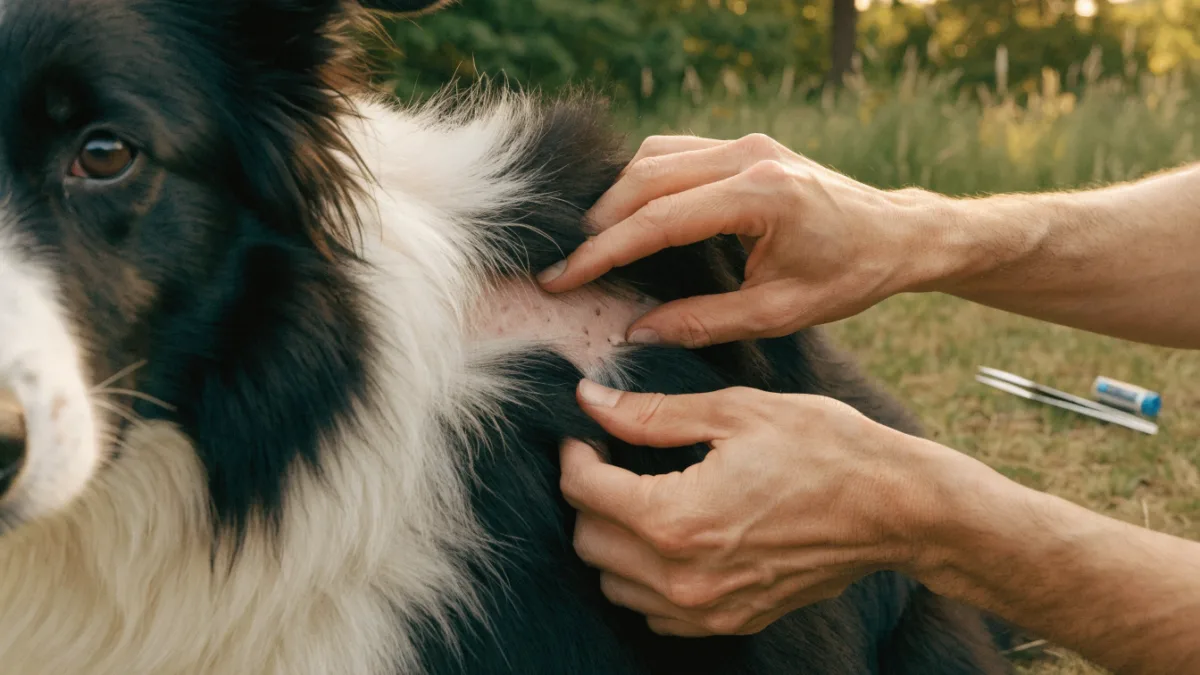
Last November, a client brought her three-year-old Brittany Spaniel, Copper, into the clinic. Copper had been limping on his front leg for a few days, but it wasn’t until I ran my fingers through his dense liver-and-white coat that I felt it: a small, hard, grayish bump attached firmly to the skin inside his ear flap. It was an adult American dog tick. His owner was horrified, mostly because she had stopped giving Copper his preventive medication in late September, assuming the “tick season” was over. This is a scenario I see entirely too often. Ticks are not just a summertime nuisance; they are highly resilient, opportunistic parasites that pose a year-round threat to our pets and our families.
Know Thy Enemy: How Ticks Actually Hunt
To effectively protect our pets, it helps to understand how these creatures operate. Despite what many of us were taught growing up, ticks do not fall from trees, they don’t jump, and they certainly can’t fly.
Instead, they rely on a rather fascinating, if unsettling, behavior called “questing.” A tick will climb to the top of a blade of grass, a low-hanging shrub, or a leafy branch. It extends its front legs into the air and simply waits. Ticks are essentially blind, but they have specialized sensory organs in their legs that detect motion, body heat, and the carbon dioxide ($CO_2$) that mammals exhale. When a dog, cat, or human brushes past that blade of grass, the tick simply grabs on. From there, it begins its slow crawl upward, usually seeking a warm, protected area of the body before embedding itself.
The Daily Once-Over: Finding Ticks Before They Bite
Because ticks take several hours to find the perfect dining spot on their host, your daily habits matter just as much as medication. I tell all my clients that a quick post-walk cuddle session is your best defense against tick-borne pathogens. Disease transmission—such as Lyme disease, anaplasmosis, or ehrlichiosis—typically takes a while, meaning if you find and remove the tick quickly, you drastically reduce the risk of infection.
Run your hands thoroughly over your pet’s entire body, paying special attention to what I call the “hidden hotspots.” Ticks love dark, moist crevices. Be sure to check:
- Inside and around the edges of the ears
- Underneath collars and harnesses
- In the “armpits” (axillary region) and groin
- Between the toes and paw pads
- Around the eyelids and under the tail
I once had a patient, a fluffy indoor-outdoor cat named Barnaby, whose owner brought him in thinking he had suddenly developed a large, rapidly growing mole on his chin. A quick look under the magnifying lamp revealed a fully engorged tick. Barnaby’s long hair made it incredibly difficult to spot. For thick-coated breeds, a fine-toothed flea comb can be incredibly helpful for parting the fur down to the skin during your daily checks.
The Art of Tick Removal: Step Away from the Match
When you find a tick embedded in your pet’s skin, the natural reaction is panic. You want it out immediately. Over the years, I’ve heard of every home remedy imaginable: covering the tick in a thick blob of petroleum jelly, drowning it in rubbing alcohol, or holding a recently extinguished, still-hot match head close to its back.
I completely understand the impulse to suffocate or burn the tick. It feels like payback. But please, put the match down. When you irritate a tick using these folk remedies, the tick’s natural stress response is to regurgitate its stomach contents—including dangerous, disease-carrying pathogens—directly into your pet’s bloodstream. You are dramatically increasing the risk of disease transmission.
The gold standard for removal is plain, fine-tipped tweezers. Here is the exact protocol I use in the clinic:
- Restrain the animal: Have a friend gently but firmly hold your pet. You don’t want them to jerk away while the tweezers are near their skin.
- Get a grip: Using fine-tipped tweezers, grasp the tick as close to the pet’s skin as physically possible. You are trying to grab the tick’s head and mouthparts, not its swollen abdomen.
- Pull straight up: Apply steady, constant upward pressure. Do not twist, jerk, or yank. A smooth, straight pull ensures the mouthparts come out cleanly.
- Do not squeeze the body: If you squeeze the tick’s engorged abdomen, you risk forcing tick saliva and pathogens into the bite wound.
- Clean the area: Dispose of the tick by placing it in alcohol or flushing it down the toilet. Thoroughly wash the bite site with warm, soapy water or a mild antiseptic.
If you accidentally leave a tiny piece of the mouthparts behind in the skin, don’t panic. The body usually treats it like a minor splinter and will form a small, localized scab. Just monitor the area for excessive redness or swelling over the next few days.
Building a Year-Round Shield
I’ll be honest: I’ve changed my mind about parasite prevention over the last decade. Early in my career, I used to tell owners they could safely pause their tick medications during the winter months. Based on shifting climate patterns, warmer winters, and the incredible adaptability of these parasites, that is no longer good advice. Ticks can be active at temperatures as low as 40°F (4°C). If the ground isn’t covered in solid snow or frozen solid, ticks can be questing.
Year-round prevention is no longer optional; it is a medical necessity. Because both dogs and outdoor cats are highly susceptible to tick-borne diseases, comprehensive, veterinary-approved preventatives are required to keep every pet in the household safe.
Prevention is multi-modal, meaning there are several ways to protect your pet. You can use convenient oral pills (which work systemically to kill ticks that bite), topical treatments applied to the skin, or specialized collars that repel and kill on contact. There is no single “best” option for every animal. What matters is that the product is appropriately dosed for your pet’s exact weight and species. Please consult your veterinarian to determine which medication is safest for your specific pet—especially if you have a multi-species household, as certain dog preventatives are highly toxic to cats. Never give a cat a medication formulated for a dog without explicit veterinary approval.
Ultimately, keeping our pets safe from ticks comes down to a combination of modern medicine and old-fashioned vigilance. By understanding how these pests hunt, committing to daily physical checks, mastering the proper removal technique, and utilizing year-round veterinary preventatives, you are doing everything possible to keep your beloved companions safe and healthy—no matter the season.