

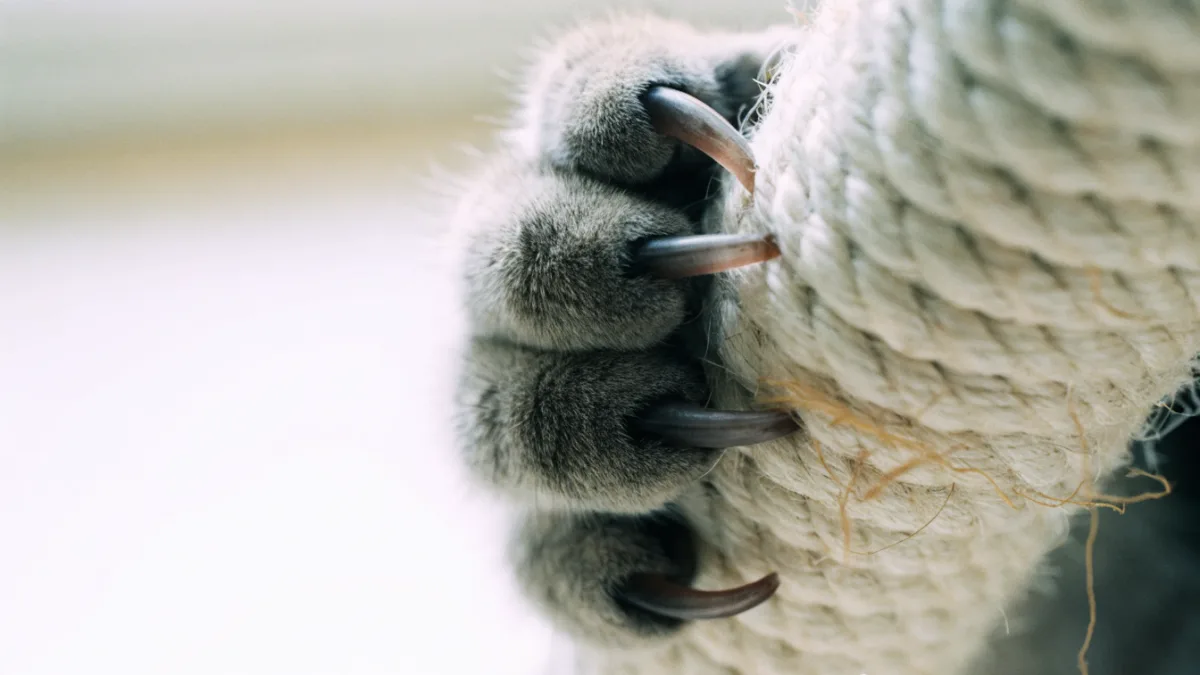
There’s a particular kind of horror that hits when you walk through the front door and see what your pet has done. Maybe it’s the corner of your couch, now sporting a lovely fringe of loose fabric threads. Maybe it’s the leg of your dining table, with little gouges in the wood that tell a story of sustained, dedicated effort. Or maybe it’s a shoe — your favorite shoe — with teeth marks pressed deep into the leather. Your first instinct is probably frustration. Totally fair. But here’s the thing: your cat didn’t scratch your couch because they hate you, and your dog didn’t chew your shoe out of spite. They did it because they’re animals with deeply wired biological needs, and you forgot to give them a legal outlet.
Nobody’s Trying to Ruin Your Furniture
Let’s just get this out of the way up front. What we call “destructive behavior” is usually just normal animal behavior happening in the wrong place. Scratching and chewing aren’t character flaws. They’re not signs of a poorly trained pet or a bad attitude. They’re instincts so fundamental that they’re going to come out one way or another — the only question is whether they come out on something you bought for that purpose, or on the armrest of the chair your grandmother gave you.
My cat Mochi has a talent for finding the single most expensive piece of fabric in any room. I once bought a cheap scratching post at a garage sale, plonked it next to her favorite armchair, and felt very pleased with myself. She sniffed it once, looked at me like I’d insulted her, and went right back to the armchair. The post wobbled when she tried to use it. She’s not stupid. Why would she stretch out on something that tips over when the nice sturdy chair is right there?
That experience taught me more about animal enrichment than any article I’d read. Our pets aren’t being difficult. They’re being practical. They have needs, and they’re going to meet those needs with whatever tools are available. The fix isn’t to punish the behavior — it’s to understand it well enough to redirect it.
Why Cats Absolutely Must Scratch
Scratching is non-negotiable for cats. If you have a cat, scratching is happening in your home. The only variable is what they’re scratching on. Veterinary behaviorists recognize scratching as essential enrichment, not optional entertainment. Here’s what’s actually happening when a cat digs into a surface:
Claw Maintenance
Cats’ claws grow in layers, and the outer sheath gets dull and ragged over time. When a cat scratches, they’re essentially stripping away that dead outer layer to reveal the sharp, healthy claw underneath. It’s grooming — like filing your nails, if filing your nails also gave you a full-body stretch and a mood boost. Without appropriate scratching surfaces, cats can end up with overgrown or ingrown claws, which is genuinely painful and can require veterinary intervention.
The Full-Body Stretch
This is the part I didn’t fully appreciate until I watched Mochi really commit to a scratch. She reaches up, digs in, and pulls her entire body upward — elongating her back, her shoulders, the muscles along her legs and paws. It’s a yoga routine.,[1] that this stretching action keeps cats physically limber and helps maintain muscle tone. A post that’s too short for the cat to get a full extension is basically useless for this purpose.
Chemical and Visual Territory Marking
Cats have scent glands between their paw pads. When they scratch, they’re not just leaving visible claw marks — they’re depositing pheromones that signal “I live here” to themselves and any other animals in the space. This is why cats often scratch more when there’s a new pet, a new person, or even furniture rearrangement. They’re not acting out. They’re re-establishing their scent map because something changed it. [2] scratching isn’t bad behavior — it’s communication.
Stress Relief
Scratching feels good. It releases energy, relieves boredom, and helps cats self-soothe when they’re anxious. A cat who has no appropriate outlet for scratching is a cat building up stress with nowhere to put it. That stress doesn’t just disappear. It finds another way out — and you probably won’t like where it goes.
Why Dogs Absolutely Must Chew
If scratching is the feline release valve, chewing is the canine equivalent. And just like with cats, chewing serves multiple overlapping purposes that go way beyond “dog is bored and decided to eat a shoe.”
It’s How Dogs Process the World
Dogs explore with their mouths the way humans explore with our hands. Puppies especially need to chew — they’re teething, their gums hurt, and applying pressure feels good. But adult dogs chew too, and for good reason. Chewing releases endorphins. It’s genuinely calming. [3] that chew toys provide mental stimulation that prevents boredom-related anxiety, which is a leading cause of destructive behavior in dogs left alone for long periods.
Dental Health
Appropriate chew objects help scrape plaque off teeth and massage gums. This isn’t a substitute for dental cleanings — talk to your vet about that — but it does contribute to oral health in a meaningful way. The mechanical action of chewing on something with appropriate texture helps keep the teeth cleaner than they’d otherwise be.
Jaw Satisfaction
Dogs have a biological drive to use their jaws. Working breeds, terriers, retrievers — many dogs were literally bred to carry things in their mouths. When that drive has no outlet, it finds one. Baseboards. Table legs. The remote control. The framing around your bedroom door, if you’re unlucky enough to have a bored adolescent Lab with separation anxiety. Ask me how I know. Actually, don’t.
The Weird Double Standard We Have
Here’s something I’ve noticed in my own circle of pet-owning friends. When a dog destroys something, people tend to frame it as a training problem. “You need to work on that.” “Have you tried crate training?” “You should talk to a behaviorist.” When a cat destroys something, people tend to shrug. “Cats, you know? What are you gonna do.”
Neither reaction is entirely wrong, but both miss the point. Both species are acting on instinct, and both need appropriate environmental enrichment to keep that instinct from causing household damage. The difference is that dog owners often get advice about management and redirection, while cat owners are sometimes pushed toward punitive “solutions” that don’t address the underlying need at all.
And let’s be honest about the declawing conversation, because it’s part of this discussion whether we want it to be or not. Declawing is the amputation of the last bone of each toe. It’s not a trim. It’s not a manicure. It’s surgery that can cause lifelong pain and behavioral issues. The countries where it’s banned keeps growing for a reason. The answer to scratching isn’t to remove the claws — it’s to provide a good enough post that the cat prefers it over your sectional.
How to Actually Set Them Up for Success
Providing appropriate outlets isn’t complicated, but it does require more thought than grabbing the cheapest item off a store shelf. Here’s what actually matters:
- For scratching posts, stability is everything. A post that wobbles when the cat leans into it will be ignored. Look for a wide, heavy base. If you can tip it over with one finger, your cat definitely can.
- Height matters. The post needs to be tall enough for your cat to fully extend their body while reaching up. If you have a large cat, that might mean a post that’s three feet tall or more. Yes, they take up space. That’s the price of intact furniture.
- Material preferences are real. Some cats love sisal rope. Others prefer corrugated cardboard. Some want vertical surfaces, others want horizontal pads they can stand on. You may need to try a few before finding the winner. Mochi’s current favorite is a horizontal cardboard scratcher shaped like a fish. It’s ugly. She adores it.
- Location, location, location. Cats scratch where they spend time. A post hidden in the spare bedroom won’t get used. Put scratching surfaces near sleeping spots, near entry points, and — crucially — near the furniture they’ve already been targeting.
- For chew toys, match the toy to the dog’s chewing style. Gentle chewers do fine with softer toys. Power chewers need something that won’t splinter, break into swallowable chunks, or wear down teeth. Size matters too — if it fits entirely in the dog’s mouth, it’s a choking hazard, not a chew toy.
- Variety prevents boredom. One chew toy isn’t enough any more than one scratching post is enough for a multi-level home. Rotate options to keep things interesting.
Enrichment Isn’t Optional Anymore
The current consensus among veterinary behaviorists and animal welfare organizations is clear: environmental enrichment is baseline care, not a luxury. Toys, posts, and appropriate chew outlets belong in the same category as food, water, and shelter. When we bring animals into our homes, we’re responsible for meeting the needs that their environment would naturally provide. A cat without a scratching post is like a bird in a cage with no perch. A dog without appropriate chew outlets is an animal whose most basic behavioral needs are going unmet.
I think about this differently now than I used to. That scratched-up armchair? I ended up donating it and buying a replacement — along with four different scratching surfaces scattered throughout my apartment. The total cost was less than the emotional toll of being constantly frustrated with Mochi for doing something she literally cannot help doing. She wasn’t the problem. I was, for expecting her to suppress an instinct because I hadn’t given her a better option.
The shift in perspective changes everything. When you stop seeing scratching and chewing as misbehavior and start seeing them as communication — “I need this, please give me a place to do it” — the relationship with your pet gets a lot less adversarial and a lot more cooperative. They’re not trying to make your life harder. They’re just being exactly what they are. Our job is to make sure that’s enough.
Sources
- Veterinarians note — mybeevet.com
- As one veterinary practice puts it — facebook.com
- Veterinary experts emphasize — dvm360.com