

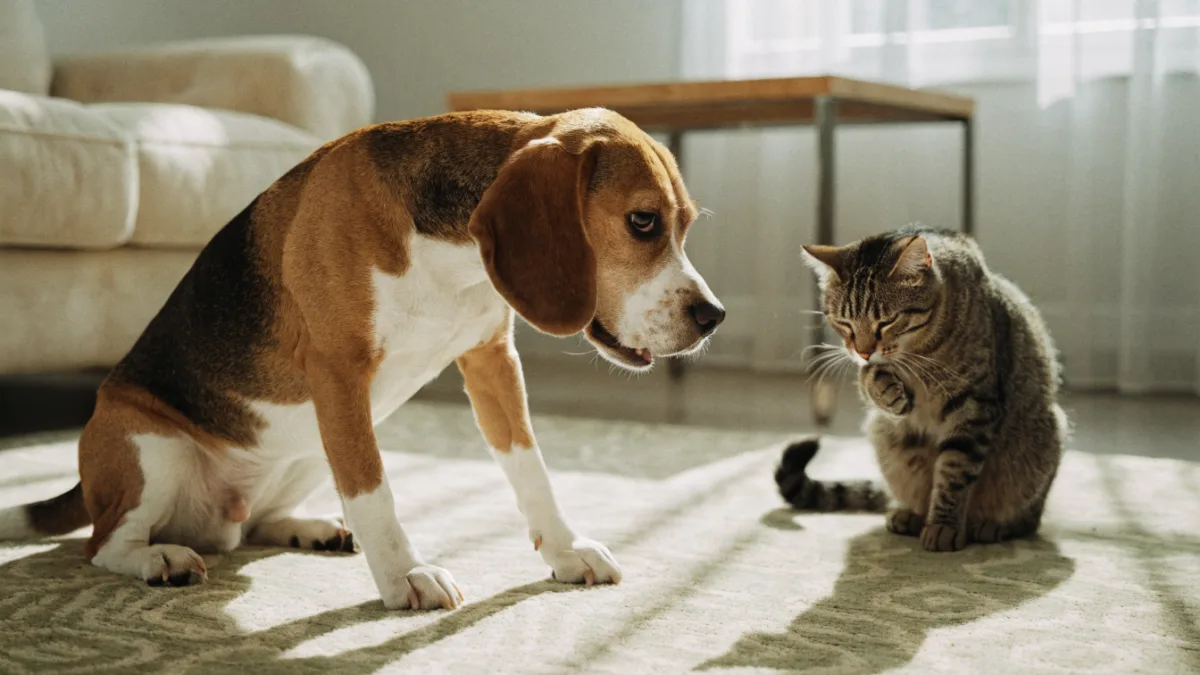
Picture an owner named Karen rushing her three-year-old Beagle, Maisy, into a clinic. “She’s been doing this awful dragging thing across the living room rug,” Karen said, miming the movement with her hands. “My mother-in-law said it’s worms, but I checked and I don’t see anything.” One look at Maisy’s swollen, slightly irritated rear end told me everything I needed to know. Her anal glands were full, uncomfortable, and needed expressing. Five minutes later, Maisy was bouncing toward the door like nothing had happened, and Karen was apologizing for the smell — a smell clinic staff grow remarkably nose-blind to. What surprised Karen most was when I mentioned that her cat, Chairman Meow, almost certainly would never have this problem. That got her thinking, and it’s a question I hear constantly: why do dogs need their anal glands expressed so often while cats almost never do?
What Are Anal Glands, and Why Do Animals Have Them?
Every dog and cat is born with a pair of small, grape-sized sacs tucked just inside the anus at roughly the four o’clock and eight o’clock positions. These are the anal glands, sometimes called anal sacs, and they continuously produce a thick, brownish, distinctly fishy-smelling fluid. Each gland connects to the outside world through a tiny duct that opens right at the anal opening.
The leading theory — and it’s a strong one — is that these glands serve as a biological ID card. When your dog or cat defecates, the stool naturally presses against the glands as it exits, squeezing out a small amount of this pungent fluid onto the waste. That scent signature tells other animals who was here, what they ate, their reproductive status, and probably information we don’t even fully understand yet. Wild canids and felids use this system constantly for territorial marking and social communication. Your housecat spraying the garden fence is using a related, though not identical, scent-marking system. Your dog sniffing another dog’s rear end at the park is essentially reading that dog’s anal gland resume.
We don’t entirely understand why domesticated pets have retained these glands with such vigor, given that most of them aren’t marking territory in any meaningful survival sense. But retained they are, and for many dogs, they’ve become more of a nuisance than a communication tool.
The Scooting Dilemma: Why Dogs Struggle More Than Cats
Here’s where the species difference becomes dramatic. Vets express dog anal glands far more often than cat anal glands — by most accounts at least twenty times more often. Some veterinarians go years without needing to manually express a cat’s glands. The reasons come down to anatomy, stool consistency, and domestication itself.
The Anatomy Problem
Dogs have been selectively bred for thousands of years into an astonishing variety of body shapes. Consider the difference between a Greyhound and a Pug — their entire pelvic architecture, tail set, and anal anatomy differ dramatically. Some breeds, particularly small breeds like Toy Poodles, Chihuahuas, and Basset Hounds, have anal gland ducts that are narrower than average or positioned at angles that make natural drainage difficult. Their bodies essentially engineered a plumbing problem through selective breeding for other traits entirely.
Cats, by contrast, have remained remarkably anatomically uniform. A Maine Coon and a Siamese have far less structural variation than a Great Dane and a Dachshund. Their anal gland ducts tend to be appropriately sized and positioned, allowing for reliable natural drainage.
The Stool Consistency Factor
This is the piece worth emphasizing most. Anal glands empty through physical pressure — specifically, the pressure of a firm, bulky stool passing over them. Cats are obligate carnivores, and their digestive systems produce small, firm, well-formed stools that apply excellent pressure to the glands during defecation. Mission accomplished, every time.
Dogs, being omnivores, have more variable stool quality. Many commercial dog diets, especially those high in fillers or moisture, produce softer stools that simply don’t press firmly enough against the gland ducts. The fluid stays trapped, gradually thickening as water is absorbed by the body, and eventually creating an impaction. I had a patient — a sweet Golden Retriever named Cooper — whose owner switched him to a lower-quality kibble during a financial rough patch. Within three weeks, Cooper was scooting constantly. His stool had softened just enough that his glands stopped emptying naturally.
Recognizing the Signs: Is Your Pet Scooting?
The classic symptom is unmistakable: your dog sits, lifts their hind legs, and drags their bottom across your carpet, grass, or favorite rug. Owners often assume it’s parasites, and historically that was a reasonable thought — tapeworm segments can cause similar irritation. But in my experience, the vast majority of scooting dogs have anal gland issues.
Other signs include excessive licking or biting at the anal area, a sudden fishy odor on your pet or their bedding, visible swelling or redness near the anus, and sometimes a brownish discharge on furniture. Some dogs will chase their tails or act restless. In severe cases where a gland has become infected or abscessed, you might see blood or pus, and your dog may cry out when trying to defecate. That’s an emergency — don’t wait.
Cats show similar signs, though they’re more discreet about it. You might notice excessive grooming of their hindquarters, small brown smears where they’ve been sitting, or a fishy smell. I’ve seen cats with impacted glands become irritable or start avoiding the litter box because they associate the pain with defecation.
The Routine Expression Debate: A Controversy Worth Understanding
This is where veterinary medicine and the grooming industry sometimes disagree, and I’ll be honest — I’ve changed my thinking on this over the years.
Many groomers include anal gland expression as part of their standard service, often performing it at every grooming appointment whether the glands need it or not. The logic is preventive: empty them before they become a problem. Some pet owners request it routinely for the same reason.
However, many veterinarians — myself included — have moved toward an as-needed philosophy. Here’s why: manually expressing healthy, naturally emptying glands introduces trauma to the delicate tissue. Over time, repeated unnecessary expression can cause inflammation, scar tissue formation, and actually create the very problem you’re trying to prevent. The glands can become dependent on manual emptying rather than functioning naturally.
I now recommend expression only when there’s a genuine need — scooting, visible discomfort, or your veterinarian detects fullness during an exam. If your dog’s glands are working fine, leave them alone.
There are exceptions. Some dogs have chronic anatomical issues that mean they’ll always need help, and for those patients, a regular schedule makes sense. But that should be determined through a veterinary exam, not assumed.
The Fiber Solution: Modern Preventive Care
The most significant shift in how we approach anal gland health has been dietary. Rather than treating the symptom — full glands — we’re increasingly focused on preventing the underlying cause: stool that’s too soft to do its job.
Increasing dietary fiber is remarkably effective for many dogs. Fiber adds bulk and firmness to stool, which means better pressure against the glands during defecation. I’ve had patients who went from needing expression every four weeks to needing it twice a year, simply from adding fiber to their diet. Options include switching to a high-fiber commercial formula, adding plain pumpkin puree (not pie filling) to meals, or using veterinary-recommended fiber supplements. The exact approach should be discussed with your veterinarian, since too much fiber too quickly can cause its own digestive upset.
Weight management matters too. Overweight dogs carry extra tissue around the anus that can interfere with natural gland emptying. And adequate exercise keeps the digestive system moving properly, which contributes to healthier stool formation.
For cats, the same principles apply, but they rarely need intervention. If your cat is having recurrent anal gland issues, something else is usually going on — chronic diarrhea, inflammatory bowel disease, or another underlying condition that warrants investigation rather than routine expression.
When to Call Your Veterinarian
If you notice scooting once or twice and it resolves, you can probably mention it at your next regular visit. But if scooting is frequent, if you see swelling, blood, or pus, if your pet seems painful, or if there’s a sudden behavior change, don’t wait. Anal gland abscesses can rupture through the skin, creating a painful, messy situation that requires antibiotics and sometimes surgery.
And please — while I understand the temptation of home remedies and DIY expression videos — talk to your veterinarian before attempting expression yourself. Performed incorrectly, you can rupture a gland, cause infection, or create trauma that makes future problems worse. Your vet or a trained veterinary technician can show you proper technique if your dog truly needs regular maintenance.
The anal gland conversation may not be glamorous, but understanding how these small structures work — and why dogs and cats handle them so differently — can save your pet significant discomfort and save you from replacing yet another rug. If your pet is scooting, don’t be embarrassed to ask. Trust me, we’ve seen it all, and we’d much rather help early than treat an abscess later.