

Let me paint you a picture. It’s a Sunday afternoon. My cat Mochi has somehow gotten into the cabinet under the bathroom sink and emerged covered in what I can only describe as “questionable sticky substance.” I’m standing in the bathroom, holding a bottle of cat shampoo, making eye contact with a 9-pound ball of fluff who has suddenly transformed into a feral raccoon. The bath that follows involves me getting more wet than she does, a shower curtain that will never be the same, and both of us questioning every life decision that led to this moment.
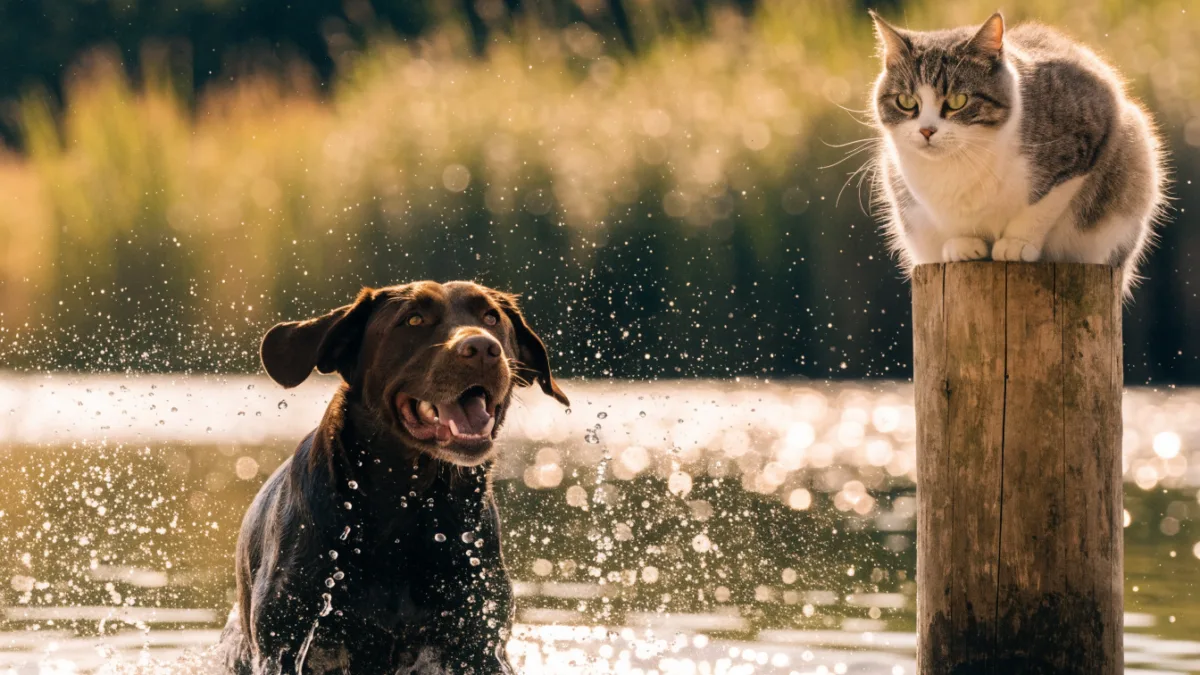
If you’ve ever tried to bathe a cat, you know. The yowling. The clawing. The way a normally graceful animal suddenly becomes a slippery, furious noodle. Meanwhile, my neighbor’s Golden Retriever literally throws himself into every puddle, pond, and questionable body of water he can find. What gives? Why did nature decide that dogs should be aquatic enthusiasts while cats treat water like it’s lava?
Blame the Desert: The Evolutionary Roots of Pet Water Aversion
Here’s the thing that completely changed how I understand my cats: domestic cats evolved from ancestors who lived in arid, desert environments. We’re talking about the African wildcat, Felis lybica, whose entire existence revolved around scarce water sources and dry terrain. When your species develops in a place where water is rare, you don’t exactly build swimming into your cultural DNA.
Cats didn’t need to cross rivers to hunt. They didn’t need to fish. Their prey was land-based—rodents, small birds, insects. Water wasn’t a resource to play in; it was something you drank carefully and then moved away from. Over thousands of years, this shaped feline behavior. Cats became masters of self-grooming specifically because they needed to stay clean without relying on water baths.
Dogs, on the other hand? Totally different story.
The Water Dog Legacy
Many dog breeds weren’t just okay with water—they were literally created to work in it. Retrievers, spaniels, poodles, Portuguese Water Dogs, Irish Water Spaniels—their names tell you exactly what humans bred them to do. For generations, these dogs dove into lakes, rivers, and marshes to retrieve waterfowl, pull fishing nets, and perform water rescues. We selected for dogs who loved water, who had webbed toes, and whose coats repelled moisture naturally.
So when your Lab leaps into a muddy pond with the joy of a child at a water park, that’s not random. That’s centuries of intentional breeding saying “yes, get in there, that’s your whole job.” Dog swimming instincts aren’t just a quirk—they’re a feature, not a bug.
Wet Fur Is Heavy Fur: The Physical Reality
Evolutionary history isn’t the whole story, though. There’s also a very real, physical reason cats hate getting wet, and it comes down to their fur.
Dog coats—especially water breeds—have oils that help repel moisture. Water rolls off a retriever’s back like, well, water off a duck’s back. But a cat’s coat? It absorbs water like a sponge. When Mochi gets wet, she goes from fluffy cloud to soggy, heavy mop in about three seconds. Her fur weighs her down. She feels sluggish, vulnerable, and utterly miserable. For an animal whose survival strategy relies on agility and speed, feeling weighted down triggers a deep, instinctive fight-or-flight response.
That panic isn’t drama. It’s biology. Your cat isn’t being difficult for the sake of being difficult—her body is genuinely telling her she’s in danger.
Self-Grooming: The Cat’s Built-In Bath System
And here’s another crucial difference: cats genuinely don’t need us to bathe them. Those sandpaper tongues aren’t just for showing affection (or, more likely, for licking plastic bags at 3 AM). They’re sophisticated grooming tools. A healthy cat spends up to 50% of their waking hours cleaning themselves. Their tongues have tiny backward-facing barbs called papillae that distribute natural oils through their coat, remove dirt, and keep everything in working order.
When we humans decide a cat needs a bath, we’re often working against a system that’s already functioning perfectly. Unless there’s a medical reason, a toxic substance on their fur, or severe matting, most cats are better off handling their own hygiene. Many veterinarians actively recommend against regular water baths for cats because over-bathing strips essential natural oils from their skin and causes unnecessary stress.
Trauma and the Spiral of Cat Bath Struggles
Here’s where things get complicated. One bad bath experience can create a lifelong association between water and terror for a cat. If a cat is forced into water, held down, or sprayed abruptly, that memory sticks. Next time they hear the faucet running? They’re gone. Before you even get near them.
This is why approach matters so much when bathing is genuinely necessary. Cats remember. And unlike dogs, who often have a “forgive and forget” attitude about unpleasant experiences (especially if treats are involved), cats hold grudges. Professionally.
I learned this the hard way with my first cat, Biscuit. One stressful bath when he was two meant that for the next twelve years, he’d vanish the second he heard the bathroom fan click on. I don’t blame him. I’d hide too.
Exceptions Exist: When Cats Break the Rules
Now, I’d be lying if I said every cat hates water. The animal behavior community loves debating this, and there are genuinely fascinating exceptions.
Large wild cats like tigers and jaguars are actually known for loving water. Tigers will swim to cool off, and jaguars hunt in rivers. In the domestic world, breeds like the Turkish Van (literally nicknamed the “swimming cat”), Bengal, and Maine Coon often enjoy playing with water or even swimming. Some cats are fascinated by running faucets. Others will paddle in shallow water without complaint.
My friend’s Bengal, Pepper, will sit in the shower with her. Voluntarily. Cats are individuals, and while the general rule holds—most cats despise water—there’s always that one cat who decided to be different.
When You Absolutely Must Bathe a Cat (Survival Guide)
Okay, so sometimes a bath is unavoidable. Maybe your cat rolled in something toxic. Maybe they have a skin condition that requires medicated bathing. Maybe, like me, you’re dealing with “questionable sticky substance” and there’s no other option. Here’s how to survive it with your relationship—and your skin—intact.
Before the Bath
- Trim those nails first. This isn’t optional. Even the calmest cat may panic when wet, and trimmed claws mean less damage when it happens.
- Set up a non-slip surface. Place a towel or rubber mat at the bottom of the sink or tub. Sliding around causes immediate panic in cats. Stability is everything.
- Gather everything beforehand. Shampoo, towels, treats—have it all within arm’s reach. You cannot leave a wet, angry cat unattended to grab something you forgot.
During the Bath
- Use lukewarm water only. Not hot, not cold. A gentle stream, not a harsh spray. Keep water away from the face, eyes, and ears entirely. Clean the face with a damp cloth if needed.
- Go slow. Introduce water gradually. Start at the back and work your way forward. Let your cat adjust before progressing.
- Use positive reinforcement. High-value treats throughout the process can help. Some feline behaviorists recommend smear a lick mat with wet food and stick it to the wall near the bathing area—it gives your cat something to focus on besides the horror of being wet.
- Don’t force it. If your cat is truly panicking, stop. Try again later or consider alternatives. No bath is worth damaging your cat’s trust in you.
After the Bath
Wrap your cat in a warm towel immediately. Most cats will tolerate being gently rubbed dry more than they’ll tolerate air dryers. Offer treats, give them space if they want it, and accept that you’re probably getting the cold shoulder for the rest of the evening. They’ll forgive you. Eventually.
The Waterless Revolution
Here’s some good news for cat owners who dread baths: the pet care industry has finally caught on. Waterless foaming cat shampoos have become genuinely effective—you massage the foam into your cat’s coat, towel it off, and you’re done. No water required. Dental wipes, grooming gloves, and dry bath products mean that for routine cleaning, you can often skip the water entirely.
If your cat needs a quick freshen-up between professional groomings or for minor messes, these products can be lifesavers. They reduce stress for your cat and save your shower curtain. Win-win.
Respecting Species Differences
The real takeaway here isn’t that cats are difficult and dogs are easy. They’re just different animals with different evolutionary histories, different physical needs, and different ways of experiencing the world. Your dog’s love of water is beautiful. Your cat’s hatred of it is equally valid.
When we understand why our pets behave the way they do—why Mochi turns into a fury tornado at bath time while my neighbor’s dog lives for lake days—we can meet their needs with more patience and compassion. We can stop fighting their biology and start working with it. And honestly, most cats don’t need baths anyway. They’ve got this handled. They’ve been handling it for thousands of years without us.
So next time your cat gives you a look of pure betrayal during a bath, remember: it’s not personal. It’s evolution. And maybe invest in a good waterless shampoo instead.