

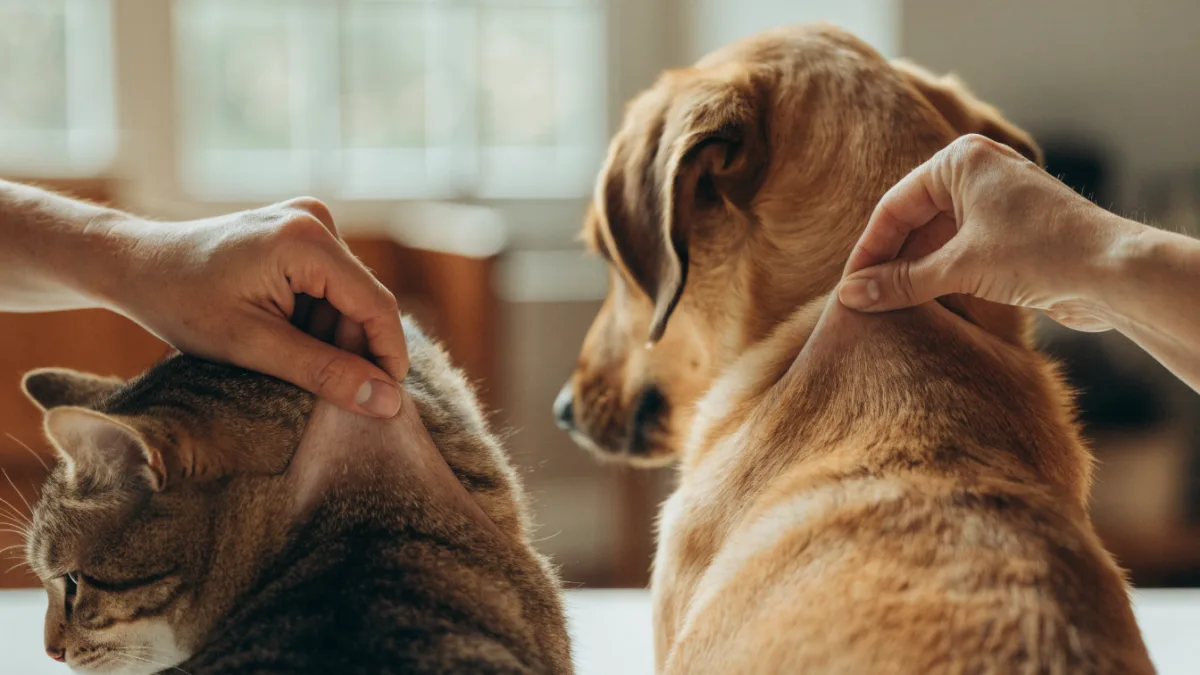
Last summer, a client named Marcus rushed his three-year-old Golden Retriever, Cooper, into the clinic on a Sunday afternoon. They’d been mountain biking in 90-degree heat, and Cooper had been “fine” until he suddenly wasn’t—lethargic, panting heavily, and refusing his water bowl. When I lifted the skin between Cooper’s shoulder blades and let go, it stayed peaked up like a little tent for nearly three seconds before slowly settling. Marcus watched my face and said, “That doesn’t look good, does it?” He was right. Cooper was around 8% dehydrated, and that simple pinch test told us almost everything we needed to know before we even drew blood.
That moment—lifting a fold of skin and watching what happens—is one of the oldest, fastest, and most useful diagnostic tools in veterinary medicine. It’s called the skin tent test, and it’s something every pet owner can learn to do at home. But there’s more nuance to it than most people realize, especially when you’re comparing dogs and cats. Let me walk you through how it works, what it tells you, and where it can lead you astray.
The Pet Skin Tent Test: A Step-by-Step Guide
The concept is beautifully simple. Your pet’s skin is supposed to behave like a fresh rubber band—stretchy, elastic, and quick to snap back into its original shape. When the body loses too much water, the skin loses that elasticity. The technical term is decreased skin turgor, which just means the skin doesn’t bounce back the way it should.
Here’s exactly how to perform the test:
- Position yourself beside or behind your pet so they’re calm and comfortable. Most pets tolerate this better from the side than from directly overhead.
- Locate the spot between the shoulder blades—the scruff area, essentially. This is where the skin is loosest and most representative of overall hydration.
- Gently pinch and lift a fold of skin between your thumb and forefinger. You’re not trying to hurt them—just lift a small tent of skin away from the muscle underneath.
- Hold for one second, then release.
- Watch what happens. Well-hydrated skin snaps back immediately, almost instantly flattening out. If the skin stays peaked—looking like a little tent that’s slow to fall—you’re looking at a potential hydration problem.
Here’s a critical number to remember: if your pet is less than 5% dehydrated, their skin turgor will look completely normal. The skin will snap right back even though they might benefit from more fluids. Visible tenting usually indicates dehydration of 5% or higher, which is the point where you should be paying close attention and probably calling your vet. A helpful,[1] demonstrates this technique on actual patients if you want to see it performed correctly before trying it yourself.
What a “Pass” and “Fail” Look Like
A “pass” is instant. The skin drops back flat against the body within a fraction of a second. You barely have time to register that you pinched anything at all. A “fail” is equally obvious—the skin stays pinched up, sometimes for two, three, even five seconds, before slowly sinking back down. In severe cases, it might not flatten out completely at all. The longer it takes, the more dehydrated your pet likely is.
Why Dogs and Cats Hydrate So Differently
This is where things get interesting, and it’s something I find myself explaining to clients constantly. Dogs and cats have fundamentally different relationships with water, and understanding why helps you keep both species properly hydrated.
The Canine Approach: Drink Often, Lose Fast
Dogs are fairly straightforward. They have a robust thirst drive—when their body needs water, their brain tells them to go find some, and they’ll readily lap up whatever’s available. The challenge with dogs isn’t getting them to drink; it’s that they lose water so quickly during physical activity. Whether it’s a game of fetch in the backyard or a long hike on a warm day, dogs pant heavily to cool themselves, and every one of those rapid breaths carries moisture out of their body. A dehydrated dog can develop surprisingly quickly after exercise, sometimes within just an hour or two of vigorous activity in warm conditions.
I remember treating a Border Collie named Jessie who’d been playing frisbee at the dog park for about 90 minutes on a pleasant 75-degree day. Her owner was shocked that Jessie was already showing mild dehydration. “But she had water right there the whole time!” she told me. The thing is, Jessie was so focused on playing that she ignored the bowl. Dogs will absolutely prioritize fun over drinking, which is why you have to be proactive about offering water during activity, not just leaving it available.
The Feline Approach: Built for Scarcity
Cats are a completely different story, and their evolutionary history explains why. Cats descended from desert-dwelling African wildcats, animals that evolved in environments where standing water was scarce. Their bodies became remarkably efficient at extracting moisture directly from prey—a mouse is roughly 65-70% water, and a wild cat gets most of their daily hydration from the food they catch.
Because of this heritage, modern domestic cats have a naturally lower thirst drive than dogs. They simply don’t feel compelled to drink the way dogs do. Their kidneys are extraordinary organs designed to concentrate urine and conserve water—essentially squeezing every last drop of moisture out of their system before excreting waste. This is an incredible survival adaptation, but it comes with a cost.
That super-concentrated urine makes cats highly susceptible to urinary tract issues—crystals, stones, blockages, and inflammation. And over years and decades, those kidneys work so hard that chronic kidney disease becomes one of the most common serious illnesses in senior cats. Proper cat hydration isn’t just about preventing a single dehydration event; it’s about protecting the urinary tract and kidneys over a lifetime.
Recognizing Other Signs of Dehydration
The pet skin tent test is excellent, but it shouldn’t be your only tool. There are several other signs that can tell you whether your dog or cat is running low on fluids:
- Gum check: Lift your pet’s lip and press a finger gently against their gums. Healthy gums are wet and slick. If they feel sticky, tacky, or dry to the touch, dehydration is likely. When you release pressure, the spot where you pressed should return to its normal pink color within one to two seconds. A slow “capillary refill time” suggests poor hydration and potentially poor circulation.
- Eyes: Dehydrated pets often develop a slightly sunken, dull-eyed look. The eyes lose their normal brightness and moisture because the fat pads behind the eyes shrink slightly when fluid is depleted.
- Energy level: Lethargy is one of the earliest behavioral signs. A pet who’s normally bouncing off the walls but suddenly seems uninterested in activity could be telling you they need water.
- Panting and heart rate: In dogs, excessive panting at rest or a noticeably rapid heartbeat can indicate the cardiovascular system is working harder to compensate for reduced blood volume.
If you’re seeing skin tenting plus any of these other signs, don’t wait it out. Call your veterinarian.
Encouraging Fluid Intake: Dogs vs. Cats
Since dogs and cats hydrate differently, the strategies for encouraging them to drink more need to match their natural behaviors.
For Dogs
- Carry water on every adventure. Collapsible silicone bowls are lightweight and easy to clip to a leash or backpack. Offer water every 20-30 minutes during activity, even if your dog doesn’t seem interested. Many dogs won’t self-regulate, so you have to prompt them.
- Moisten their meals. Adding warm water to dry kibble is a simple way to sneak in extra fluids. Some dogs love the “soup” this creates, and it’s especially helpful for dogs who don’t drink enough between meals.
- Offer ice cubes as treats. Plenty of dogs enjoy crunching on ice, especially in warm weather. It’s hydration disguised as entertainment.
- Consider electrolyte support for active dogs. The pet industry has recently seen a surge in electrolyte supplements designed specifically for dogs who hike, run, or work hard. Look for products that are formulated for canine electrolyte balance—never give human sports drinks, as the sugar and sodium ratios are wrong for dogs, and some contain xylitol, which is toxic. Ask your vet for guidance on what to look for.
For Cats
- Incorporate wet food. This is the single most impactful change you can make for a cat’s hydration. Wet food is typically 70-80% water, compared to dry kibble at around 10%. Even replacing one meal a day with wet food significantly increases your cat’s daily fluid intake. I’ve seen cats with recurring urinary issues improve dramatically after this one dietary adjustment.
- Use a water fountain. Cats are drawn to moving water—it signals freshness and safety to their instincts. A fountain with a gentle flow often encourages cats to drink more than a still bowl ever would. Look for models with replaceable filters and easy-to-clean components.
- Place multiple water sources around the house. Cats often avoid water that’s near their food (another instinct—in the wild, a water source next to a fresh kill could be contaminated). Try placing water dishes in several quiet, separate locations.
- Consider a smart fountain. Newer water fountains now track how much your cat drinks over time. For cats with a history of urinary or kidney issues, this data can be genuinely valuable for catching problems early. Discuss any significant changes in intake with your vet.
When the Skin Tent Test Gets It Wrong
I need to be honest about the limitations of this test, because I’ve seen it cause unnecessary panic—and dangerous false reassurance.
Puppies and Kittens
In very young pets, the skin tent test is widely considered unreliable. Puppies and kittens have very little subcutaneous fat, which means their skin naturally lacks the plump elasticity of an adult animal. Their skin might not snap back quickly even when they’re perfectly well-hydrated, leading owners to believe they’re dehydrated when they aren’t. According to [2] other indicators—gum moisture, energy level, and urine output—are far more useful in young animals.
Senior Pets
Older dogs and cats face the opposite problem. Just like in older humans, skin naturally loses elasticity with age. A perfectly healthy twelve-year-old cat might have skin that takes a moment to settle back into place—something that would be alarming in a three-year-old. I’ve had plenty of clients rush in with their senior pets, convinced they’re dehydrated, when the “tenting” was simply a normal sign of aging skin.
The key is knowing your pet’s baseline. Perform the skin tent test when your pet is healthy and well-hydrated so you know what normal looks and feels like for them specifically. That way, you’ll recognize when something has genuinely changed.
Bringing It All Together
Hydration is one of those foundational aspects of pet health that’s easy to take for granted until something goes wrong. The skin tent test gives you a quick, reliable way to check in on your pet’s fluid status at home or on the trail—but it works best when you combine it with other observations and when you understand the species you’re caring for. A dehydrated dog usually tells you loud and clear that something’s wrong. A dehydrated cat might quietly concentrate their urine for days or weeks before anyone notices, all while their kidneys work overtime.
So learn the pinch test. Check those gums. Offer water proactively during exercise, and seriously consider wet food if you share your home with a cat. These are small habits, but they protect some of the most vital systems in your pet’s body—and they might just save you an emergency visit on a Sunday afternoon.
Sources
- clinical video from VETgirl — youtube.com
- clinical guidance from veterinary educators — dvm360.com