

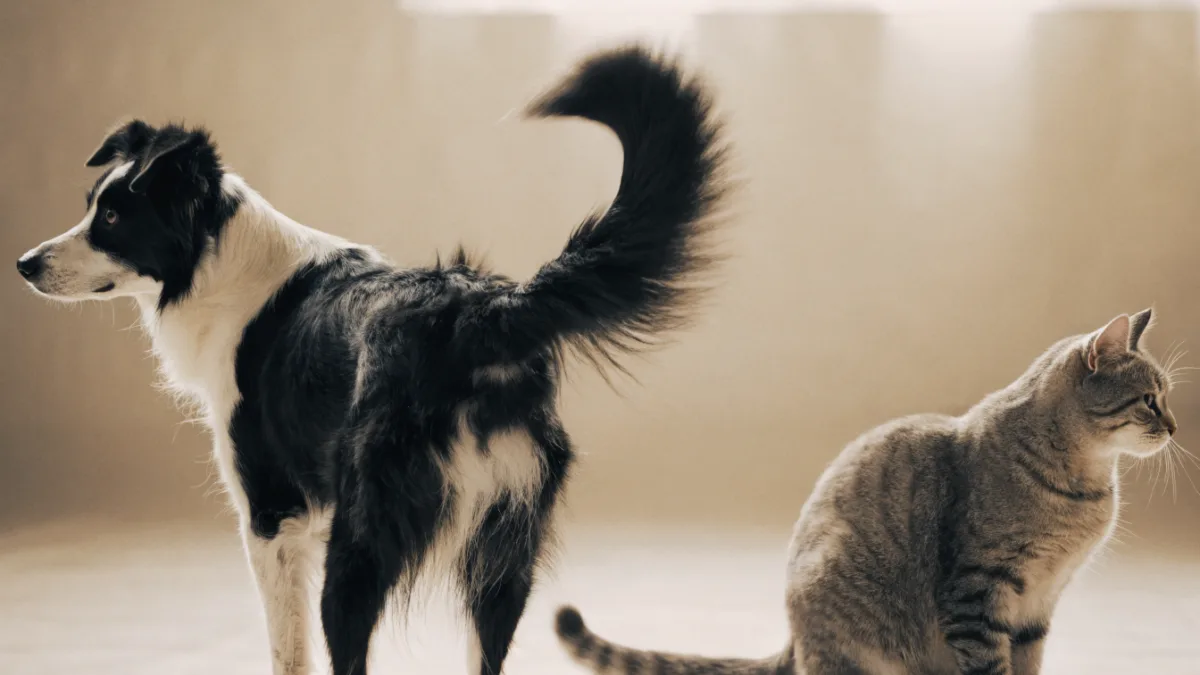
Most people see a wagging tail and think, “That dog wants to be friends.” I watched someone approach a gorgeous Akita at a local park last month because his tail was wagging. The dog bit them. Not a nip either — a full, warning-free bite to the forearm that required stitches. The owner stood there, stunned, repeating the same thing: “But his tail was wagging.” And she was right. It was. But that wag was a warning, not an invitation, and misunderstanding the difference is one of the most common — and most dangerous — mistakes pet owners make.
The Myth of the Happy Wag
Let’s get one thing straight immediately: a wagging tail does not mean a dog is happy. A wagging tail means a dog is aroused. That is a very different thing, and the distinction matters more than almost anything else you’ll learn about canine behavior.
Arousal covers a wide emotional range. A dog who is thrilled to see you after work is aroused. A dog who is terrified of the stranger approaching their yard is aroused. A dog who is deciding whether to bite the vet tech touching their paw is aroused. All of them wag.
What actually tells you how a dog feels? You have to look at the whole picture. The tail is one chapter in the story, not the whole book.
What to Look For Beyond the Tail
- Ears: Pinned back against the skull usually signals fear or appeasement. Erect and forward means interest or alertness. The “helicopter ear” — spinning like they’re tuning a radio — often signals genuine, relaxed happiness.
- Eyes: Soft, blinking eyes suggest calm. Hard, unblinking stares mean business, and not the friendly kind. “Whale eye” — when you can see the whites of a dog’s eyes — signals significant stress.
- Posture: A loose, wiggly body that curves toward you? That’s a good sign. A stiff, frozen posture, even with a wagging tail, means back off slowly.
- Mouth: A relaxed, slightly open mouth is a good sign. Lips pulled back tight, or a mouth that’s closed with tension in the jaw, signals discomfort.
I had a client last year with a Border Collie mix who would wag furiously whenever the doorbell rang. The owner assumed excitement. I watched the dog during a session — tail going like crazy, but her body was stiff, her ears were pinned flat, and she was whale-eyeing the visitor. That wasn’t excitement. That was a dog preparing to defend her home from an intruder, and the wagging tail was just evidence of intense emotional arousal. We changed how they managed door greetings, and within three weeks, the reactivity had dropped significantly.
Left Brain, Right Brain: The Direction Tells a Story
Here’s where things get genuinely fascinating. Researchers discovered that dogs don’t just wag — they wag with directional bias based on their emotional state. And no, you probably won’t notice it in real-time unless you’re filming in slow motion, but the pattern is consistent and scientifically validated.
Positive, approach-oriented emotions — happiness, recognition of a familiar person, anticipation of something good — trigger a wag that biases to the dog’s right. Anxious, fearful, or want-to-withdraw emotions trigger a bias to the left.
Why? It comes down to how the brain is wired. The left hemisphere of the brain controls movement on the right side of the body, and it’s associated with positive, approach behaviors. The right hemisphere controls the left side and deals more with withdrawal, fear, and negative emotions. So when a dog sees their favorite person, the left brain lights up, and the tail swings right. When they see something threatening, the right brain takes over, and the tail swings left.
Other dogs can actually read this. Studies showed that dogs observing a silhouette of another dog wagging left versus right responded differently — they became anxious and their heart rates elevated when watching left-biased wags. They read each other’s tails like we read facial expressions, and they get it right without any training.
Your Cat’s Tail: A Different Vocabulary Entirely
Cats are not small dogs, and their tail language proves it. While dogs use their tails as a broad emotional broadcast, cats tend to be more precise, more subtle, and honestly, more likely to tell you to leave them alone.
The Feline Translation Guide
Here’s what those tail movements actually mean when your cat is the one making them:
- Gently curved like a question mark at the tip: This is a friendly greeting. Your cat is happy to see you. This is the closest feline equivalent to a dog’s happy wag, and it’s an invitation for interaction.
- Tail held straight up with a slight hook: Confidence and contentment. A cat approaching you with this posture is saying hello in the friendliest way they know how.
- Slow, deliberate swishing: Interest and focus. Often seen when they’re watching a bird outside or deciding whether that dust bunny needs to be hunted. They’re engaged but not aggressive.
- Thrashing or thumping: Irritation. If your cat is thumping their tail against the couch while you pet them, stop. They’ve had enough. Ignoring this is how people get scratched.
- Puffed up like a bottle brush: Fear or extreme agitation. The fur stands on end to make the cat look bigger to whatever is threatening them. Back away and give them space to calm down.
- Tucked tightly between or around the legs: Fear, pain, or submission. A cat carrying their tail like this is not feeling secure, and they need reassurance — not forced attention.
- Wrapped gently around your leg or another cat: Affection. This is a feline hug, and it’s one of the sweetest things they do.
- Lying flat and still while resting: Relaxed and neutral. Nothing to report here, which is exactly what you want.
I worked with a family who had a senior cat named Olive. They said she’d become “aggressive” in her old age and was scratching the kids constantly. I watched the interaction for about ten minutes. Every single time the kids approached her, Olive’s tail started thumping against the cat tree immediately. She was broadcasting her discomfort clearly — the kids just didn’t speak the language. We taught the kids to watch the tail before touching her, and the scratching stopped completely within a week. Olive wasn’t the problem. Communication was.
When Cats Learn to Speak “Dog”
If you have both cats and dogs in your home, you might have noticed something odd: your cat wags their tail when they’re happy. Not the subtle question-mark curl, but an actual, dog-style wag. Maybe even with some butt involvement.
This isn’t your imagination. Cats raised alongside dogs, especially from a young age, often begin incorporating canine tail language into their communication repertoire. It’s a form of cross-species social learning, and researchers studying multi-pet households are documenting it more frequently as indoor, integrated living becomes the norm.
There’s some debate about whether this is truly learned behavior or just natural feline excitement being interpreted through a canine lens. After all, cats do swish their tails when stimulated, and a hunting cat’s tail moves with obvious energy. But the consensus among behaviorists who’ve studied the phenomenon closely is that cats in dog-heavy households genuinely adapt — they learn that tail-wagging solicits attention and response from both their canine housemates and their humans, so they start using it intentionally.
I’ve seen it firsthand with a client who has a Golden Retriever and two rescue cats raised together since kittenhood. Those cats greet her at the door, tails high and swishing back and forth in a movement that looks absolutely nothing like typical cat greeting behavior and exactly like a small, furry dog. Whether it’s mimicry, adaptation, or just clever cats figuring out what works, it’s fascinating to watch.
Learning the Language Matters
Your dog and cat are talking to you constantly. Through their tails, their ears, their eyes, their posture — they’re telling you exactly how they feel in every moment. Most of us just never learned to listen.
The more you pay attention to the whole animal — not just the tail, but everything happening together — the better you’ll understand what they need. You’ll know when to approach, when to back off, and when your cat has had enough petting for one afternoon. You’ll avoid bites, scratches, and the countless misunderstandings that strain relationships between people and their pets.
And honestly? Once you start reading the language accurately, the bond deepens in ways that’ll surprise you. There’s something powerful about understanding exactly what another creature is telling you — especially when they can’t use words to say it.