

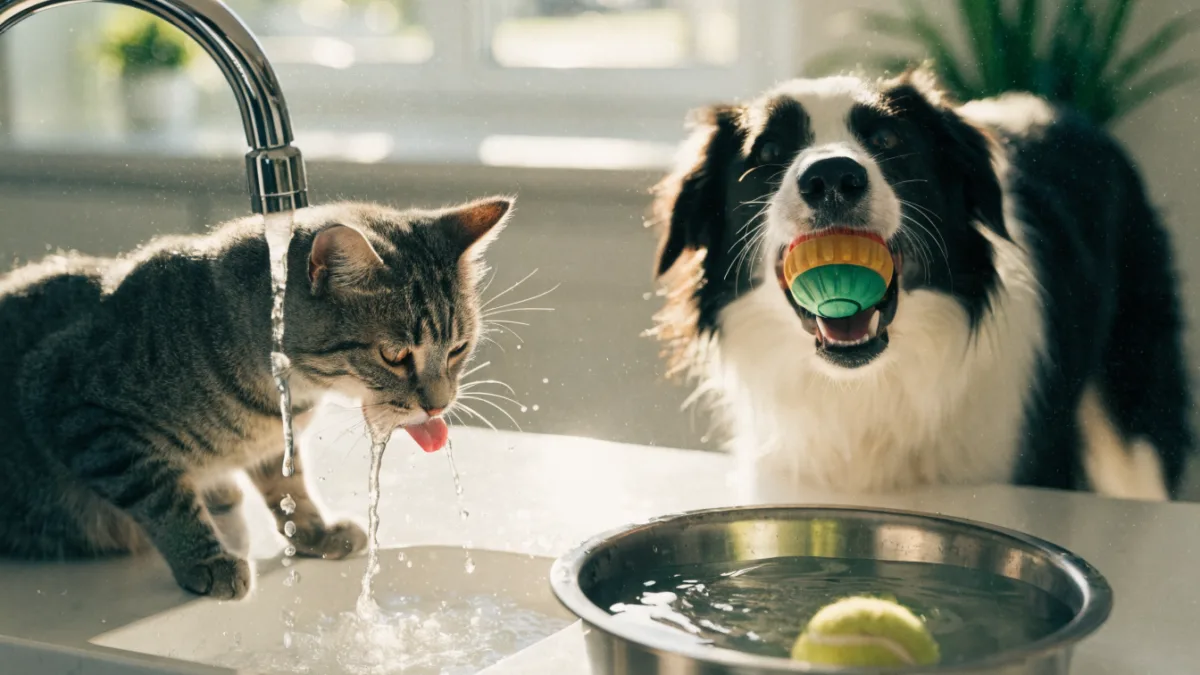
If you’ve ever found a sopping wet catnip mouse floating in your dog’s water bowl, or watched your cat aggressively ignore a perfectly good dish of fresh water in favor of dripping bathroom faucet, congratulations — you’re living the standard pet owner experience. My cat Biscuit treats her water bowl like a bank vault for her favorite crinkle toys, and my sister’s golden retriever, Moose, has turned his into a personal splash pad. These behaviors seem quirky, maybe even a little unhinged, but there’s actual evolutionary biology behind them. Understanding what’s driving these water-adjacent antics doesn’t just explain the mess on your kitchen floor — it can help you keep your pets better hydrated and healthier in the long run.
The Ancient Logic Behind the Modern Cat Water Fountain
Cats are notorious for not drinking enough water. In the wild, their ancestors — closer to the African wildcat than the pampered fluffballs sleeping on our keyboards — got most of their hydration from prey. They didn’t evolve to seek out still water because still water in nature is often stagnant, warm, and teeming with bacteria. Running water, on the other hand, meant a fresh stream, cooler temperatures, and a lower risk of making them sick. That instinct didn’t disappear just because we brought them indoors and handed them ceramic dishes.
There’s also a visual component to this. Cats have surprisingly poor ability to see still water directly in front of their faces. If you’ve ever watched your cat stare at a bowl like it’s a magic eye puzzle before tentatively dipping a paw in, that’s why. The movement and ripples in flowing water help them locate the surface, which prevents the deeply undignified experience of getting water up their nose.
This is where a good cat water fountain earns its keep. A fountain filters the water, keeps it circulating and aerated, and provides both the visual ripple and the auditory cue of a safe, running stream. The circulation also keeps the temperature cooler, which most pets find more appealing than room-temperature water that’s been sitting out since morning. If your cat has been treating the kitchen faucet like a personal watering hole, a fountain is usually the compromise that keeps everyone happy — and keeps you from leaving the bathroom sink running all day.
Whisker Fatigue: The Bowl Problem Nobody Talks About
One more thing working against traditional bowls: whisker fatigue. Cat whiskers are packed with nerve endings, and when those sensitive hairs repeatedly brush against the sides of a narrow, deep bowl, it can cause genuine discomfort and stress. This has gotten more attention recently, and thankfully, the market has responded with wider, shallower dishes and fountain designs that let cats drink without their whiskers touching the sides. If your cat pulls water out of the bowl with their paw to lick off — yes, this is a thing — whisker irritation might be the culprit.
Why Does My Cat Keep Drowning Their Toys?
This is one of those behaviors that sends people racing to internet forums, and the answers are usually more endearing than concerning. When a cat drops toys into their water bowl, it’s often linked to a natural hoarding or caching instinct. In the wild, a cat might bring their catch back to a safe, central location near their water source to protect it from scavengers. Your living room is that safe territory, and the water bowl is the landmark that says “this is mine.”
So when Biscuit carefully places her favorite stuffed mouse in her water dish, she’s not trying to ruin it — she’s making a deposit at the safest bank she knows. It’s a compliment, even if it does mean I’m constantly fishing soggy toys out of the water and wringing them out in the sink.
For dogs, the motivation is different. A dog dropping a toy in their water bowl is often inviting you to play a round of bobbing-for-apples. It’s enrichment. The water adds a new texture and challenge to the toy, and if you’ll reach in and grab it, congratulations — you’ve been trained to play their favorite game.
The Hygiene Catch
Here’s where I have to be the fun police for a second. Some veterinarians warn against letting wet toys sit in water bowls indefinitely. That slobbery, submerged toy creates a damp environment where bacteria thrive, and if your pet then drinks from that same bowl, it can contribute to gastrointestinal upset. You don’t need to panic every time a toy goes for a swim, but fishing it out and giving the bowl a rinse is a good habit. If you’re going to allow the behavior, just plan on washing the bowl more often — and maybe keep backup toys on hand.
Dog Digging in Water: What’s Going On?
“Dog digging in water” is one of the most common complaints I hear from dog owners, and it usually comes with a description of a soaked floor, a soaked dog, and a very specific look of innocence. The behavior has a few root causes.
First, there’s the instinct to clear away debris. Dogs — descended from wolves — would have encountered watering holes covered in leaves, mud, or floating vegetation. Pawing at the surface was a practical way to push that material aside and get to cleaner water underneath. Your kitchen bowl doesn’t have leaves in it, but the instinct doesn’t know that.
Second, dogs create ripples for the same reason cats prefer running water: it’s easier to see. Those ripples catch light and give the water surface definition, making it more interesting to interact with and easier to locate for a drink.
Third — and this is the big one for breeds like retrievers and spaniels — it’s just fun. Paws in cool water, splashing, watching the movement. It’s self-made entertainment. If your dog is digging in their bowl on a hot day, they may also be trying to cool themselves down by wetting their paws.
The downside is obvious: it’s messy, and it can mean your dog isn’t actually drinking as much as they’re playing. A pet fountain with a smaller drinking surface can be harder to dig in, which helps redirect the behavior. Providing a separate shallow splash pool outdoors — even a plastic storage bin lid works — can give water-loving dogs an appropriate outlet for their excavation projects.
Pet Hydration: When Quirky Becomes Concerning
Here’s something that doesn’t get said enough: most of these behaviors are normal and harmless. Toys in bowls, an occasional paw in the water, a preference for running water — these are instinctual expressions, not problems to fix.
But there’s an important caveat. If your pet suddenly changes their water habits in a dramatic way — obsessively playing in water when they never did before, or drinking significantly more than usual — that’s worth paying attention to. Sudden increases in water consumption can be an early warning sign of conditions like feline hyperthyroidism, diabetes, or kidney disease. This isn’t a reason to panic; it’s a reason to call your vet and mention what you’re seeing. You’re the person who lives with your pet every day, and you’ll notice the shift before anyone else will.
For most pets, though, the fix for poor hydration is simply changing how water is presented. A fountain, a wider bowl, multiple water stations around the house, and keeping everything clean can dramatically increase daily intake. Better hydration supports urinary tract health in cats — especially critical for male cats prone to blockages — and helps prevent kidney issues and heat-related problems in dogs.
A Quick Note on Smart Fountains
Pet tech has gotten genuinely impressive lately. There are now fountains that sync with smartphone apps to track water intake in milliliters and send you a notification if your pet’s consumption drops below a healthy threshold. I’m not going to recommend specific brands, but if you have a pet with known health concerns — a cat with early kidney disease, for instance — the data tracking can be genuinely useful for catching problems early. For a healthy pet, a solid, easy-to-clean fountain is plenty.
The mess on your floor and the toys in your water bowl aren’t random acts of chaos — they’re echoes of ancient survival strategies that kept your pet’s wild ancestors alive. Cats seek running water because their bodies learned that still water was dangerous. Dogs dig and splash because clearing a watering hole was once a life skill. And toys in the bowl? That’s trust — your pet telling you that this place, this bowl, this home is safe enough to stash their most valued treasures.
So the next time you’re wringing out a drowned catnip mouse or mopping up around the dog bowl, take a breath. You’re not just cleaning up after a pet — you’re living with a small, domesticated wild thing whose instincts still run deep. Meet them where they are, give them water that moves the way their bodies expect it to, and both of you will be better for it.