

Every January, without fail, my exam rooms fill up with embarrassed pet parents clutching their dogs’ leashes or peering into their cat carriers. “I don’t know what happened, Dr. Mitchell,” they’ll say, avoiding eye contact. “Bella was fine in October, and now she’s…” They trail off, gesturing vaguely at their distinctly rounder companion. I’ve had this conversation hundreds of times, and I always start the same way: I tell them it’s not entirely their fault. Winter weight gain in pets is a real, biological phenomenon, and understanding why it happens is the first step toward doing something about it.
The Winter Metabolism Trap: Your Pet’s Body Is Working Against You
Let me introduce you to a concept called the “thrifty gene.” It’s exactly what it sounds like — a genetic trait that makes the body exceptionally good at storing fat for lean times. For wild animals facing famine and harsh winters, this gene was a literal lifesaver. Your domesticated Labrador retriever or tabby cat still carries it, even though the closest thing they’ll experience to a famine is a delayed dinner.
This genetic inheritance becomes a real problem when winter rolls around. Three things happen simultaneously: your pet’s metabolism naturally slows down (their body is preparing for scarcity that will never come), they move less because outdoor time shrinks and indoor enrichment often doesn’t compensate, and many owners actually feed more because cold weather makes everyone feel hungrier and more sedentary.
I saw this play out with a patient last winter — a five-year-old Beagle named Chester. His owner, Martin, was an avid hiker who covered miles with Chester every weekend from spring through fall. When the temperatures dropped, Martin switched to the treadmill and Chester switched to the couch. By February, Chester had gained nearly four pounds on a dog who should weigh around 30. That’s over a 13% body weight increase in three months. For a human, that would be like gaining 20 pounds between Halloween and Valentine’s Day.
The thrifty gene doesn’t care that Chester’s food bowl is always full. It just sees winter and says, “Store everything.”
Why “Just Feed Less” Backfires Spectacularly
Here’s where I need to admit something. For years, my standard obesity advice was straightforward: reduce portions, increase exercise, problem solved. I’d hand over a measured feeding chart, pat myself on the back for a clinical consultation well done, and send owners on their way. Then they’d come back three months later with a pet who’d gained weight instead of losing it.
The conventional wisdom isn’t just incomplete — it actively sabotages weight loss efforts because it ignores pet psychology. When you suddenly reduce your pet’s food, their brain interprets this as a crisis. Behavioral research shows that pets on reduced-calorie diets often eat faster, exhibit intensified food-seeking behaviors, and become genuinely preoccupied with eating.
I learned this lesson from a client named Theresa and her eight-year-old orange tabby, Marmalade. Theresa cut Marmalade’s food by 25% on my recommendation. Within a week, Marmalade had started waking Theresa at 4:00 AM by screaming outside the bedroom door, knocking every item off every shelf in the living room, and parking herself three inches from Theresa’s face during every human meal with an unblinking stare that Theresa described as “psychologically warfare.” Theresa lasted 11 days before she gave up and refilled the bowl.
She wasn’t weak-willed. She was responding to exactly what the research predicts: strict portion control disrupts the human-animal bond through behavioral disruption and owner guilt. When your pet is miserable, you feel like a monster. When you feel like a monster, you quit the diet.
The Feline Begging Arsenal
If you think dogs are annoying when they want food, you haven’t lived with a hungry cat. Dogs have basically one move — the sad eyes, maybe a paw on your knee, a well-timed whimper. It’s effective but predictable.
Cats operate on an entirely different level. Their begging tactics are what I’d call passive-aggressive disruption. The unbroken stare is their opening gambit — they’ll position themselves at eye level and maintain eye contact that feels genuinely menacing. When that doesn’t work, they escalate to property damage. Mugs get swept off coffee tables. Pens are batted under furniture with surgical precision. Picture frames become casualties. I had one client whose cat, a dignified silver Persian named Duchess, learned to open the kitchen pantry during her diet and systematically removed every item from the bottom shelf. Not to eat them. Just to make a point.
Understanding these behaviors as hunger-driven rather than “bad behavior” changes how we respond to them. Your cat isn’t being a jerk. They’re genuinely distressed.
The Human Element: Why We’re Part of the Problem
A 2017 study by Dr. MJ Downes and colleagues examined how owner beliefs, lifestyle, and emotions shape pet feeding and exercise routines. The findings fundamentally shifted how I approach obesity conversations. The study found that an owner’s personal relationship with food, their emotional attachment to feeding as an expression of love, and their own activity levels were stronger predictors of pet obesity than any factor related to the pet itself.
This tracks with what I see clinically. The client who treats themselves to comfort food all winter tends to share that pattern with their pet. The owner who exercises regularly keeps their dog active year-round. Feeding becomes a love language, and when we restrict it, both pet and owner feel deprived.
I had a breakthrough with a client named David and his Golden Retriever, Biscuit, when we stopped talking about Biscuit’s weight and started talking about David’s daily routine. David worked from home, felt isolated during winter months, and had developed a habit of giving Biscuit treats every time he himself snacked — which was constantly. Once David understood the pattern, we found other ways for him to bond with Biscuit throughout the day. Short training sessions. A game of hide-and-seek with a favorite toy. The treats dropped by 80% without Biscuit feeling neglected.
Prevention Beats Dieting Every Time
The most effective approach to winter weight is to prevent it rather than react to it. Veterinary clinics are increasingly shifting toward proactive campaigns — what some colleagues call “Battle of the Bulge” initiatives — that address root causes before pets need to lose significant weight.
Practical Strategies That Actually Work
- Focus on food density, not just volume. High-fiber, moisture-rich foods help pets feel full without excess calories. Look for formulas where fiber sources appear early in the ingredient list, and consider adding appropriate vegetables to bulk up meals.
- Replace free-feeding with puzzle feeders. This slows eating, provides mental stimulation, and extends the satisfaction of a meal. For dogs, snuffle mats and slow-feeder bowls work well. For cats, food-dispensing toys that require batting and problem-solving can extend a meal from two minutes to twenty.
- Maintain winter exercise through indoor alternatives. Indoor fetch, laser pointer sessions followed by a real toy to “catch,” stair-climbing games for dogs, and even indoor agility courses made from household items can keep activity levels reasonable.
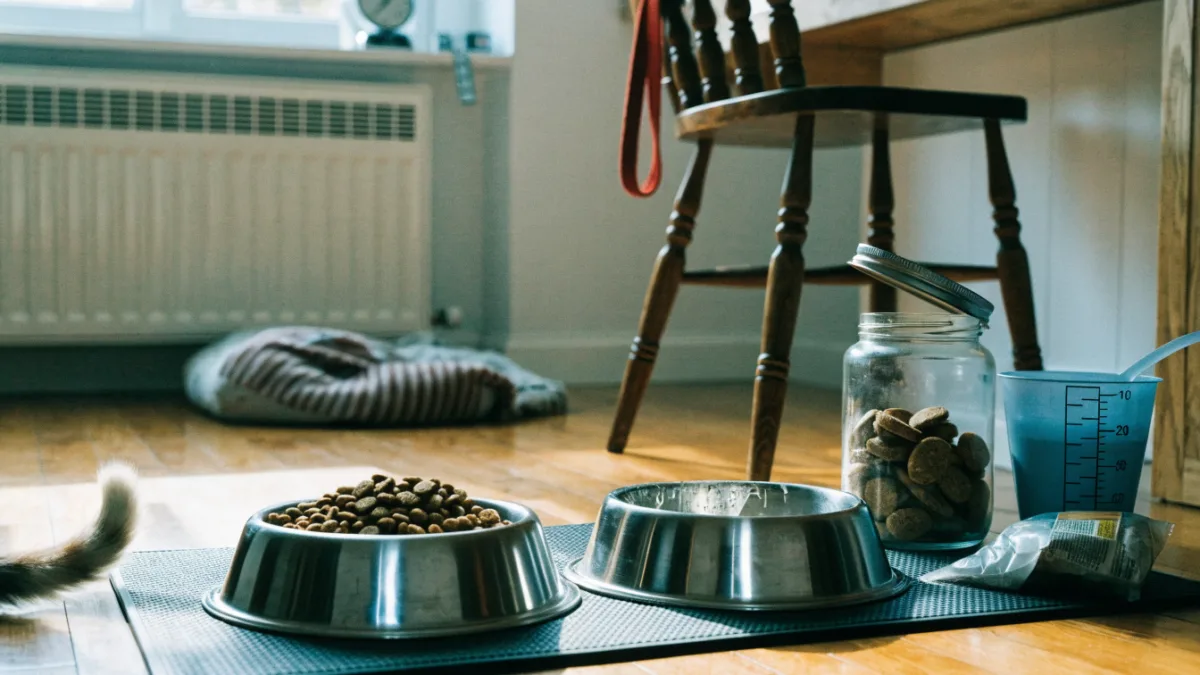
- Measure everything. Owners consistently underestimate how much they’re feeding by 20-30%. Use an actual measuring cup or kitchen scale, not a “scoop” that could be anything.
- Count treats as food. Those small training treats add up fast. If you’re treating throughout the day, reduce meal portions accordingly.
Most importantly, talk to your veterinarian before making significant dietary changes. Every pet’s caloric needs are different based on age, breed, activity level, and health status. What worked for your neighbor’s dog might be completely wrong for yours, and sudden diet changes can cause gastrointestinal upset or, in cats specifically, trigger serious liver problems.
The conversation around pet obesity is changing for the better. We’re moving away from blame — both of pets for begging and of owners for giving in — and toward understanding the complex biology, psychology, and relationship dynamics that shape how our animals eat and move. Winter will always be challenging. The thrifty gene isn’t going anywhere, and neither is your cat’s ability to stare into your soul until you surrender the tuna. But with some preparation, a realistic understanding of what drives weight gain, and strategies that work with your pet’s nature rather than against it, you can help your companion enter spring looking and feeling like themselves again.
Your pet doesn’t need to be perfect. They just need you to keep showing up, paying attention, and remembering that their health is a year-round commitment — even when it’s cold outside and the couch is calling both your names.