

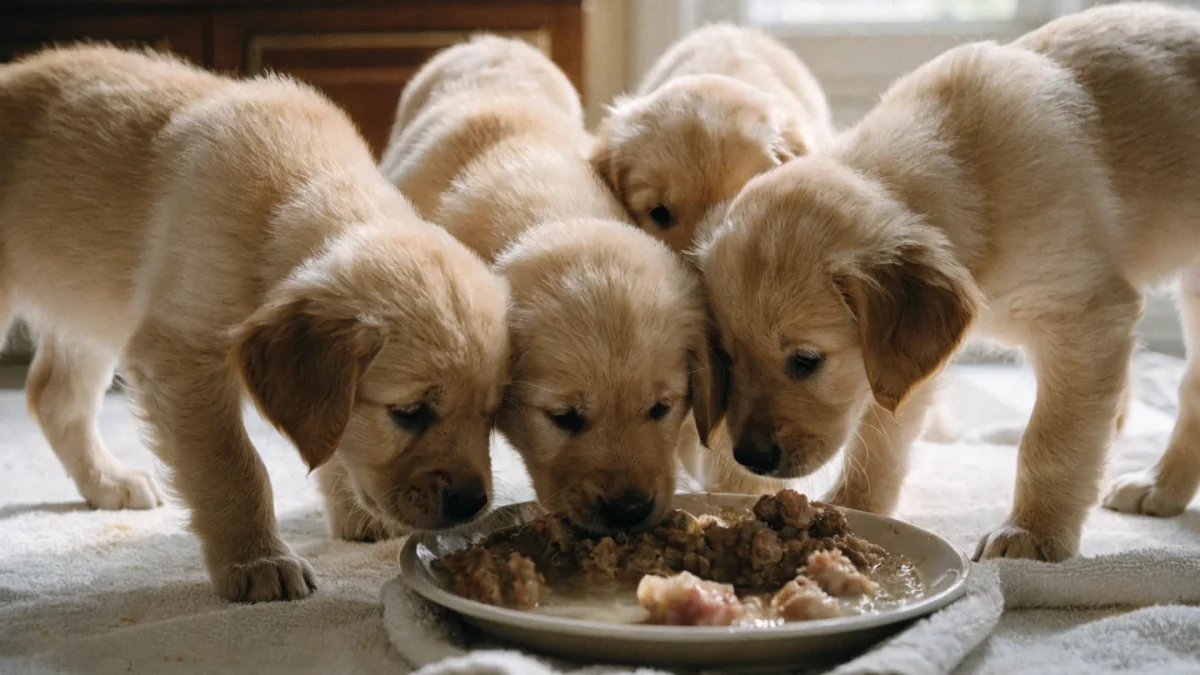
Weaning is one of those milestones that sounds straightforward and then becomes unexpectedly chaotic the first time you watch it happen in person. A colleague of mine who breeds working dogs described it perfectly: "The first week of weaning is thirty percent nutrition and seventy percent mess." She's right. There's food on faces, food on paws, food on you. But if you know the timeline and the progression, the whole process is much less stressful for everyone involved — including the dam, who is generally relieved to be needed slightly less.
When to Start: The Weaning Window
Both puppies and kittens begin showing interest in solid food around three to four weeks of age. The biological cue is the eruption of deciduous teeth — those tiny needle-sharp incisors and canines that make nursing progressively less comfortable for the mother. At around the same time, neonatal digestive systems are maturing enough to process something other than milk.
Three weeks is early. Four weeks is more typical. Some litters aren't ready until closer to four and a half weeks, and that's fine — forcing the process before a neonate is physiologically ready accomplishes nothing and can cause GI distress.
Kittens tend to become interested in solid food slightly earlier and more spontaneously than puppies in my experience. Puppies need a bit more encouragement initially; kittens often just walk over to the dam's food bowl and start investigating it themselves.
The Gruel Phase: Weeks Three to Five
The starting point for both species is soft food — often called gruel — with a texture closer to thick soup than anything a three-week-old could reasonably chew.
For puppies: Take a high-quality puppy kibble and soak it in warm water for fifteen to twenty minutes until completely softened. Blend or mash to remove large lumps, then thin further with warm water if needed. The final texture should be pourable — something a puppy can lap without having to chew. You can also use a small amount of a species-appropriate milk replacer instead of water.
For kittens: Wet kitten food at roughly body temperature works well as a starting point. Many kittens will investigate and begin lapping almost immediately if the temperature and smell are right. Alternatively, blend a small amount of wet food with warm water to a thinner consistency. Kittens are smell-driven in a way puppies aren't — cold or stale food gets ignored, and different brands can elicit dramatically different responses.
The goal during this phase isn't caloric completeness — the dam is still providing most nutrition through nursing. The goal is exposure and GI adaptation.
Progressing the Texture: Weeks Four to Six
Over the following two weeks, you're gradually thickening the food and encouraging active chewing rather than lapping.
- Week three to four: thin gruel, offered two to three times daily in shallow dishes
- Week four to five: thicker consistency, more like canned food texture
- Week five to six: moistened kibble or softened pieces of wet food, some chewing required
- Week six to seven: solid food with very little or no added water
The timing is a guideline, not a deadline. Some litters progress faster; some take another week or two. The metric that matters is whether they're eating enthusiastically and maintaining weight — not hitting an exact timeline.
Keep the dam and litter together throughout this process. Most dams naturally reduce nursing as the litter starts eating solid food. Her milk production responds to demand, so as the pups or kittens nurse less, production gradually decreases. You don't need to forcibly separate them to make weaning happen.
Common Mistakes I See
Weaning too fast. Someone reads that weaning starts at three weeks and interprets that as "no more milk at three weeks." The process is gradual and typically takes two to three weeks to complete. Abrupt weaning causes GI upset and nutritional stress.
Offering food that's too cold. Young animals' appetites are heavily driven by warmth and smell. Food straight from the refrigerator is frequently ignored. Warm it to roughly room temperature or slightly above.
Using the wrong food. This matters especially with kittens. Adult cat food isn't appropriate; cow's milk is not appropriate; goat's milk is sometimes offered but is nutritionally incomplete as a primary food. Use kitten-formulated food from the start.
Not offering enough fresh water. As soon as solid food is introduced, fresh water should be available in a shallow dish. Young animals learning to lap from a water bowl alongside food is part of the developmental process. For orphaned kittens who need formula support alongside solid food, the bottle feeding orphaned kittens guide covers the overlap between formula feeding and weaning.
Caring for the Dam During Weaning
Weaning isn't just a process for the pups and kittens — it's a significant physiological event for the mother. As nursing decreases, the dam's mammary glands need to gradually reduce milk production. Feeding her back to maintenance rations (rather than the elevated lactation rations she's been on) as the litter starts eating solid food helps facilitate this. Restricting water to speed up drying is a myth — it causes discomfort without actually working.
Watch her mammary glands during this period. Some engorgement is normal; painful, hard, hot glands or a dam who seems unwell could indicate mastitis, which needs veterinary attention.
After Full Weaning: What's Next
By six to eight weeks, most puppies and kittens are eating solid food exclusively. This is typically when they move to their new homes, and it's also when the meal-frequency conversation starts. Young animals this age need three to four meals a day — not two. The complete guide to puppy and kitten nutrition covers the full feeding schedule from here through twelve months.
Frequently Asked Questions
My three-week-old puppy isn't interested in the gruel at all. Should I push it?
No. Offer it, observe — if there's no interest, put it away and try again in a day or two. Appetite for solid food develops gradually; trying to force it before the puppy is ready causes stress without benefit. As long as the puppy is nursing actively and gaining weight, there's no urgency at three weeks.
Can I use cow's milk instead of water to make the gruel?
I wouldn't. Many puppies and kittens are lactose intolerant to varying degrees, and cow's milk is nutritionally mismatched for either species. A species-appropriate puppy or kitten milk replacer is better if you want a liquid base other than water, but even plain warm water works fine.
The kitten ate some gruel once and now refuses everything. Normal?
Very. Kitten appetites during early weaning are inconsistent and personality-driven. One kitten in a litter might take to solid food at three weeks while another sibling won't willingly eat anything until four and a half weeks. Don't panic. Keep offering small amounts twice daily; interest usually develops within a week.
How do I know weaning is complete?
When the litter is reliably eating measured portions of solid food and maintaining or gaining weight without depending on nursing to meet their caloric needs. You can confirm by weighing them before and after a period of no nursing access — if weight is stable, solid food is sufficient.