

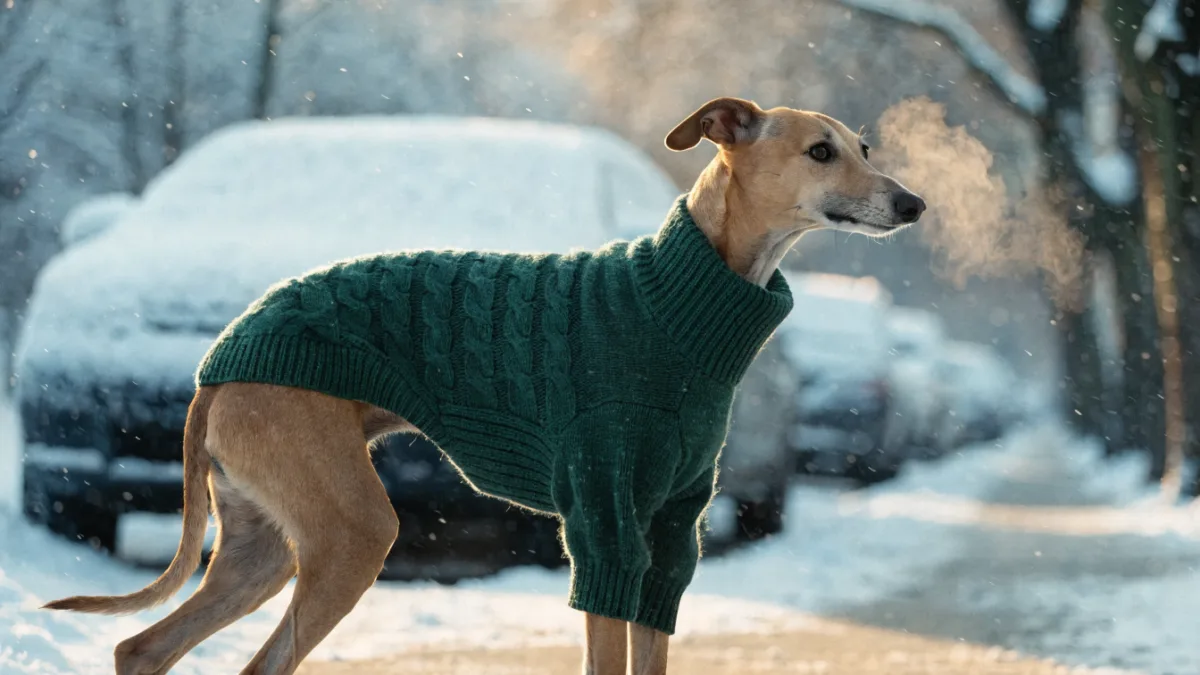
Last February, I watched my neighbor’s husky mix, Atka, roll around in a snowbank with the expression of a dog who had personally waited eleven months for this moment. Meanwhile, my sister’s Italian Greyhound, Crumbs, was standing on the porch shaking so hard his little teeth chattered. Both dogs. Same weather. Radically different experiences. And that, in a nutshell, is why the question of whether pets need winter gear doesn’t have a one-size-fits-all answer — no matter what that random person at the dog park insists.
The truth is somewhere between “dogs survived winters for thousands of years without puffer jackets” and “your short-haired companion genuinely cannot regulate their body temperature in freezing weather.” Let’s break down when outerwear is actually necessary, when it’s purely cosmetic, and how to tell the difference without making your pet miserable.
Fashion vs. Necessity: Who Actually Needs a Sweater?
Here’s where a lot of the online arguing happens. Someone posts a photo of their greyhound in a fleece-lined coat, and within minutes, comments flood in about how “dogs don’t need clothes” and “this is human vanity gone too far.” And sure — if we’re talking about a thick-coated malamute in thirty-degree weather, that dog is not just fine. That dog is thriving. That dog is living for this.
But veterinarians consistently identify specific groups that genuinely benefit from extra insulation, and it’s not a short list.[1] We’re talking about:
- Short-haired and single-coated breeds — Greyhounds, whippets, chihuahuas, French bulldogs, and other breeds that essentially have nothing between their skin and the cold
- Senior dogs — Aging bodies just don’t thermoregulate as efficiently, and arthritis makes cold muscles stiffer and more painful
- Puppies — They haven’t fully developed their ability to manage body temperature yet
- Dogs with low body fat or health conditions — Thin dogs, dogs recovering from illness, dogs with kidney disease or hormonal imbalances that affect circulation
- Small breeds — They have more surface area relative to their mass, which means they lose heat faster than larger dogs
My sister’s Italian Greyhound, Crumbs? He’s basically a heat-seeking missile with legs. He shivers at sixty degrees. For dogs like him, a sweater isn’t a fashion statement — it’s the difference between a functional walk and a miserable one.
The Natural Coat Argument
Let me address the elephant in the room: the debate that pops up every winter in pet forums. Someone will inevitably argue that “dogs grow winter coats for a reason” and that dressing them is interfering with nature (AccuWeather). And this isn’t entirely wrong! Many dogs do grow magnificent undercoats that serve them incredibly well.
But here’s the thing most of those commenters miss: the dogs we share our homes with today aren’t wild animals. They’re domesticated companions, many of whom have been selectively bred for appearances or temperaments that have nothing to do with cold-weather survival. A Labrador retriever has a biological defense system that a Chinese crested quite literally does not. Saying “dogs don’t need coats” as a blanket statement is like saying “cars don’t need oil changes” because your neighbor’s Toyota hasn’t had one in two years. It might work out for some. It won’t for all.
Reading the Signs: Is Your Pet Actually Cold?
Dogs are remarkably bad at telling us things directly. Mine communicates his displeasure about an empty food bowl by screaming at a pitch that could shatter crystal, but when it comes to “I am uncomfortable,” the signals are subtler. You have to pay attention.
Signs your dog might be cold include:
- Shivering or trembling — This is the most obvious one, though some small dogs tremble from excitement or anxiety too, so context matters
- Reluctance to keep walking — If your dog suddenly stops, turns toward home, or refuses to move forward, the cold may be the culprit
- Lifting paws alternately — This is a huge red flag that the ground is too cold or that salt and ice are hurting their feet
- Burrowing behavior — If your dog is trying to tunnel into your coat or under blankets the second they come inside, their body temperature probably dropped more than it should have
- Hunching posture with a tucked tail — They’re literally trying to make themselves smaller to conserve heat
My cat, Biscuit, has a thick tabby coat and zero interest in going outside in any season, so winter gear is not relevant to her life. But even indoor cats can feel a chill if your house runs cold or they like to hang out near drafty windows. Senior cats and hairless breeds like Sphynx cats can absolutely benefit from a lightweight indoor sweater. Biscuit would rather perish than wear one, but I respect that every cat is different.
Building Your Winter Gear Toolbox
So you’ve determined your pet could use some help in the warmth department. What do you actually need? The pet industry has exploded with options, and honestly, some of it is overkill. But certain categories genuinely earn their place (Wellness Pet Food).
Sweaters and Coats
These are your core warmth layers, and the material matters enormously. A sweater should be something that traps heat — think wool blends, fleece, or insulated quilted fabrics. For dogs who need warmth but not weatherproofing, a well-fitted sweater does the job. For dogs facing actual winter precipitation, you want a coat with some structure: water-resistant exterior, insulated interior, full belly coverage (this is where a lot of dogs lose heat), and a snug neck that isn’t choking them.
Vests and Waterproof Jackets
If you live somewhere with rain, sleet, or wet snow, waterproof gear is transformative — not just for warmth but for cleanliness. A good rain shell keeps the undercoat dry, which means your dog isn’t carrying around freezing water against their skin for the rest of the walk. Vests are also a great option for dogs who run hot during exercise but need core protection. They cover the vital organs without restricting shoulder movement the way a full coat sometimes can.
Booties: Not Just for Warmth
People tend to think dog boots are about keeping paws warm. Sometimes they are. But the bigger reason most veterinarians recommend booties is protection from what’s on the ground: road salt, chemical de-icers, jagged ice, and those awful little ice balls that form between paw pads and make every step agonizing.
Road salt in particular is genuinely dangerous. It can cause chemical burns on paw pads, and worse, dogs lick their feet to clean them and ingest it. If your dog won’t tolerate boots — and many won’t, because having things on your feet is deeply weird if you’re not used to it — paw balm is a solid backup. It creates a barrier between the pad and whatever’s on the ground. Not as protective as boots, but better than nothing.
Heated Beds and Indoor Recovery
This is the gear people forget about. After a cold walk, your pet needs to warm back up, and a heated bed or pad makes a massive difference, especially for senior dogs and cats with arthritis. Even Biscuit, who treats the outdoors with suspicion year-round, becomes deeply attached to her heated pad from approximately November through March. It’s the one piece of winter gear she fully endorses.
Getting the Fit Right
A coat that doesn’t fit properly isn’t just useless — it can actually cause problems. Too tight and it chafes, restricts breathing, or creates pressure points that turn into sores. Too loose and it lets cold air in, shifts around during movement, or catches on things. Before you buy anything, measure your pet: neck circumference, chest circumference at the widest point, and length from the base of the neck to the base of the tail.
Pay attention to where the leg holes sit. If they’re too far forward, your dog won’t be able to walk normally. If the coat extends past the tail, it’ll get filthy within minutes. And if your dog falls between sizes, size up — you can always adjust fit with straps, but you can’t add fabric that isn’t there.
For booties, the fit question is even more critical. Most boot sizing is based on paw width and length, measured while the dog is standing with full weight on the paw. A boot that’s too big will twist and rub. One that’s too small will pinch and come off. Expect an adjustment period. The first time most dogs wear boots, they walk like the ground is lava. Be patient. Keep sessions short. Bring treats.
The Bottom Line
Winter gear for pets exists on a spectrum, and where your companion falls on it depends entirely on who they are — their breed, age, health, coat type, and the climate they live in. A husky in Minnesota needs nothing but open space to run. A nine-year-old greyhound in the same state needs a wardrobe. Both are correct. Both are fine.
The most important thing is to stop treating this as a debate with a right answer and start treating it as a question about an individual animal’s comfort. Watch your pet. Learn their cold signals. When in doubt about a health question — especially for senior pets or those with medical conditions — talk to your vet. They know your dog’s specific situation in a way that no internet commenter ever will.
And if your short-haired dog is standing at the door, refusing to go outside, and looking at you like you’ve personally betrayed them? Yeah. They probably need a coat.
Sources
- (Siena Animal Hospital) — sienaanimalhospital.com