

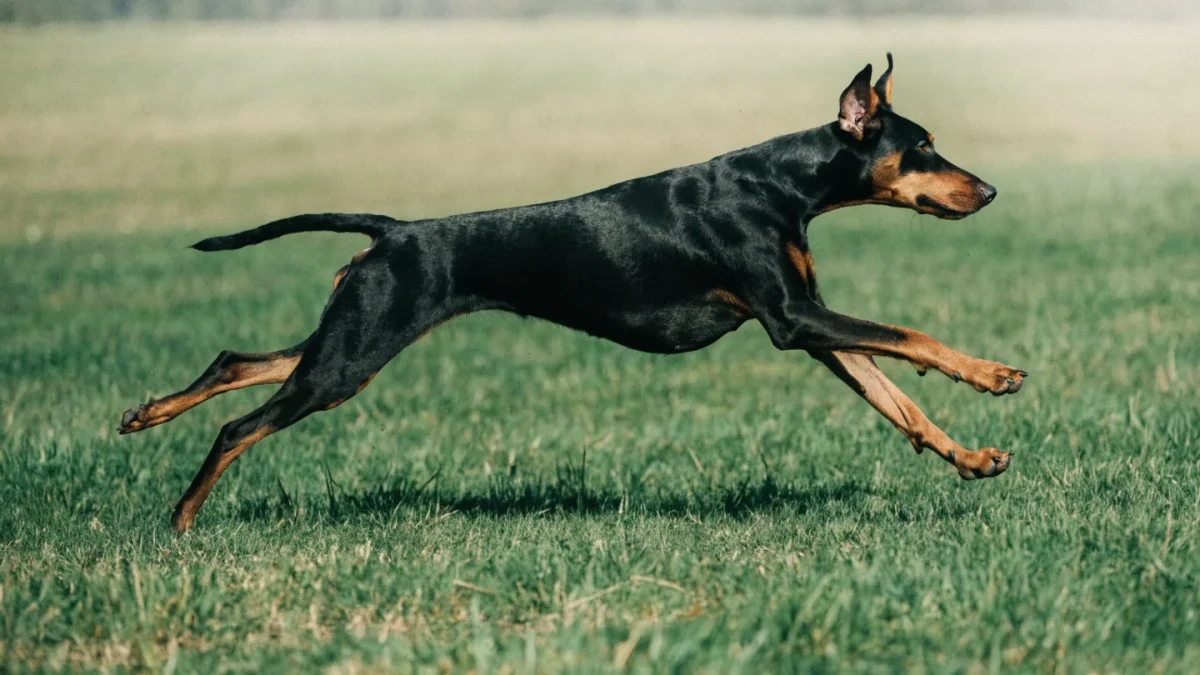
The Doberman Pinscher was built from sighthound, herding, and working stock — breeds selected for speed, endurance, and sustained physical output. That athletic foundation did not disappear when the breed moved into suburban homes. It's sitting on your couch right now, waiting for you to do something about it.
If you own a Doberman or are considering one, exercise is not a suggestion. It is the single most important variable in whether your dog is a calm, satisfied household companion or an anxious, destructive problem. Nearly every behavioral complaint I encounter with this breed — barking, pacing, destructive chewing, reactivity on leash — traces back to insufficient physical and mental activity.
Daily Requirements: The Real Numbers
A healthy adult Doberman between 2 and 7 years old needs a minimum of 90 to 120 minutes of exercise per day. That range is a baseline, not a ceiling. Working-line Dobermans and particularly driven individuals may need more. Dogs from calmer bloodlines may function well at the lower end. But dropping below 90 minutes consistently will produce noticeable behavioral changes within days.
Split the total across at least two sessions. Morning and evening works for most schedules. A single long session is less effective than two moderate ones because Dobermans accumulate mental tension throughout the day — an evening session addresses what has built up since morning.
Puppies: Controlled Growth
Doberman puppies grow fast. Males can gain over 30 kg in their first year. That rapid growth means developing bones, joints, and growth plates are vulnerable to repetitive impact stress.
The standard guideline of 5 minutes of structured exercise per month of age, performed twice daily, is a reasonable framework. A 4-month-old gets two 20-minute sessions. Free play on soft surfaces — grass, sand, carpet — can exceed these limits because the puppy self-regulates its effort. What should not happen before 18 to 24 months: sustained running on hard surfaces, forced distance jogging, repeated jumping, or extended stair climbing.
Mental exercise has no developmental restrictions. Short training sessions, puzzle feeders, socialization outings, and novel environment exploration tire puppies effectively and begin building the obedience foundation that an adult Doberman requires.
Seniors: Adapt the Intensity
Older Dobermans — roughly 8 years and beyond — typically slow down, though some remain remarkably active. Joint stiffness, reduced stamina, and potential cardiac limitations (given the breed's DCM prevalence) all influence exercise planning for senior dogs.
Shorter, more frequent walks replace long runs. Swimming provides full-body exercise without joint stress. Gentle scent work and low-intensity training keep the mind engaged. Watch for post-exercise stiffness, reluctance to rise, or excessive panting that could signal cardiac compromise. Any sudden change in exercise tolerance warrants veterinary evaluation — in this breed, it could indicate cardiac progression.
What Counts as Exercise
Standing in a fenced yard is not exercise. A slow-paced neighborhood stroll is a warm-up. Doberman pinscher exercise needs demand activities that elevate heart rate and engage the mind simultaneously.
Running is the most natural fit. Dobermans are built to run — the Greyhound influence in their ancestry shows. Jogging with your dog, off-leash running in safe areas, or even structured sprints satisfy deep physical drives. Start distance running only after skeletal maturity.
Structured training sessions count as exercise when they involve movement and focus. Obedience sequences, rally courses, and advanced command work engage the Doberman's handler-focused temperament while providing physical activity.
Fetch and retrieval games give high-intensity cardio in short bursts. Many Dobermans are enthusiastic retrievers despite not being bred for it. Use these sessions as supplements, not substitutes for sustained movement.
Swimming is excellent for Dobermans, particularly those with any joint sensitivity. Not every Doberman takes to water naturally — introduce it gradually. The breed's lean build and single coat mean they cool down quickly in water, which is an advantage in warm weather but means monitoring for chill in cooler conditions.
Agility and sport work channel both physical and mental energy. Dobermans excel in agility, competitive obedience, and tracking. These sports provide structure that the breed thrives on.
When Exercise Falls Short
An under-exercised Doberman does not get pleasantly lazy. It gets anxious. The behavioral deterioration follows a predictable pattern:
First comes restlessness — pacing, inability to settle, constant repositioning. Then vocal complaints — whining, barking at nothing, demand barking directed at the handler. Then destructive outlets — chewing on furniture, door frames, or personal items. In severe cases, compulsive behaviors emerge: shadow-chasing, tail-spinning, excessive licking that creates sores.
These are not character flaws. They are the entirely predictable outcome of a high-energy, high-intelligence breed with nothing to do. The fix is almost always more exercise and more mental engagement — not punishment, not medication, and not crating the problem away.
The Doberman Pinscher breed guide covers the full ownership picture, but exercise is the foundation. Get this right and most other aspects of living with a Doberman become manageable. Get it wrong and everything else — training, behavior, even health — suffers the consequences.