

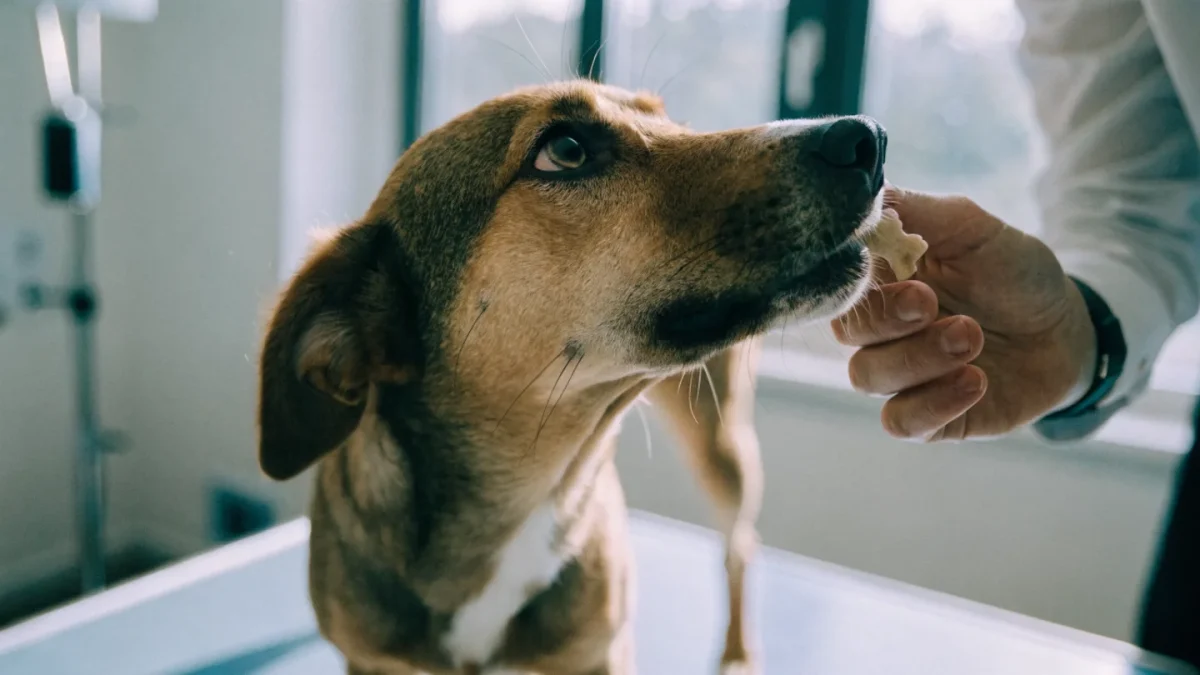
A dog that panics at the vet is not just stressful to handle — it's actually a welfare and safety issue. Struggling dogs are harder to examine accurately. Stress affects blood pressure and other clinical measurements. And a dog that's bitten a vet tech has created a situation that follows them: notes in their file, muzzle requirements, avoidance of necessary procedures.
The good news: this is a very trainable problem, and the training is done at home, not at the vet.
Why Vet Fear Develops
Veterinary clinics are, objectively, unusual environments for dogs. The smells (antiseptic, other animals, fear pheromones from previous patients), the handling (strangers restraining the dog, touching sensitive areas, performing uncomfortable procedures), the stainless steel exam table — all of these are neutral stimuli that can become conditioned fear cues.
For many dogs, every vet visit adds to the negative association: go to clinic → get poked, prodded, held down, sometimes hurt → leave. Repeat across a lifetime. The dog has learned that the clinic means bad things.
The Cooperative Care Approach
Cooperative care is a framework for training dogs to be active, willing participants in their own handling rather than passive subjects who have to be restrained. The principle: give the dog information and choice, build positive associations with handling stimuli, and the dog stops fighting the process.
This is increasingly adopted by progressive veterinary practices, but you can implement it at home.
Build positive associations with handling.
Start at home with gentle, brief touches to the ears, paws, mouth, and belly — areas that get examined. Pair each touch with high-value treats. The dog learns: hand near ear = treat. This changes the association with handling before there's any clinical context.
The chin rest as consent behavior.
Train the dog to rest their chin in your palm as a start-the-handling signal. Dog puts chin in hand → handling begins. Dog lifts chin → handling stops. This gives the dog a behavioral way to say "I need a break" without escalating to struggling or snapping. This consent signal transfers to clinic contexts.
Desensitize vet-specific stimuli.
Stethoscope on the chest: introduce at home, pair with treats. Exam table: practice at home on a raised surface. Clipper noise: run clippers near the dog at home while feeding. Paw handling and nail pressure: routine handling that the dog is specifically desensitized to.
Visit the clinic before appointments.
Drop in just to say hello — treats from the staff, sniff around the waiting room, get on the scale (which delivers a number and a treat), then leave without any medical procedure. These happy visits change the association with the clinic itself. (See also: preparing your dog for vet visits through.)
Working With a Fear-Friendly Practice
The clinic your dog attends matters. Fear-free and low-stress handling practices are increasingly common. Clinics that use non-slip surfaces on exam tables, allow dogs to be examined on the floor if they're more comfortable, give waiting room time for the dog to acclimate, and allow owner-held restraint rather than tech restraint — these approaches reduce stress significantly.
It's worth finding a practice that shares this approach if vet fear is significant. The training you do at home is much more effective when the clinic experience also minimizes fear rather than adding to it.