

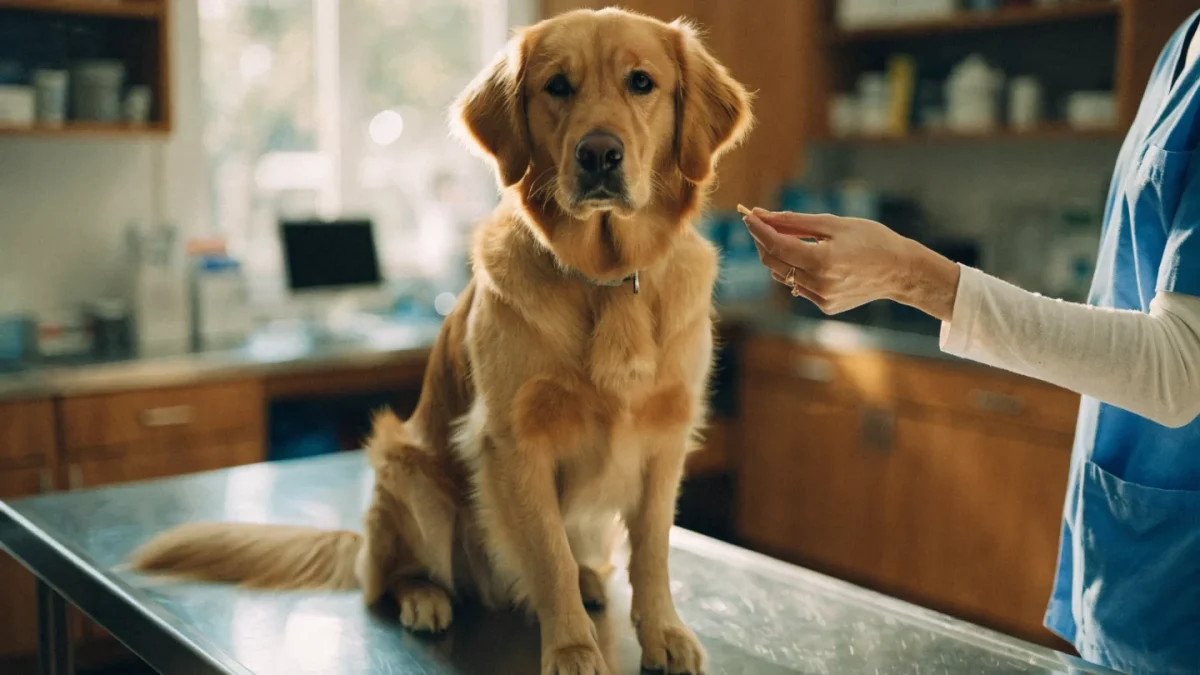
Most dogs have learned to dread the vet before they're a year old. The pattern sets up fast: every visit involves something uncomfortable (vaccinations, temperature check, physical exam), the environment smells like fear and antiseptic, and the dog never goes there for any reason except something unpleasant.
Then we wonder why the dog shakes in the waiting room.
The fix is simple in concept and requires some upfront time investment: change what the vet clinic predicts. Not just tolerable, actually good.
Happy Visits: The Foundation
A happy visit is a trip to the vet clinic where nothing happens except good things. You walk in, the staff gives your dog treats, maybe the dog gets weighed, and you leave. That's it. No exam, no needles, no restraint.
Most vet clinics are willing to accommodate happy visits, especially for puppies. Call ahead and let them know what you're doing. Some practices actively encourage this kind of proactive prep.
For puppies: start happy visits as early as possible, before any negative association has been established. Bring the highest-value treats you have.
For dogs that already have vet anxiety: it takes more work, but happy visits can still shift the emotional association. Start with just approaching the building exterior, walking in the door for treats, leaving. Build up the duration and depth of each visit slowly.
Practice the Physical Stuff at Home
Most dogs aren't afraid of the building itself — they're afraid of the handling. The exam table, the ear check, the paw-touching, the mouth opening, the stethoscope.
You can desensitize all of this at home, before it ever happens in a clinical setting.
Ear handling: Gently touch around the ears daily. Lift the ear flap, peer inside briefly, deliver treat. Progress to using a flashlight around the ears (nothing inserted). Practice until your dog is completely neutral about ear handling.
Paw handling: Hold each paw for a second, deliver treat. Gradually extend the duration, separate each toe, press on the pads. This also makes nail trims dramatically easier.
Mouth handling: Touch around the muzzle, gently lift the lips, peek at the teeth. Progress to opening the mouth briefly. Practice the exact movements a vet uses during an exam.
Body pressure: Run your hands along the dog's sides, back, belly (if the dog tolerates it). Apply light pressure in different areas. The physical exam covers all of this.
Temperature: Some owners practice with a thermometer near the rear (without inserting) just to reduce the startle response. This one's more optional.
The key is pairing each touch with a treat. Not after you're done — during the touch. Touch + treat delivered simultaneously teaches that handling = good things happening right now, not "I endure it and then get rewarded."
The Waiting Room Problem
Waiting rooms are often the most stressful part of the visit. Strange dogs, strange smells, other animals in distress. For anxious dogs, the wait can wind them up before the exam even begins.
Options:
- Ask if you can wait in your car and be called in when a room is ready
- Sit away from the main cluster of people and animals
- Keep your dog busy with a high-value chew or continuous treat delivery during the wait
- Practice mat work at home so you have a portable "settle" behavior to deploy in the waiting room
Handling Restraint
Some dogs are fine with the exam but panic during restraint. If a veterinarian or tech needs to hold your dog firmly for a procedure, a dog who's never been restrained before can react dramatically.
Practice at home: gently hold your dog around the chest or neck area (simulating the restraint position), deliver treats throughout. Increase the firmness gradually. You're not trying to immobilize your dog — you're teaching that being held doesn't mean something terrible is happening. (See also: dog anxiety.)
When the Dog Is Already Fearful
If your dog already has established vet anxiety, the approach is systematic desensitization: starting well below threshold and building up slowly. For exposing your puppy to new environments, the same threshold-based approach applies — and it works for adult dogs too, it just takes longer.
For severe vet fear, talk to your vet about pre-appointment medication options. Several safe anxiolytic medications can take the edge off enough for the dog to be handled safely and for the positive association work to have a chance to function. Medication during visits plus ongoing desensitization outside of visits is often the most effective combination.
This preparation pays off for the entire life of your dog. Every vet visit for the next 12-15 years goes more smoothly if the dog arrives calm. Start the happy visits now.