

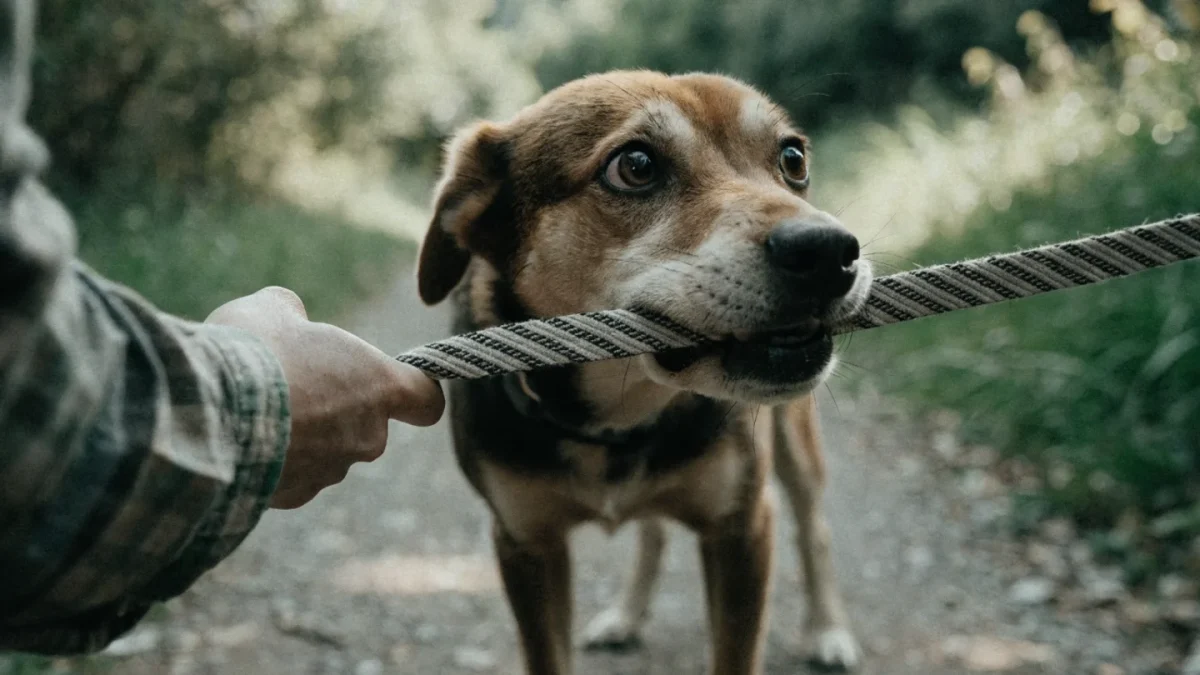
Leash biting is one of those behaviors that looks funny in a small puppy and becomes a real problem in a six-month-old lab who's shredded three leashes this month.
I'll tell you upfront: the most common cause is that the behavior got a reaction. You pulled the leash back, you said "hey!", you stopped and tried to pry the leash from the dog's mouth. All interesting. The dog learned that leash = game.
Why Dogs Bite the Leash
Frustration. The dog wants to get somewhere and the leash prevents it. They redirect the frustration onto the nearest accessible thing — the leash. Classic barrier frustration applied to the leash itself.
High arousal during play. Some dogs bite the leash at the start of walks because the walk is so exciting and their mouth needs somewhere to go. They're not frustrated — they're over-aroused.
Habit from reinforcement. Leash biting got a response. The walk was more interesting when they were tugging on it. Even negative responses (owner stops, pulls, reacts) can be reinforcing enough to maintain the behavior.
Breed tendencies. Herding breeds and retrievers often have high "mouth drives" — they want things in their mouths. A leash is a convenient item to mouth.
I go deeper on this in stop a dog from jumping on.
What Not to Do
Yanking the leash back. Makes it a tug game.
Reacting loudly. Creates an interesting interaction.
Using a metal leash. Can injure the dog's teeth and escalate frustration. Not recommended.
What To Do
Redirect to a toy before the walk starts. If the dog is going to want something in their mouth, give them something appropriate. Have a specific "walk toy" — something they can carry. The moment the leash goes on, the toy appears. Over time, the walk cue predicts the toy, not the leash.
Stop all forward progress when leash biting starts. Become a tree. Zero reaction. Wait. When the dog drops the leash: mark and reward, then continue the walk. Forward progress is the reward — leash biting stops it.
Don't give the leash to tug on. Loose leash: walk continues. Any tension from the dog grabbing: zero response, dog gets nothing.
Work on arousal management before the walk. If the leash biting is arousal-driven at the start of walks, work on the pre-walk routine — calm exits, settled departure behavior — so the dog is at a lower baseline when the walk begins. See calm excited dog on walks for the broader arousal management piece.
Most dogs stop leash biting within a few weeks of consistent no-reaction plus the toy redirect. The key is not making the behavior interesting.