

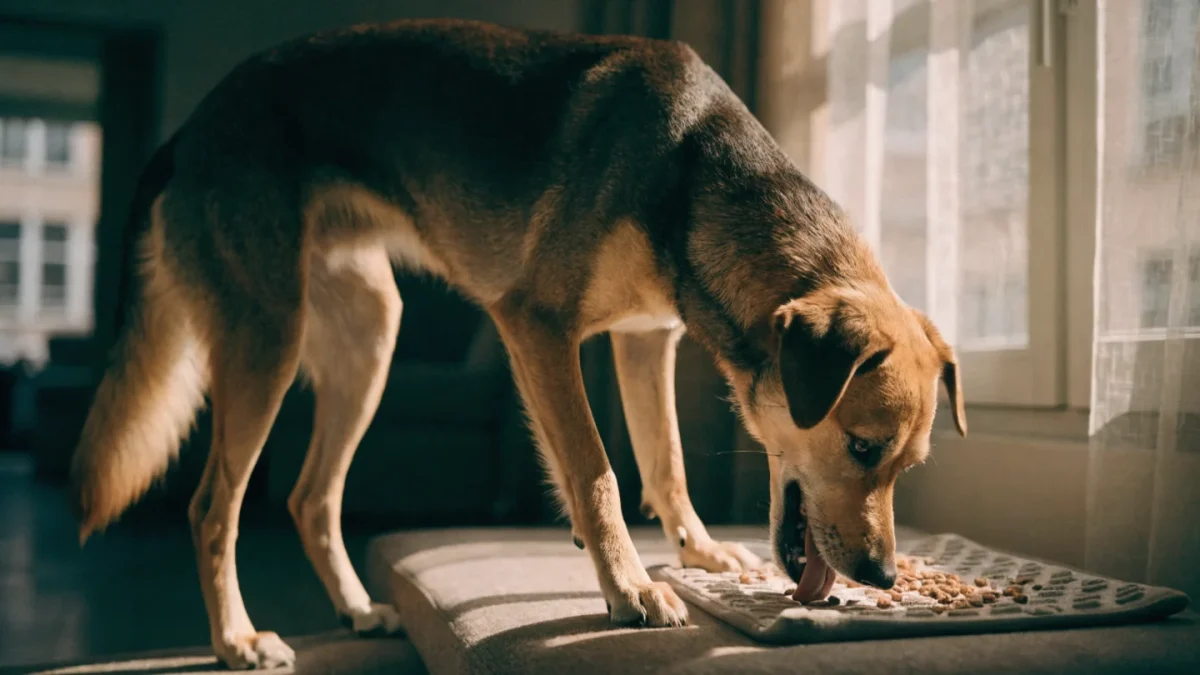
I stopped using food bowls for my own dogs about six years ago. Not out of principle — out of practicality. I realized I was giving away roughly 700 calories a day, twice a day, for free. That's a significant reinforcement budget just disappearing into a metal bowl.
When you're working on training, every meal is an opportunity. Not a dramatic all-day training session — just five minutes of working for breakfast instead of inhaling it in thirty seconds.
What's Wrong with a Bowl
Nothing is wrong with a bowl. It's fast, clean, and easy. But consider what a bowl does for your dog's day: nothing. Ten seconds of gulping, then back to lying on the couch.
Dogs evolved to work for food. Foraging, hunting, searching — getting food required effort. That effort built mental engagement and satisfaction that ten seconds of bowl-eating doesn't come close to providing.
Bowl-fed dogs that don't get enough mental engagement through training or enrichment often find their own outlets: chewing furniture, barking, pacing, or pestering their owners for attention. These aren't bad dogs. They're dogs with unmet needs.
Option 1: Training Sessions as Meals
The simplest form of enrichment feeding is just using kibble as training rewards. Measure out the daily meal and train with it throughout the day in short sessions.
5-minute session in the morning: work on sit, down, recall, one new behavior. Use a third of the daily kibble.
5-minute session midday: maintenance work on known behaviors. Second third.
5-minute session in the evening: same.
The dog's entire caloric need is met through training. Every rep reinforces a behavior. The cost is 15 minutes per day across three sessions. The benefit is a more focused, responsive dog that views training as mealtime.
Option 2: Puzzle Feeders
Place the meal inside a puzzle feeder — a device with compartments, sliders, or moving parts that the dog must manipulate to access food. The dog takes 10-20 minutes to eat instead of 30 seconds, works their brain, and eats more slowly (beneficial for gulpers and large breeds prone to bloat).
Puzzle feeders and enrichment toys covers the full range of options if you want to invest in a few.
Option 3: Scatter Feeding
Scatter the meal in the grass and tell your dog "find it." The dog spends 10-20 minutes sniffing through the lawn for every piece of kibble. This is the lowest-cost enrichment feeding option — no equipment required.
Works best on untreated, uncut grass where the kibble gets lost easily. Indoors, a snuffle mat does the same thing on a smaller scale.
Option 4: Stuffed Hollow Toys
Stuff a hollow rubber toy with wet food, kibble soaked in broth, or a combination of textures. Freeze overnight. The dog works for 15-30 minutes extracting the food, depending on size and how tightly it's packed.
This is good for dogs that need to be settled — long crate time, post-surgery rest, or high-anxiety situations. The focused licking and foraging has a genuinely calming effect.
Option 5: Sniff Games
Mental stimulation games like the muffin tin game or box searches make the entire meal into a sniff-and-find session. Spread kibble across 10-15 containers or locations and release your dog to find all of it.
Rotating Options
The mistake most people make is picking one enrichment method and using it forever until the dog treats it as just a slightly more annoying bowl. Rotate. If your dog had a snuffle mat yesterday, scatter feed today. Use puzzle feeders this morning, training session this evening.
Novelty keeps the engagement high. A dog that has to figure out a new container or a new hiding pattern works harder and gets more cognitive value from the same amount of food.
Starting Tomorrow
Pick one meal — breakfast or dinner. Measure out the usual amount. Scatter it in the yard and say "find it." That's it. First day of enrichment feeding done.
The bowl can come back out when you want it to. But once you see how much more engaged and satisfied your dog is after working for their meal versus inhaling it from a dish, you probably won't want it to.