

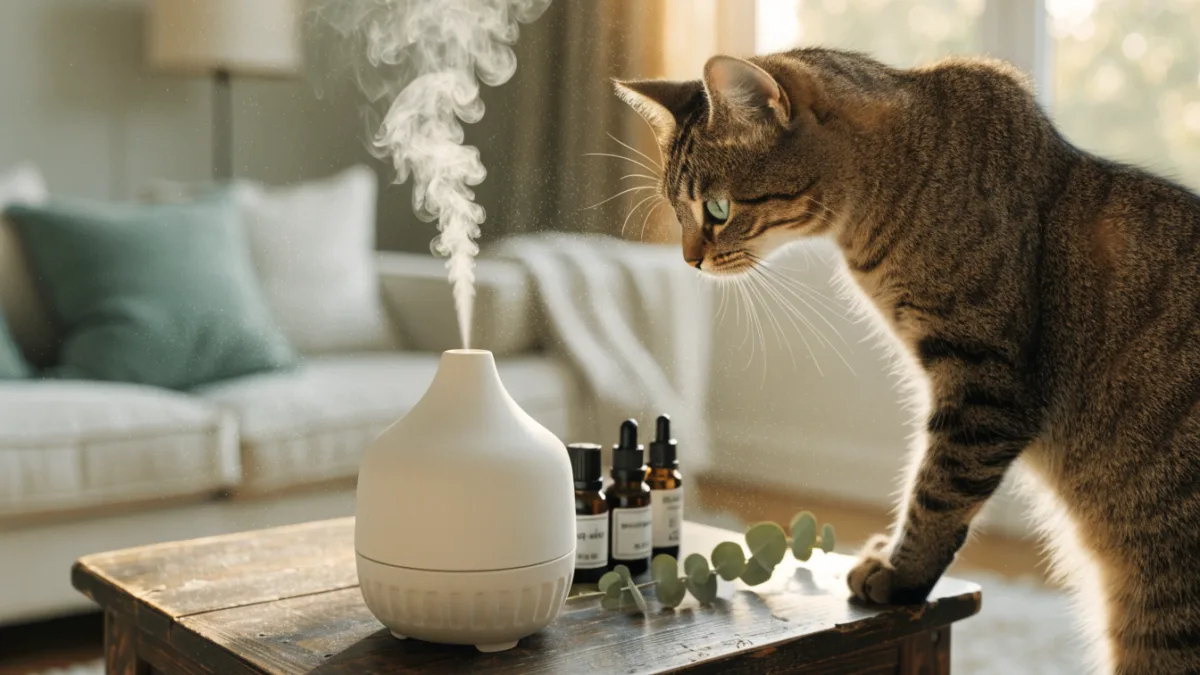
Chloe is a client of mine who embodies the modern homesteader. She grows her own herbs, makes her own tinctures, and relies heavily on her collection of essential oils to keep her home smelling like a spa. When she brought her 4-year-old Maine Coon cat, Barnaby, into my clinic, she was in tears. Barnaby had stopped eating, was drooling excessively, and his eyes were glassy and irritated. Chloe was terrified we were dealing with a severe systemic illness. As we talked through his daily routine, she mentioned her new favorite evening ritual: turning on a waterless diffuser with a pure citrus and eucalyptus blend to unwind. She assumed because the oils were natural and high-quality, they were safe for the whole family. I had to gently explain to her that the exact opposite was true. The beautiful scent filling her living room was slowly poisoning her cat.
I see cases like Barnaby’s all the time. As holistic wellness and natural living have grown in popularity, veterinary poison control centers have noted a sharp rise in emergency calls related to essential oil exposure. It’s an incredibly well-intentioned mistake. We want to create healthy, chemical-free environments for our families. But being a truly holistic pet parent means recognizing that animal bodies process the world entirely differently than ours do.
The “Natural” Doesn’t Mean “Safe” Myth
There is a pervasive myth in the wellness community that if something comes from a plant, it must be gentle and safe. But let’s look at the science. Essential oils are not just pleasant scents; they are the highly concentrated, volatile aromatic compounds extracted from plants. To put that into perspective, it takes about 250 pounds of lavender flowers to make a single pound of lavender essential oil. In their pure, 100% concentrated form, these botanical extracts contain potent chemical compounds designed by nature to deter insects and herbivores.
I’ll admit, early in my career, I didn’t pay much attention to aromatherapy warnings. I assumed the concentration of oils floating in the air from a diffuser was too minimal to cause real harm. I’ve changed my mind on this completely as the science—and my caseload—evolved. Today’s diffusers, whether they are water-based ultrasonic models or waterless nebulizers, work by breaking these oils down into micro-droplets and aerosolizing them into the air. Your pet isn’t just “smelling” the oil; they are inhaling microscopic particles of plant chemicals directly into their lungs.
Routes of Exposure You Might Not Expect
We usually associate poisoning with eating something bad. But with essential oils, exposure happens in sneaky ways:
- Inhalation: Pets breathe in the aerosolized micro-droplets, which can cause severe respiratory irritation and distress. Birds and cats have incredibly sensitive respiratory tracts, making this route particularly dangerous for them.
- Skin Absorption: Those micro-droplets eventually fall. They settle on your pet’s fur, their bedding, and your furniture. When the oils land on your pet, they are quickly absorbed through the skin, leading to localized irritation or systemic toxicity.
- Ingestion during Grooming: When your dog or cat grooms themselves to clean their fur, they are actively licking those settled essential oils straight into their digestive system.
Why Cats and Dogs Process Oils Differently
If you take away one piece of medical information from this article, let it be this: cats lack a specific liver enzyme called glucuronyl transferase.
In humans and dogs, this enzyme is responsible for breaking down and excreting a wide variety of chemical compounds, including the phenols and terpenes found in many essential oils. Because cats simply do not have this enzyme, their livers cannot process these compounds. Instead of safely clearing the oils from their system, the toxins accumulate. This causes severe liver damage, central nervous system depression, and can ultimately be fatal.
Dogs are slightly better equipped to process certain oils, but they still have very sensitive respiratory systems and are prone to skin sensitivities. A dog’s tolerance also varies wildly by breed, age, and size. I’ve seen robust terriers sneeze uncontrollably from a simple lavender diffuser, while smaller breeds like Chihuahuas can experience gastrointestinal upset just from the aroma lingering in the air.
The Banish List: Oils to Remove from Your Home
When we identified the eucalyptus and citrus diffuser as the culprit behind Barnaby’s illness, Chloe was devastated. She had no idea she was exposing him to toxins. To practice effective pet poison prevention, you need to know exactly which oils to banish from your home. The following oils are highly [1] and should never be diffused, applied topically, or used in cleaning products around them:
- Tea tree (Melaleuca)
- Eucalyptus
- Citrus oils (Lemon, Lime, Orange, Grapefruit, Bergamot)
- Pennyroyal
- Pine
- Wintergreen
- Peppermint
- Clove
- Garlic and Onion oils
- Ylang Ylang
This list is by no means exhaustive. If you have a cat, I generally recommend assuming that no essential oil is truly “safe” to diffuse in their environment. The risk to their liver is simply too high.
The Truth About Dog-Safe Essential Oils
So, can you ever diffuse oils if you only have dogs? Yes, but it requires strict boundaries. If you want to use aromatherapy, you must carefully select [2] and follow rigid safety protocols.
Oils that are generally recognized as safe for dogs—when properly diluted and used correctly—include:
- Chamomile (Roman or German)
- Lavender (though use with caution if your dog is prone to sneezing)
- Frankincense
- Cedarwood
- Copaiba
However, let’s bust a major myth right now: buying a water-based diffuser does not make a toxic oil safe. Diluting a toxin only means you are exposing your pet to a smaller amount of a toxin. And while some brands now market specific “pet-safe” essential oil lines, I strongly urge you to remain skeptical. Marketing labels are not a substitute for veterinary toxicology. Always research the specific plant extract, not the brand’s claims.
If you choose to diffuse dog-safe oils, follow my clinical rules:
- Never use waterless diffusers: These pump pure, concentrated oil into the air. Stick to water-based ultrasonic diffusers.
- Limit diffusion time: Run the diffuser for only 15 to 30 minutes, then turn it off. Your dog does not need to live in a fog of aromatherapy.
- Ensure strict ventilation: Open a window or door so the scent has a place to escape rather than building up in the room.
- Provide an escape route: Never diffuse in a closed room where your pet is trapped. They must always have the ability to leave the room if the scent bothers them.
Red Flags: Signs of Essential Oil Poisoning
Despite our best efforts, accidents happen. A dog might knock over a bottle, or a cat might brush against a poorly placed diffuser. Recognizing the signs of [3] early is critical for your pet’s survival. Symptoms can develop within a few minutes or take several hours to appear, depending on the type of oil and the route of exposure.
Watch out for these urgent warning signs:
- Respiratory distress: Labored breathing, wheezing, panting, or coughing. If your cat starts breathing with its mouth open, this is an absolute emergency.
- Neurological issues: Muscle weakness, difficulty standing, loss of coordination (ataxia), lethargy, or depression. Your pet might look like they are drunk or unable to control their legs.
- Gastrointestinal symptoms: Persistent vomiting, drooling, or a sudden refusal to eat.
- Dermal reactions: Redness, burns, or inflammatory responses on their skin, particularly on their paws, belly, or face.
If you notice any of these symptoms and suspect essential oil exposure, do not wait it out. Turn off the diffuser, get your pet into fresh air immediately, and call your veterinarian or your local animal poison control center right away. Do not attempt to induce vomiting without a veterinarian’s explicit instruction, as some oils can cause fatal aspiration pneumonia if inhaled into the lungs during vomiting.
Fortunately for Chloe and Barnaby, we caught his liver distress early. With supportive care, fluid therapy, and a strict ban on all diffusers in her home, Barnaby made a full recovery. Chloe still grows her beautiful herbs, but she now relies on fresh bouquets and open windows to keep her home smelling fresh.
A truly holistic, healthy home is about creating an ecosystem where all living creatures under your roof can thrive. Nature is incredibly powerful, and out of respect for that power, we have to protect those who are smaller and more vulnerable than us. Sometimes, the most natural choice of all is simply opening a window and letting the fresh air do its job.
Sources
- toxic to pets — spca.bc.ca
- dog-safe essential oils — petmd.com
- essential oil poisoning — gsvs.org