

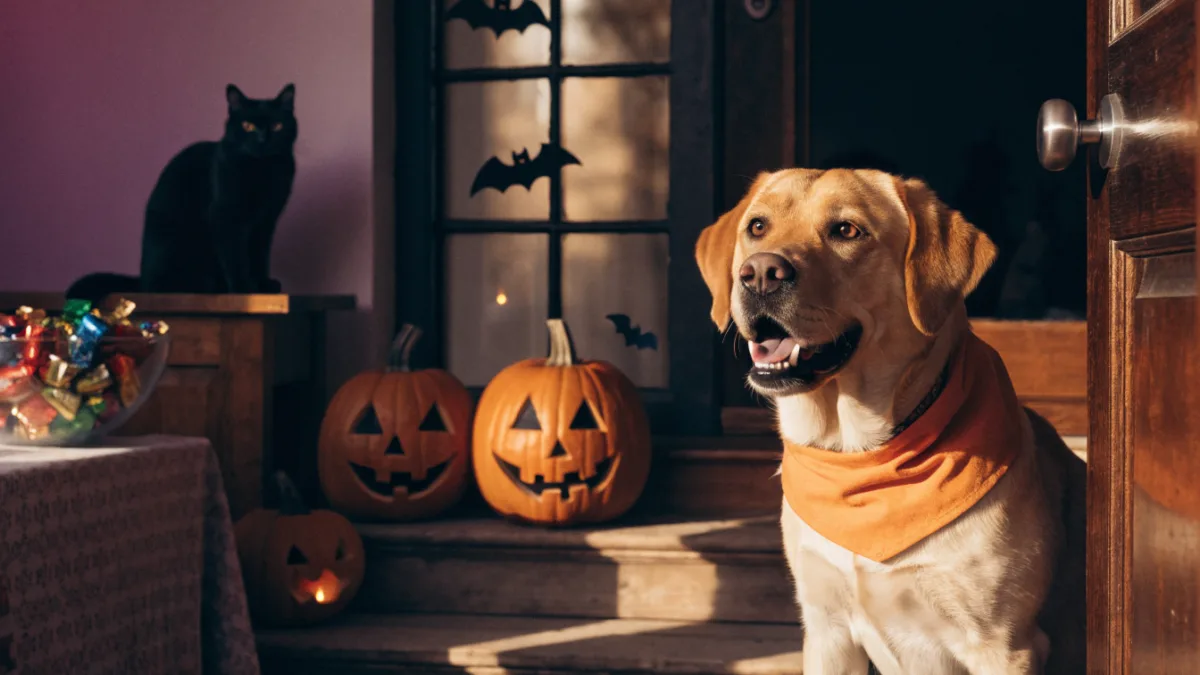
Every year, somewhere around 7 p.m. on October 31, the phones at our clinic start ringing. The rhythm is predictable: a dog who inhaled the candy bowl, a cat who punctured a glow stick, a panicked owner whose terrier bolted between the legs of a group of trick-or-treaters. Halloween is one of my favorite holidays, and it can absolutely stay fun for your pets — it just needs about twenty minutes of planning. This is the Halloween pet safety talk I give every client who walks in with a pumpkin-spice latte and a costume question in October.
Dog Costume Safety: Sorting the Cute from the Risky
I’ll admit something: I used to be the vet who rolled her eyes at pet costumes. I’ve changed my mind. Some dogs genuinely seem to enjoy the attention — but the key word is some, and the difference between a happy dog and a miserable one is usually fit, fabric, and whether anyone bothered to ask the dog.
Two patients come to mind. Winston, a four-year-old Goldendoodle, arrived at our clinic visit in a hot dog costume, completely frozen — ears pinned, tail tucked, staring at the floor. “He’s being so good!” his owner said. He wasn’t being good; he was shutting down. And Biscuit, a Lab, ate a pom-pom off his own bee costume in under ninety seconds. That pom-pom required an emergency visit and a very expensive endoscopy.
The Fit and Fabric Checklist
- Movement: You should be able to slide two fingers under every strap. Anything tighter restricts movement and causes chafing under the legs and armpits — check those spots after a trial run.
- Senses: Nothing should cover the eyes, ears, or muzzle, or interfere with breathing and the ability to bark or meow.
- Fabric: Look for lightweight, breathable, flame-resistant material, especially if there will be candles or decorations nearby. Reflective trim is a smart addition if you’ll be out on evening walks.
- No dangly bits: Buttons, pom-poms, bells, and loose trim are choking and obstruction risks. Assume anything attached can be removed by a determined mouth, because it usually is.
- Flat-faced caution: If you have a Frenchie, Pug, or Bulldog, remember they already work harder to breathe than other dogs. Keep costume sessions short and watch for heavy panting.
Reading Your Pet’s “No Thank You”
The [1] is clear on this point:
Costumes should never constrict a pet’s movement, hearing, breathing, or ability to bark or meow — and pets who seem stressed should skip the costume entirely.
Stress looks like: freezing, pinned ears, a tucked tail, a hunched “sorry” posture, showing the whites of the eyes, pawing at the costume, or refusing treats they’d normally take. If you see any of these, take it off — no photo is worth it. A festive bandana or a themed collar gets you 90% of the cute with about 5% of the risk.
The Halloween Treats That Send Pets to the ER
If I had to rank Halloween dangers for pets, the candy bowl is unambiguously number one. Two years ago, Wrigley, a six-year-old Beagle, pulled an entire community candy bowl off a counter while his family was handing out candy at the door. By the time they noticed, he’d eaten an estimated forty miniature chocolate bars — wrappers and all. His owner called us in tears, and the first thing I told her was exactly what I’d tell you: call before you panic, and call before you wait. Symptoms can lag hours behind the raid.
The Usual Suspects
- Chocolate: It contains theobromine — a caffeine-like compound that dogs metabolize very slowly. The darker the chocolate, the more theobromine: baking and dark chocolate are the most dangerous, milk chocolate less so. Watch for restlessness, vomiting, a racing heart, and tremors.
- Xylitol: This sugar-free sweetener, which may also appear on labels as “birch sugar,” is found in sugar-free gum and some candies. In dogs it triggers a massive insulin release, crashing blood sugar, and can cause liver failure. Check any sugar-free item in the trick-or-treat bag.
- Raisins and grapes: Those tiny raisin boxes (and chocolate-covered raisins) can cause kidney failure in dogs. There’s no established safe amount, so any ingestion warrants a phone call.
- Wrappers: Foil and plastic eaten in quantity can clump into an intestinal obstruction — Wrigley’s second problem that night.
What to Do If the Candy Bowl Disappears
Call your vet or local emergency clinic first — they’d rather field a “probably fine” call than see a dog six hours too late. Please skip the online home remedies like salt-dosing or unguided hydrogen peroxide tricks; I understand the urge to do something immediately, but the right something is information, and inducing vomiting should only happen with professional guidance. Save your local emergency clinic’s number and your regional pet poison hotline in your phone before Halloween, and store treat bags elevated or in a cabinet — a determined dog can open a lot you wouldn’t expect. If the kids want to include the dog, keep a jar of regular dog treats by the door, and plain pumpkin puree makes a perfectly festive topper.
Doorbell Dread: A Stress Plan for Anxious Dogs and Cats
Imagine the doorbell ringing a hundred times in three hours, each time admitting a shrieking stranger in an unfamiliar silhouette. That’s a genuinely confusing night for a dog, and [2] and lost pets this week.
Build the Quiet Room
Pick an interior room away from the front door and set it up earlier in the day — before the first doorbell — with your dog’s bed, water, and a white noise machine or TV to mask the knocking. A frozen stuffed rubber toy or a long-lasting chew gives them a job. Tire your dog out with a good walk before dusk, and if they must be near the action, use a leash, crate, or baby gate rather than trusting a sit-stay under pressure.
Escape-Proofing the Evening
Open doors are the escape risk, so check that ID tags are current and legible, and confirm your pet’s microchip registration has your present phone number — a chip with an old number is a chip that doesn’t work. Olive, a tabby cat I treated for an unrelated issue, slipped out between legs one Halloween and vanished; she was found two blocks away in a neighbor’s garage two days later, scanned, and home by Tuesday because her chip was up to date. Keep cats indoors that night — ideally from the evening before through the night after. And a myth worth busting: many shelters used to suspend black cat adoptions in October over fears of ritual harm, but welfare organizations have largely found that fear to be an urban legend, and keeping cats waiting in shelters arguably does more harm than a holiday ever has.
Candles, Wires, and Glow Sticks
Decorations cause fewer emergencies than candy, but the ones they cause are dramatic. Wagging tails and curious whiskers meet jack-o’-lantern candles badly — battery-operated flameless candles get you the same glow. String light wires are tempting to chew and can cause oral burns; tape them down or keep them out of reach. And glow sticks: cats puncture them with their needle teeth, and the liquid is intensely bitter, causing dramatic drooling and pawing at the mouth. It looks terrifying and usually isn’t dangerous at that exposure — [3] if signs persist.
Here’s my takeaway after many Halloweens: your pet doesn’t know there’s a holiday. They just know the door kept opening, the smells changed, and their routine got strange. The kindest gift you can give them is a boring evening in a quiet room, candy stored where noses can’t reach, a costume they actually consent to wearing, and identification that works if all else fails. The best Halloween costume is the one your pet barely notices they’re wearing — and the best Halloween memory is the one that ends with everyone, pets included, asleep on the couch by ten.
Sources
- ASPCA's Halloween guidance — aspca.org
- emergency clinics see a real uptick in stress-related calls — omahavetsgroup.com
- offer water and a bit of food, wipe the mouth, and call your vet — chfa.net