

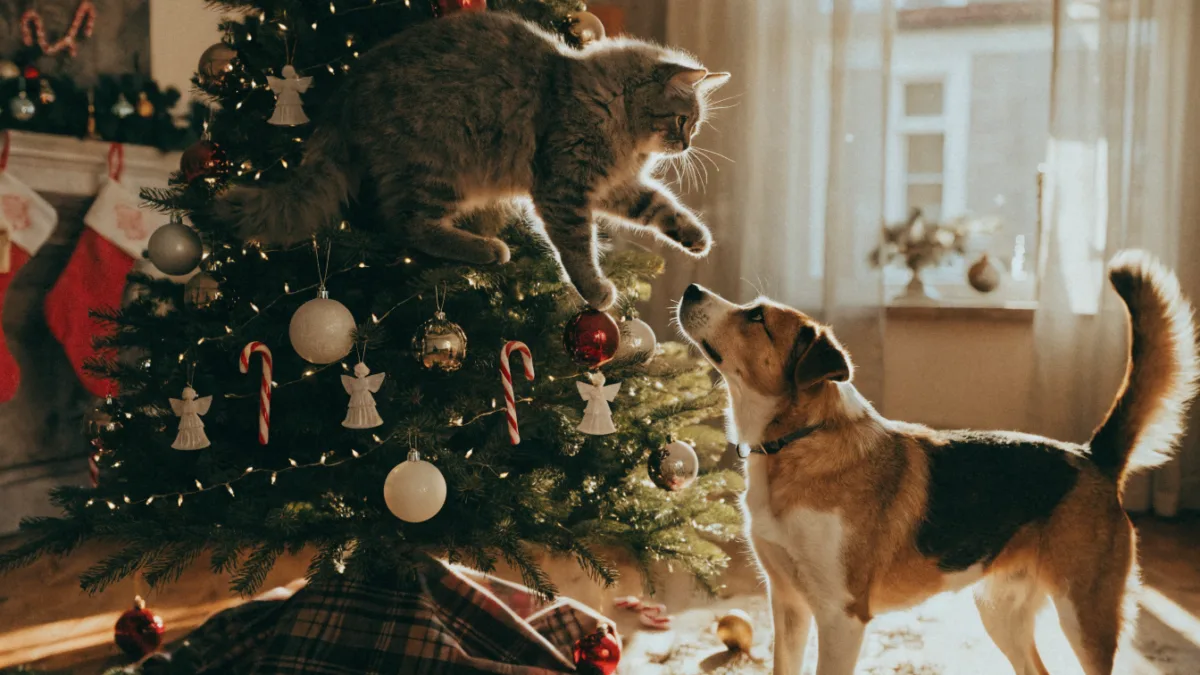
Bringing a seven-foot Fraser fir into your living room is basically the equivalent of installing an indoor jungle gym and daring your pets not to use it. If you share your home with a feline acrobat or a wildly enthusiastic canine, you already know the drill: you spend hours setting up the tree, meticulously wrapping it in lights, only to spend the rest of December holding your breath every time an animal enters the room. I still remember the year my cat, Barnaby, decided the angel on top of our tree was his mortal enemy. He didn’t just knock it over—he systematically dismantled the top third of the tree at 2 AM while we slept. It was a disaster, but it definitely taught me to respect the irresistible allure of cat logic.
The truth is, veterinary emergency clinics routinely see a massive spike in gastrointestinal emergencies during December. The primary dangers aren’t just broken ornaments; they are ingested hazardous materials. Pets routinely consume toxic plants like poinsettias, holly, and mistletoe, chocolate, and even toxic tree water. From chewed electrical cords to linear foreign bodies, the holidays present a minefield of risks for our pets. But you don’t have to choose between festive cheer and a safe home. Here is how to pet-proof your Christmas tree and keep the holidays merry for everyone.
Outsmarting the Feline Acrobat (The Climbers)
Cats are instinctively drawn to Christmas trees. To them, it’s a giant, indoor climbing tower adorned with dangling “prey.” You can’t turn off millions of years of predatory instinct, so you have to outsmart it.
The Magic of Aluminum Foil
If you haven’t heard of the foil trick, prepare to have your mind blown. Wrapping the trunk of the tree and the area around the base in aluminum foil is a highly recommended deterrent featured in almost every.[1] Cats generally detest the texture, the crinkly sound, and the feeling of foil under their paws.
It looks completely ridiculous, I won’t lie to you. Your beautifully curated holiday aesthetic will take a hit. But would you rather have a slightly silly looking base or a toppled tree at 3 AM? I’ll take the foil every time. Barnaby took one look at the foil wrapping, touched it with a single, horrified paw, and backed away like it was an alien artifact.
Ditch the Tinsel, Strategically Place Ornaments
Tinsel needs to go entirely. I know it sparkles beautifully and gives that vintage holiday feel, but tinsel is fatally dangerous if ingested. It creates what veterinarians call a “linear foreign body.” If a cat swallows it, the tinsel can anchor in the stomach and pull on the intestines, which can require life-saving surgical removal. It is entirely not worth the risk.
Instead of fragile glass baubles, swap them out for shatterproof ornaments. To,[2] safely, make smart decoration choices:
- Tinsel and Ribbon: Ditch it entirely. Use paper bows or thick cloth ribbons instead.
- Ornaments: Swap fragile glass for shatterproof plastic or wooden decorations.
- Strategic Placement: Leave the bottom third of the tree bare, or place only soft, unbreakable items within paw’s reach. Keep your valuable or dangerous ornaments high up.
Managing the Canine Wrecking Ball (The Tail-Waggers)
Dogs approach the tree with a different kind of chaos. They are less interested in climbing and more focused on the novel smells, the inviting water at the base, or the sheer physical joy of wagging their tail right through a fragile glass ornament. Large, rowdy dogs pose a massive physical threat to the structural integrity of your centerpiece simply due to their size and high energy.
Barriers and Scent Deterrents
For large or highly energetic [3] one of the most overlooked but effective things you can do is place the entire tree inside a circular puppy playpen or exercise pen. It creates a physical boundary that keeps enthusiastic tails at a safe distance.
When it comes to training them to stay away from the pen or the tree itself, I defer entirely to Jake’s expertise. I don’t give dog training advice, but from a purely environmental management perspective, scent and taste deterrents are fantastic. Spritzing the lower branches and the tree skirt with a pet-safe bitter apple or citrus spray makes the tree taste terrible. This effectively discourages both dogs and cats from chewing on the branches or getting too close without causing them any harm.
Securing the Fort (and the Fluids)
No matter how well-behaved your pets are, accidents happen. The best approach is to set up the environment so that if they do make a mistake, it doesn’t result in a catastrophe.
Water, Cords, and Anchors
The water at the base of a real tree is basically a stagnant cocktail of fertilizers and pine sap. It is toxic to pets, and they will try to drink it. To a dog or a cat, that basin is just a weird new water bowl. You must use a heavy-duty tree skirt or wrap the base tightly to block their access to the water entirely.
Electrical cords are another major hazard. Chewing on wires can cause severe oral burns or fatal electrocution. Hide and cover all electrical wires using plastic cord protectors, and make it a strict rule to unplug the lights whenever you leave the house or go to sleep.
Finally, secure the tree itself. Anchor the tree to the wall or ceiling using fishing line. If a rowdy dog bumps the tree, or Barnaby decides to leap into the middle branches, the fishing line will ensure the whole setup won’t come crashing down.
The “Half-Tree” and Other Modern Compromises
If you scroll through forums like,[4] you’ll find an ongoing debate over how to handle tree interactions. Some advocate for squirt bottles or scolding, but animal behaviorists firmly argue that positive reinforcement and passive deterrents (like foil and bitter sprays) are safer, more effective, and prevent the pet from developing anxiety. Punishing a cat for being a cat is a losing battle.
Because of these challenges, the “half-Christmas tree” trend has exploded in recent years. This involves either buying a shorter tree or only decorating the top half of a standard tree, leaving the bottom completely bare. It might look a little unconventional, but it keeps dangerous items out of reach of destructive pets and toddlers alike.
Another fantastic strategy is timing the introduction. Pet behavioral experts widely recommend a “gradual introduction” to the tree.
Put the bare tree up early—say, mid-November—without any decorations. This allows the pets to investigate, get bored, and acclimate to the new object before you add the shiny, tempting toys.
There are also great advancements in pet-safe deterrents, like motion-activated ultrasonic devices or harmless compressed-air canisters that hiss when a pet gets too close, offering a hands-off way to train them to keep their distance.
Another popular debate is real versus fake trees. Real trees carry the risk of toxic pine needles, poisonous preservatives in the water, and pine oils. Fake trees pose their own risks if a pet decides to chew and ingest the plastic needles, which can cause intestinal blockages. Neither option is foolproof, so supervision is always required.
There is even a humorous but very real “just let them have it” camp among multi-pet households. The idea is to decorate a cheap, unbreakable “pet tree” in one room for the animals to destroy, while keeping a nice tree safely locked in another room. If you have multiple destructive pets, this might be your only sane option!
The holidays should be about enjoying time with your family, furry members included, not panicking over your décor. By using aluminum foil, strategically placing ornaments, securing electrical cords, and blocking access to toxic tree water, you can drastically reduce the risks. If your pet ingests something questionable, always talk to your vet immediately—don’t wait it out. Taking these steps falls under the broader umbrella of domestic animal welfare, ensuring our companion animals stay safe, happy, and out of the emergency room during the most wonderful time of the year. A little bit of pet-proofing goes a long way in ensuring your holiday season stays merry, bright, and completely upright.
Sources
- cat-proofing tutorial — youtube.com
- keep cats away from the tree — food52.com
- rowdy dogs — facebook.com
- Reddit’s r/CatAdvice — reddit.com