

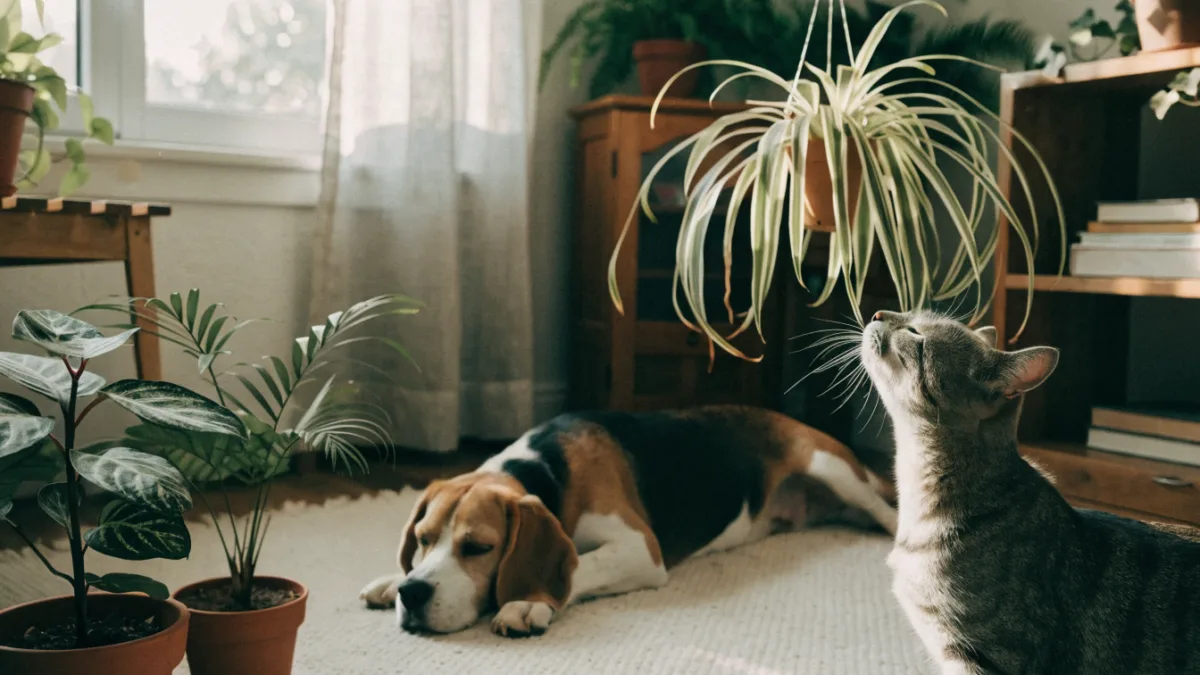
Just last spring, a woman named Karen rushed into our clinic cradling her three-year-old Maine Coon, Barnaby. He’d been perfectly fine that morning, she told me, but by afternoon he was drooling, pawing at his mouth, and vomiting. The culprit? A pothos plant she’d picked up at a hardware store the day before. She hadn’t even thought to check if it was safe—after all, it was just a little plant. Barnaby recovered fully after supportive care, but that afternoon in the clinic stuck with both of us. The houseplant hobby has exploded in recent years, and I completely understand the appeal. There’s something deeply satisfying about filling your home with greenery. But if you share that home with a curious cat or an inquisitive dog, that same hobby can turn dangerous fast. The good news? You don’t have to choose between being a plant parent and a pet parent. You just need to know what you’re bringing home.
Understanding the Spectrum of Toxicity
One of the biggest misconceptions I encounter is that all toxic plants are equally dangerous. They’re really not. In veterinary medicine, we think of plant toxicity as a spectrum, and understanding where a particular plant falls on that spectrum can help you make smarter decisions about what belongs in your living room.
On the milder end, you have plants that cause gastrointestinal upset—some drooling, perhaps a bout of vomiting, maybe a day or two of diarrhea. Unpleasant for your pet and stressful for you, but rarely life-threatening with supportive care. On the far end of that spectrum, you have plants that cause organ failure. The difference between these two extremes is enormous, and it matters enormously for how quickly you need to act.
Most common houseplants fall somewhere in that mild-to-moderate zone. But there are a few that are genuinely deadly, and those are the ones every pet owner should commit to memory before browsing the garden center.
The Feline Foe: Plants That Genuinely Terrify Me
True Lilies: The One I Lose Sleep Over
If there’s one plant I wish I could erase from every florist’s inventory, it’s the true lily. Plants in the Lilium and Hemerocallis genera—which include Easter lilies, Tiger lilies, Asiatic lilies, Stargazer lilies, and Daylilies—are extraordinarily toxic to cats. Not mildly irritating. Not moderately concerning. Fatal, often within seventy-two hours, if treatment isn’t started promptly.
What makes these lilies particularly devastating is how little exposure it takes. A cat doesn’t need to eat an entire flower. Chewing on a single petal, lapping at the water in the vase, or even getting pollen on their fur and then grooming themselves can be enough. The toxic compounds cause acute kidney failure, and once those kidneys shut down, the clock is ticking in a way that makes my stomach tighten every time I see it happen.
I treated a beautiful white Persian named Snowball a few years back. Her owner had received an Easter lily arrangement and set it on the dining table, assuming the cat wouldn’t bother with it. By the time Snowball came in—lethargic, not eating, producing no urine—the damage was severe. We managed to pull her through with aggressive intravenous fluids and several days of intensive care, but her owner spent thousands of dollars and three sleepless nights. That lily arrangement cost forty dollars.
If you have a cat, true lilies do not belong in your home. Not on a high shelf. Not in a closed room. Not anywhere. This is one area where I won’t compromise, and I don’t think you should either.
The Insoluble Calcium Oxalate Gang
Now for the more common—but less deadly—offenders. Three of the most popular houseplants in the world share a similar defense mechanism: insoluble calcium oxalate crystals. These are microscopic, needle-shaped structures that embed themselves in the tissues of the mouth, tongue, and throat when an animal chews on the plant. Think of them as tiny glass shards.
The main culprits here are Pothos (that trailing vine practically everyone owns), Philodendron (its equally popular cousin), and Peace Lilies (which, despite the name, aren’t true lilies and don’t cause kidney failure, but will make your pet thoroughly miserable). When a dog or cat bites into one of these, the crystals cause immediate, intense oral pain. You’ll see excessive drooling, pawing at the face, head shaking, and often vomiting.
I remember a golden retriever puppy named Cooper who got into his owner’s large philodendron and spent a memorable evening drooling what looked like gallons of saliva all over the exam room floor. His owners were frantic, but once we rinsed his mouth, gave him something for the pain, and offered him some milk to soothe the irritation, he bounced back within hours. That’s the typical pattern with calcium oxalate plants—dramatic symptoms, but usually good outcomes with prompt care.
The “Fern” Confusion: What’s Safe and What Isn’t
Here’s where things get genuinely confusing, and I’ve seen even experienced plant collectors get tripped up. Not everything called a “fern” is actually a fern—and the difference matters.
True ferns belong to the Polypodiopsida class, and many of the most popular ones are completely safe for pets. The Boston Fern, those lush, feathery plants that cascade over the edges of hanging baskets? Safe. Maidenhair Ferns, with their delicate, fan-shaped fronds? Safe. Staghorn Ferns and Bird’s Nest Ferns? Also safe. If you love the look of ferns, you’re in luck—most true ferns are excellent choices for households with animals.
But here’s the trap: several toxic plants have “fern” in their common name but aren’t actually ferns at all. The Asparagus Fern, for instance, is a member of the lily family and can cause skin irritation and gastrointestinal upset. The Fern Palm (also called Sago Palm) is one of the most dangerous plants you can bring into a home with pets—it can cause liver failure in dogs, often fatally. Always check the scientific name, not just the common name on the label.
Building Your Pet-Safe Collection
Once you know what to avoid, the world of pet-safe plants opens up beautifully. Here are some of my favorite recommendations for homes with cats and dogs:
- Spider Plants — Nearly indestructible, architecturally interesting, and completely non-toxic. Cats sometimes enjoy batting at the dangling plantlets, which is harmless entertainment.
- Calatheas and Marantas — These include the Prayer Plants, with their stunning patterned leaves that fold up at night. All members of this family are safe for pets.
- Parlor Palms — Despite the palm family containing some dangerous members (like the Sago Palm mentioned earlier), the Parlor Palm is completely safe and brings a lovely tropical feel indoors.
- Boston, Maidenhair, Staghorn, and Bird’s Nest Ferns — As discussed, true ferns are excellent pet-safe choices.
- Peperomia — A diverse genus of small, often texturally interesting plants that are all safe for cats and dogs.
- Haworthia — If you love the look of succulents but worry about toxicity (many Aloe species are toxic), Haworthia offers a similar aesthetic with complete safety.
- Herbs like Basil, Rosemary, and Thyme — A practical, pet-safe indoor garden option that also happens to improve your cooking.
- African Violets — For a pop of color, these classic flowering houseplants are entirely non-toxic.
The Risk Tolerance Question
I want to address something that comes up constantly in exam rooms: what about keeping mildly toxic plants out of reach? Is that ever acceptable?
I’ve changed my thinking on this over the years. Early in my career, I was fairly rigid—if a plant was toxic, I’d tell owners to get rid of it entirely. But experience has taught me that life is more nuanced than that. A pothos on top of a seven-foot bookshelf in a home with a small dog who’s never shown interest in plants? That’s probably fine, and I’m not going to make you feel guilty about it. A pothos at eye level in a home with a young, curious cat who chews everything? That’s asking for trouble, and I’ll gently suggest you find an alternative.
The key is honest assessment. Cats, in particular, are capable of reaching places that seem impossible. If you have a determined feline, assume they can access any plant in your home, no matter how high you place it.
When the Worst Happens: Your Action Plan
Despite our best efforts, pets sometimes eat things they shouldn’t. Here’s what I want every pet owner to know:
First, don’t panic—but do act quickly. If you catch your pet in the act of chewing a plant, remove any plant material from their mouth and rinse it gently with water. Identify the plant if you can—take a photo of it, or bring a sample with you. Knowing exactly what your pet ate dramatically changes how we treat them.
If you suspect your pet has ingested any part of a true lily and you have a cat, don’t wait for symptoms. Call your veterinarian or an emergency clinic immediately. Every hour matters with lily toxicity.
For milder toxicities, call your veterinarian or a poison control hotline for guidance. The ASPCA Animal Poison Control Center is available at (888) 426-4435, and the Pet Poison Helpline is another valuable resource. Keep these numbers saved in your phone—you don’t want to be googling during an emergency. Please note that any specific treatment or dosage decisions should always be made in consultation with your veterinarian, as recommendations vary depending on your pet’s size, health status, and exactly what they consumed.
You Can Have Both
Being a devoted pet owner and a passionate plant collector aren’t mutually exclusive. The surge in indoor gardening over recent years has been wonderful to witness—there’s real joy and mental health benefit in surrounding yourself with living green things. The increase in plant-related poisoning calls that veterinary clinics have seen is simply a side effect of that trend, not a reason to abandon your botanical hobbies.
What it is a reason to do is shop thoughtfully. Many nurseries have begun labeling their plants with toxicity warnings right on the pots, which makes the process easier than ever. When in doubt, the ASPCA maintains a comprehensive toxic and non-toxic plant list that you can search before making a purchase.
And here’s a final thought that goes beyond pet safety: the plants we bring into our homes connect us to ecosystems worldwide. Many of our most beloved houseplants—from the rainforest-dwelling Calatheas to the desert-origin Haworthia—represent biodiversity from threatened habitats. By learning their names, understanding their needs, and choosing them thoughtfully, we become more attuned to the natural world and more invested in protecting it. That awareness, more than anything, is what conservation looks like in everyday life.
Your home can be lush, green, and alive—while also being safe for every member of your family, including the four-legged ones. It just takes a little knowledge, a bit of planning, and the willingness to look up the scientific name before you fall in love with a plant at the store.