

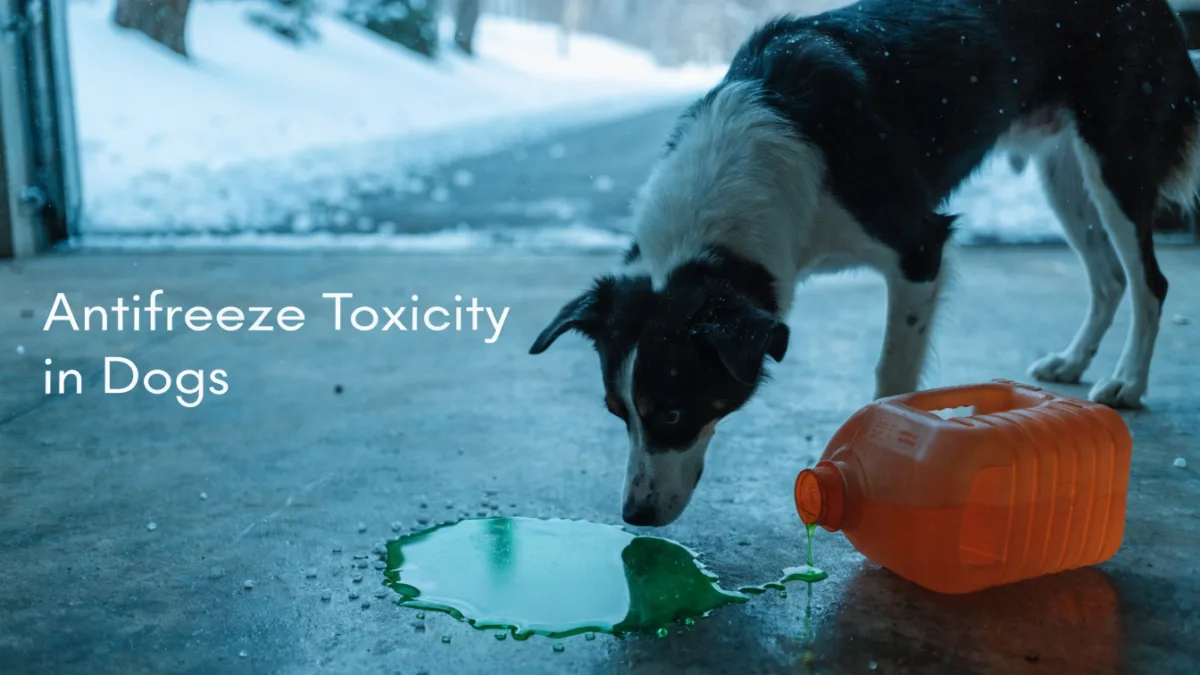
The deadliest thing in your garage this winter probably tastes like dessert. I know that sounds dramatic, but after years of emergency practice, I can tell you the two winter toxins for pets that send people through my doors aren’t exotic — they’re the jug of antifreeze on the shelf and the bucket of ice melt by the front door. Antifreeze poisoning in dogs and cats is uniquely cruel because pets don’t stumble into it; they seek it out, because it tastes sweet. And ice melt does its damage slowly, one walk at a time. The good news? Nearly all of it is preventable, if you know what you’re looking at.
The Sweet-Bait Problem: Why Antifreeze Poisons So Many Pets
One January, a client called me at 9 p.m. in a panic. Her three-year-old yellow Lab, Moose, had been under her truck in the driveway for maybe two minutes, and when he came out he was licking his lips and, within the hour, wobbling like he’d had too much wine. She found a small green puddle under the engine. “He seemed fine by the time I got my shoes on,” she told me later. “I almost didn’t call.”
He seemed fine by the time I got my shoes on. I almost didn’t call.
That call saved his life. Most antifreeze is made from ethylene glycol, a chemical with an artificially sweet flavor that dogs, cats, and wildlife find genuinely attractive — it doesn’t warn them off the way bitter toxins do. And the lethal dose is shockingly small: one teaspoon can kill a cat, and one to two tablespoons can kill a small dog. Cats are roughly three times more sensitive than dogs, which is why even walking through a spill and grooming it off their paws can be enough.
Once swallowed, the liver converts ethylene glycol into acidic metabolites that form sharp calcium oxalate crystals — essentially tiny shards that shred the kidneys. Untreated, it causes acute kidney failure, usually fatal within two to three days. The classic exposure points are garage floor drips, driveway spills, fall and spring radiator flushes, winterized cabins and RV plumbing, and puddles in parking lots. If you want a fuller inventory of what’s hiding in your garage, [1] is worth a read.
The Three Stages — and the “Recovery” That Isn’t
Antifreeze poisoning unfolds in three acts, and the second act is the one that fools people:
- 30 minutes to 12 hours: Your pet looks drunk — wobbliness (we call this ataxia), lethargy, vomiting, diarrhea, low body temperature, and excessive thirst and urination.
- 12 to 24 hours: The deceptive stage. Pets often appear to recover. They eat, they perk up, owners relax. Meanwhile, the crystals are marching through the kidneys.
- 24 to 72+ hours: Kidney failure takes over — severe depression, seizures, coma. Once we reach this stage, the prognosis is grave.
I’ve had families tell me their dog “got better on his own” overnight, only to collapse on day two. That middle stage is the trap, and it’s exactly when the treatment window is closing.
Bitterants and “Safer” Antifreeze: What Actually Helps
I’ll admit I’ve changed my mind on this one. Early in my career, I reassured clients that bittered antifreeze had largely solved the problem — and it has helped. Most consumer antifreeze sold today contains denatonium benzoate, one of the bitterest substances known, after states like California and Oregon passed laws requiring it and manufacturers voluntarily added it nationwide around 2012–2013.
But here’s what I learned the hard way: bitterant is a safeguard, not a guarantee. Dogs will still lap up bittered fluid, and cats — who have fewer bitter taste receptors than dogs — may barely notice it at all. So treat every antifreeze, bittered or not, as a lethal hazard.
One genuinely safer swap: antifreeze made with propylene glycol instead of ethylene glycol. It’s significantly less toxic, though it’s not harmless — it can still cause GI upset, so call your vet if your pet gets into it.
If Exposure Happens: Your Action Plan
Moose survived because his owner moved fast, and speed is everything here. The antidote, a drug called fomepizole, blocks the enzyme that converts ethylene glycol into its deadly metabolites — essentially stopping the poison before it can become the kidney-shredding version of itself. Outcomes are best when it’s given within eight hours of ingestion. After that, we’re supporting kidneys with IV fluids, and increasingly, referral centers can offer hemodialysis (blood filtering) for cases that would have been fatal a decade ago.
If you even suspect your pet licked antifreeze:
- Call your vet or the nearest emergency clinic immediately — on your way out the door, not after you’ve watched your pet for a while.
- Bring the container, or photograph the label, so the team knows exactly which chemical they’re dealing with.
- Don’t induce vomiting unless a veterinarian tells you to. I know the internet says otherwise; please don’t.
- En route, you can call a poison helpline such as Pet Poison Helpline or the ASPCA Animal Poison Control Center in the U.S. (both charge consultation fees), or your national equivalent — but don’t let a phone call delay the drive.
Ice Melt: The Winter Hazard You Walk Through Every Day
Then there’s the stuff we scatter everywhere on purpose. Last February, Winnie, a five-year-old Beagle, came in limping after a week of sidewalk walks. Her paw pads were cracked and ulcerated, and the skin between her toes was angry and raw. Her owner assumed winter air was just drying her feet out. What Winnie had was chemical burns from ice melt.
Most ice melts rely on sodium chloride, magnesium chloride, or calcium chloride — and calcium chloride is the sneaky one: as it dissolves, it releases heat, reaching temperatures around 140°F (60°C). That’s enough to burn and crack paw pads on contact. When pets lick it off, it causes drooling, vomiting, and diarrhea. Large ingestions can push blood sodium to dangerous levels — hypernatremia — triggering tremors and seizures. The ASPCA’s poison control center sees a predictable spike in ice melt calls every winter, on top of a record-breaking 450,000 total cases in 2023.
How to Read a “Pet-Safe” Ice Melt Label
Here’s my plea: read the ingredient list, not the front of the bag. “Pet-safe” is an unregulated marketing term, and some products carrying it still contain chlorides. What to look for instead:
- Urea-based products — much gentler on paws, though they can still cause stomach upset if eaten in quantity.
- Calcium magnesium acetate (CMA) — a gentler deicing compound.
- Coated or rounded granules designed not to jab into pads.
No ice melt is 100% safe if swallowed, so treat all of it as “safer,” never “safe.”
Paw Protection That Earns Its Keep
The single best habit is boringly simple: rinsing paws with lukewarm water after every single walk, then drying them and checking between the toes. Booties work wonderfully if your dog will tolerate them (introduce them gradually, with treats). Wax-based paw balms create a protective layer against salt and cold. And discourage eating snow or drinking from puddles near treated pavement — melted ice melt concentrates in exactly those slushy puddles dogs love.
Your Garage and Driveway Checklist
- Clean any spill immediately — absorb it with kitty litter or sand, then scrub the spot.
- Store antifreeze tightly sealed, off the floor, ideally in a locked cabinet. [2] prevent most of the exposures I see.
- Check under your car weekly for leaks — a piece of cardboard under the engine overnight makes drips obvious.
- Keep pets out of the garage during radiator work and coolant flushes.
- If you winterize an RV or cabin, do it before pets travel with you, and consider propylene glycol products.
- Sweep up excess ice melt indoors and at entryways. A good [3] is worth a skim before the first freeze.
One last thought, because it’s bigger than our pets. That same sweet puddle that nearly killed Moose also kills songbirds, raccoons, squirrels, and deer every winter — wildlife deaths that helped drive the original bitterant laws. And the estimated 20-plus million tons of road salt we apply each year is slowly salinizing northern lakes, streams, and wetlands, threatening amphibians and freshwater ecosystems. That’s why I love seeing municipalities blend road treatments with beet juice and cheese brine to cut salt use, and why “salt smart” winter maintenance campaigns are spreading. When you use less, choose gentler products, and clean up your spills, you’re not just protecting the animal asleep at your feet — you’re protecting the whole watershed outside your door. That’s a winter habit worth keeping.
Sources
- this rundown of common household pet toxins — carecentervets.com
- Simple garage storage habits — livinggracecanineranch.org
- review of seasonal yard and garage hazards — mountainviewvh.com