

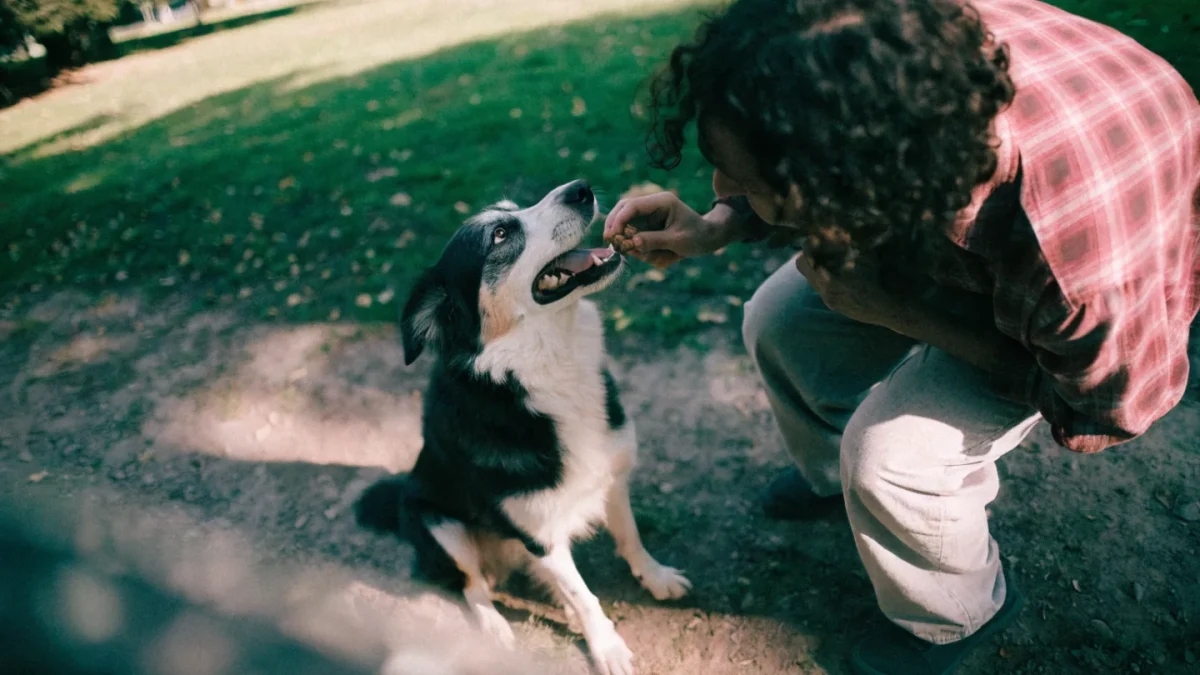
"My dog knows 'come' but doesn't do it at the park."
I hear this constantly. The translation is usually: "My dog's recall reward is less compelling than the dog park."
The fix is either increasing the reward value or doing the long proofing work to raise the threshold before using recall in that environment. Usually both.
The Competition Question
Before choosing rewards, ask: what is the recall competing with? The answer determines the required reward level.
- Recall from mild sniffing in your yard → kibble works
- Recall from active play at the dog park → kibble doesn't work
- Recall mid-chase on a wildlife scent trail → nothing works unless carefully conditioned over time
The reward needs to be more valuable to the dog than what you're asking them to leave. If it isn't, the recall is not reliable in that context — regardless of how many times you've said "come."
Food-Based High-Value Options
These are general categories — individual dogs vary considerably in what motivates them:
- Fresh or cooked meat: Often the highest-value food for dogs. Small pieces, delivered rapidly.
- Real cheese: Compelling for many dogs, easy to carry.
- Dried fish: Strong scent, high value for many dogs, portable.
- Soft commercial treats: More convenient than fresh food, varying value depending on the brand and ingredients.
- Whatever your dog loses their mind over: The right answer is your dog's personal hierarchy, not a generic list.
Not every food works for every dog. Some dogs are highly food-motivated; others are relatively indifferent to food in high-arousal environments. Know your dog.
Non-Food High-Value Options
For some dogs — particularly working breeds and high-drive dogs — toy play is more motivating than food in stimulating environments:
- Tug with a high-value toy: For a dog that loves tug, a 30-second tug session as a recall reward can be more compelling than any food.
- Chase/retrieve game: Immediately throwing a ball after recall, while the dog is right at your feet.
- Running together: Some dogs find "run with the owner" highly reinforcing.
These non-food rewards require more timing and handling skill but can reach dogs that don't respond well to food under arousal. (See also: recall training in high-prey-drive dogs.)
How to Deliver the Reward
The delivery matters as much as the reward itself. A jackpot recall reward should be:
- Multiple pieces delivered in rapid succession (5-10 pieces, one at a time, over 15-20 seconds)
- Accompanied by genuine enthusiasm (if you're flat and mechanical, the reward is less reinforcing)
- Delivered immediately when the dog arrives — not after a sit, not after the leash is clipped
The entire arrival should feel like a party. "You came back! Yes! Yes! Yes! Good! Here! And here! And here!"
Over time, you can fade treat frequency as described in fading treats — but the recall should always be well-rewarded relative to other behaviors.
The highest-value reward isn't about what you have in your pocket. It's about what you're offering that competes with what the dog values in that moment. Figure that out for your specific dog, and you've solved most recall problems.