

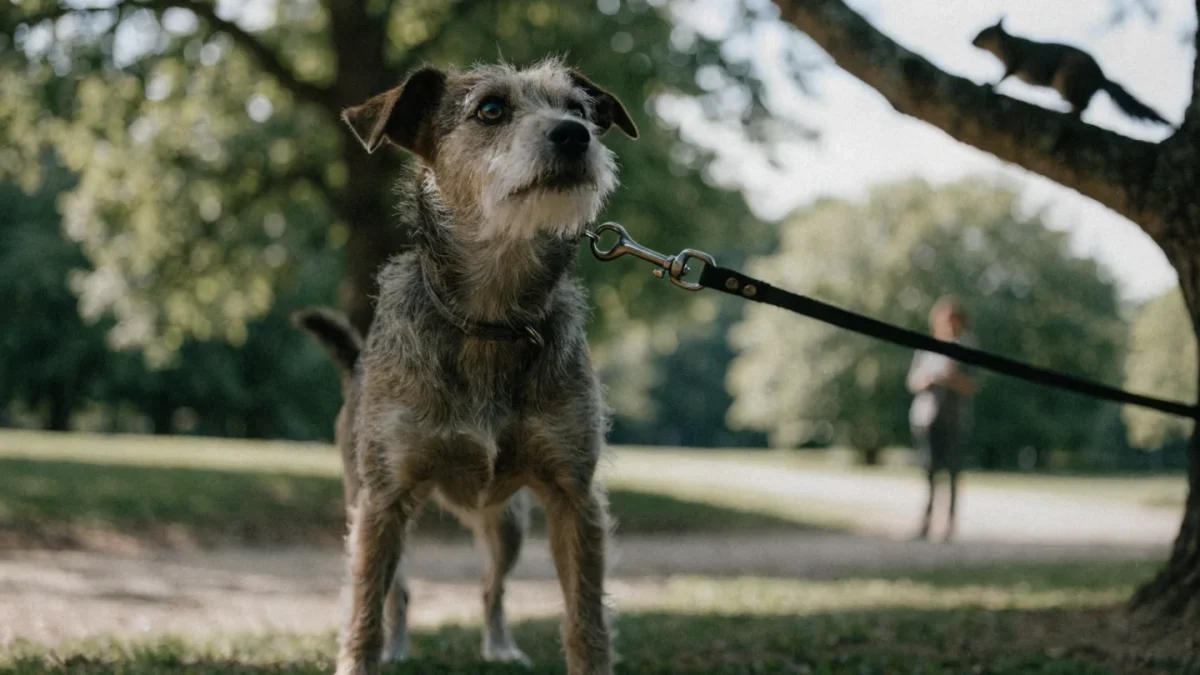
I've worked with Border Terriers that would ignore a steak when a rabbit was moving 100 yards away. Jack Russell Terriers whose entire body vibrated when a squirrel appeared. Dogs in active chase are genuinely unavailable — the prey chase sequence activates neurochemically in a way that overrides most other inputs.
This doesn't mean recall training is impossible for high-prey-drive dogs. It means the expectations and methods need to be calibrated to reality.
Understanding the Prey Sequence
The prey chase sequence in dogs runs something like: orient → stalk → chase → grab → kill (with bite and shake). Dogs in the chase phase are in an aroused, focused state that's functionally incompatible with responding to cues. The behavior is self-reinforcing — the act of chasing feels good independent of catching anything.
This is why standard food-based recall often fails for these dogs. Food is not competitive with an active chase. The drive to chase is, in that moment, more motivating than any treat you're carrying.
What Works Better
Use drive-appropriate rewards. For many high-prey-drive dogs, a tug session with a rope toy or a flirt pole game is more motivating than food. If your reward is a game of chase or tug with you, you're competing more effectively.
Train under threshold. As with all distraction training — find the distance or intensity at which the dog notices the prey animal but hasn't committed to chase. At that level, recalls can succeed and can be reinforced. Build toward harder situations from there.
Build an interrupt before the chase. You can build a "look at me" or attention behavior that's conditioned to fire before the dog commits to chase mode. The window between "noticed" and "launched" is your training target.
Build a strong emergency recall and maintain it. Even if the everyday recall is unreliable mid-chase, a rarely-used emergency recall with extremely high-value reward history may break through when the standard recall won't.
Accept the limits honestly. For some high-prey-drive dogs in high-wildlife environments, the responsible answer is: long line, fenced areas, or leash. This is not a failure. It's appropriate management for the dog you have.
Practical Management
During active chase or immediately post-chase, the dog is not accessible for training. Wait until the arousal drops before working on recall. Recall practice just after seeing a squirrel (but before any chase) is far more effective than recall practice during or after one.
Check the reliable recall guide for the general system, and the emergency recall for the high-stakes safety tool. (See also: recall for hound breeds.)
Manage the environment you can't train yet. Train the threshold you can work at. And be honest about what off-leash freedom is safe for your specific dog in specific environments. That combination is the honest answer to high-prey-drive recall.