

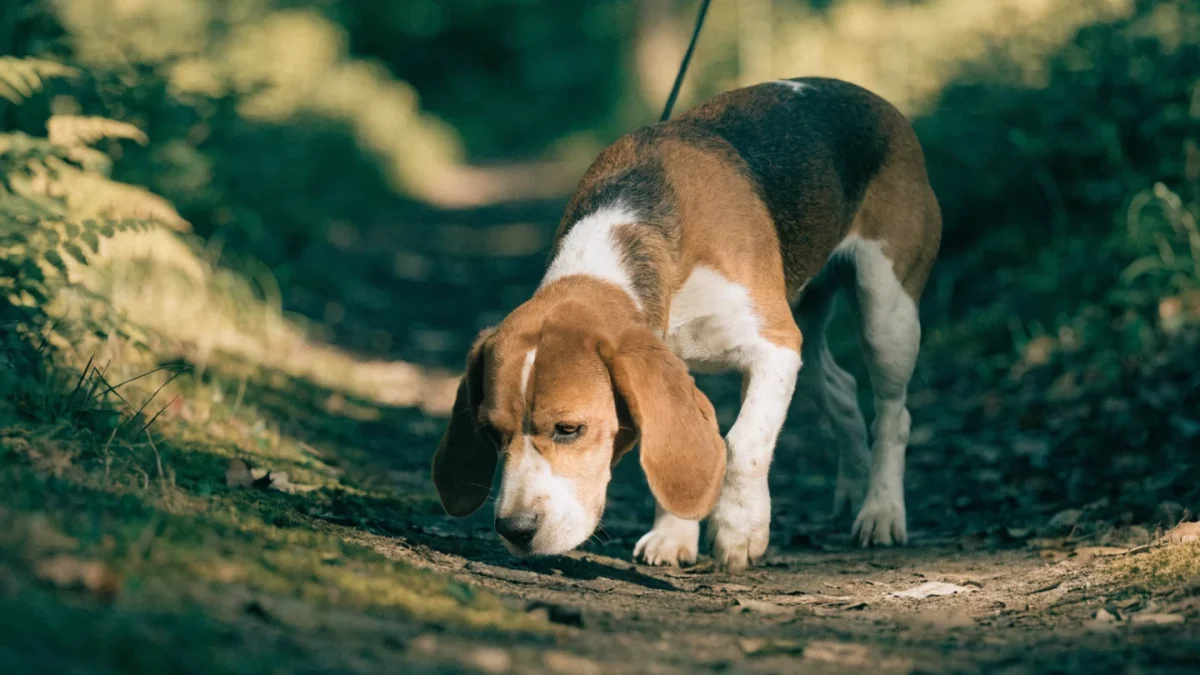
I love working with hound breeds. I also want to be honest with hound owners from the start: reliable off-leash recall in uncontrolled environments is genuinely harder with scent hounds than with herding breeds or sporting dogs, and some hounds may never be fully off-leash safe in open spaces without a fence.
That's not a failure of training or of the dog. That's a thousand years of selective breeding for exactly the thing you're fighting against.
Why Scent Hounds Are Different
Scent hounds — Beagles, Bloodhounds, Coonhounds, Basset Hounds, and similar breeds — were developed to follow a scent trail for hours, often far ahead of their humans. The traits that make them extraordinary at their original job (tunnel-vision focus, persistence, willingness to work independently) are the exact traits that make recall training hard.
When a Beagle's nose hits an interesting scent trail, the entire brain organizes around following it. They aren't ignoring you because they're defiant. They literally cannot hear you — they're in scent-focus mode. The olfactory system is essentially filling the dog's entire attention bandwidth.
What Works Better
Start earlier and with higher value. With most dogs, reasonably good treats work for recall training. With scent hounds, you need the absolute highest-value food you can safely offer consistently. This might be fresh meat, real cheese, something that competes olfactorily with whatever trail they might find.
Train before habits are established. Hound puppies before 10-12 weeks haven't fully developed the scent-focus pattern. That early window is critical. A hound puppy with 3 months of strong recall reinforcement is meaningfully different from one that spent those months following scent trails unpracticed.
Use scent work as reward, not just food. Controlled scent games — letting the dog hunt for a hidden food item — can be used as jackpot rewards for recalls. The dog learns that coming to you sometimes leads to a structured scent hunt. Leverage the drive rather than always fighting it.
Accept that a leash or fenced area may be permanent. For many scent hound owners, this is the honest answer: your dog can have rich, fulfilling outdoor experiences on a long line in open areas and off-leash in fenced spaces. Off-leash freedom in unfenced environments may not be achievable, and that's okay.
Proofing Specifically for Hounds
Work the recall against scent specifically. Drop treats on the ground, walk away, call the dog. Build the "leave a scent-interesting thing to come to me" response directly.
Practice near areas with mild wildlife scent. Recall success near interesting but not overwhelming scent is meaningful training.
On the long line (which I strongly recommend as a permanent tool for hound outdoor time), practice recalls when the dog is nose-down on a good sniff — not mid-track on a hot trail. Build from "recalled while sniffing casually" before you attempt "recalled while tracking actively."
Check the reliable recall guide for the general principles and breed-specific training tips for the broader context of working with purpose-bred dogs. (See also: breed-specific dog training.)
Hound owners who make peace with management — long lines, fenced spaces, careful off-leash choices — and build the best recall they realistically can tend to have much happier dogs and much less stress than those who insist on full off-leash freedom at any cost.