

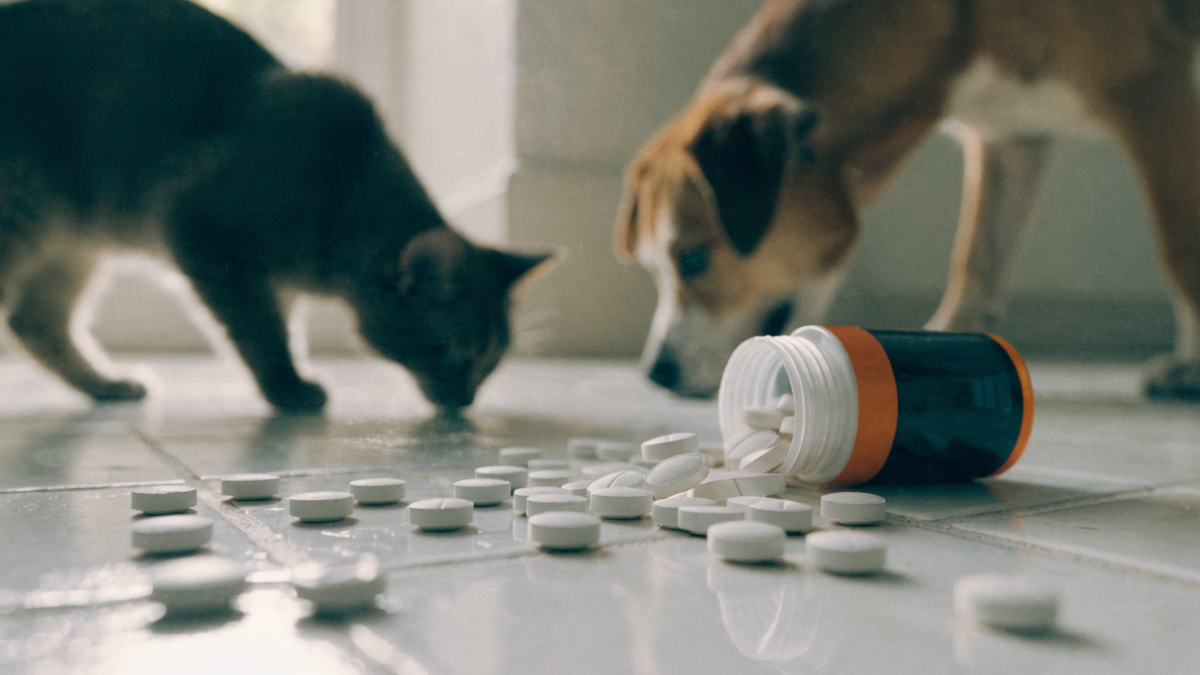
It was a Tuesday evening when Marcy called, her voice shaking. Her twelve-year-old tabby cat Oliver had been limping after jumping off the kitchen counter, and in a moment of well-meaning concern, she’d broken off a tiny piece of her Tylenol and tucked it into a bit of tuna. “It was barely a crumb,” she kept saying. By the time Oliver reached our clinic two hours later, his gums had turned a muddy brown color and he was struggling to breathe. That “barely a crumb” of acetaminophen was actively destroying his red blood cells’ ability to carry oxygen, and we were in a race against time to save his life.
Stories like Oliver’s are more common than most pet owners realize. Human medications consistently rank among the top calls to animal poison control centers every year, and the tragic part is that most of these emergencies stem from love, not negligence. An owner sees their pet in pain and wants to help. A pill drops on the floor and gets gobbled up before anyone notices. A curious cat knocks a bottle off the counter. The medicine cabinet that keeps us healthy can be a minefield for our pets, and understanding why requires looking at some fundamental differences in how their bodies process drugs.
Why Tylenol Is Devastating for Cats
Cats are not small dogs, and they’re certainly not small humans. Their livers process medications through entirely different metabolic pathways, and they’re missing a critical enzyme called glucuronyl transferase. This enzyme helps most mammals break down and eliminate certain compounds, including acetaminophen, the active ingredient in Tylenol. Without it, acetaminophen builds up rapidly in a cat’s system and begins destroying red blood cells in a process called methemoglobinemia.
In plain terms, methemoglobinemia changes the shape of hemoglobin, the protein in red blood cells responsible for carrying oxygen throughout the body. When hemoglobin is altered, it can no longer release oxygen to tissues. A cat with acetaminophen toxicity essentially suffocates at the cellular level. Their gums turn brown or blue rather than healthy pink. Their breathing becomes rapid and labored. Their face and paws may swell. And this can happen with as little as one-tenth of a single regular-strength Tylenol tablet.
Treatment involves a medication called N-acetylcysteine, which helps replenish the body’s natural antioxidant stores and protect remaining red blood cells. It’s effective when started quickly, which is why Oliver survived. But not every cat is so fortunate. I’ve seen cases where well-intentioned owners gave their cat Tylenol before bed and didn’t discover the problem until morning, by which point organ damage was irreversible.
What About Dogs and Acetaminophen?
While cats are dramatically more sensitive to acetaminophen, dogs aren’t safe either. In dogs, acetaminophen toxicity tends to target the liver, causing irreversible liver failure, and can also damage red blood cells. Larger dogs may tolerate small doses under very specific veterinary supervision, but the margin between a therapeutic dose and a toxic one is razor-thin, and owners should never attempt to calculate this themselves.
The NSAID Trap: Ibuprofen, Naproxen, and Aspirin
If acetaminophen is the great danger for cats, nonsteroidal anti-inflammatory drugs (NSAIDs) represent the most common cause of medication-related kidney failure in dogs. Ibuprofen (the active ingredient in many common pain relievers), naproxen, and even plain aspirin are all culprits. These medications work by blocking enzymes called COX-1 and COX-2, which produce prostaglandins, the compounds responsible for pain and inflammation.
Here’s the catch: some prostaglandins also perform essential housekeeping duties. They maintain the protective mucosal lining of the stomach and intestines, and they regulate blood flow to the kidneys. When NSAIDs block all prostaglandin production, the stomach lining thins and ulcers form. Blood flow to the kidneys drops, and in severe cases, acute kidney failure develops.
Last spring, a client named David brought in his six-year-old Beagle, Daisy. Daisy had been favoring her hind leg, and David had given her half an ibuprofen tablet before going to work. When he came home, Daisy had vomited several times and was refusing to eat. By the time we saw her, she was already showing signs of gastrointestinal ulceration and her kidney values were climbing. We hospitalized her for three days on intravenous fluids, medications to protect her stomach lining, and round-the-clock monitoring. She pulled through, but David learned an expensive and frightening lesson.
The “Baby Aspirin” Myth
I frequently encounter pet owners online recommending “baby aspirin” or low-dose aspirin as a safe home remedy for dogs. I understand the reasoning, and I’ll admit that early in my career, veterinarians did occasionally prescribe aspirin for certain canine conditions. But veterinary medicine has evolved, and we now have safer, FDA-approved medications specifically formulated for dogs and cats.
The problem with aspirin isn’t just toxicity risk, though that’s real. It’s also that aspirin interferes with platelet function, meaning it affects blood clotting for up to seven days after a single dose. If your dog then needs surgery or develops an unrelated bleeding issue, that aspirin you gave last Tuesday can become a serious complication. When you factor in the ready availability of veterinary-specific NSAIDs that are both safer and more effective for managing pain in pets, there’s simply no good reason to reach for the human bottle.
Cold and Flu Medications: A Cocktail of Dangers
If single-ingredient pain relievers are dangerous, multi-symptom cold and flu medications are a full-scale emergency waiting to happen. These products often combine several toxic ingredients in a single pill or liquid, and each one poses its own threat.
Decongestants like pseudoephedrine and phenylephrine act as stimulants in pets. A dog or cat that ingests even a partial dose can develop elevated heart rate, dangerously high blood pressure, tremors, seizures, and hyperthermia, which is a dangerous spike in body temperature. Consider a four-month-old Yorkshire Terrier puppy who chewed through a blister pack of her owner’s daytime cold medicine. She weighed only four pounds, and the dose she received would have been excessive for an adult human. We spent forty-eight hours managing her racing heart and neurological symptoms before she stabilized.
Liquid cold medicines add another layer of risk. Many contain alcohol, which causes dangerous drops in blood sugar, body temperature, and blood pressure in pets. And increasingly, liquid medications and cough syrups are being formulated with xylitol, an artificial sweetener also sometimes labeled as “birch sugar.”
The Xylitol Explosion
Xylitol deserves its own warning label. Once found primarily in sugar-free gum and candy, xylitol is now used extensively in liquid children’s medicines, chewable vitamins, cough syrups, and even some toothpastes. In dogs, xylitol causes a massive, rapid release of insulin from the pancreas, leading to life-threatening hypoglycemia, which is severely low blood sugar. Symptoms include weakness, collapse, seizures, and in severe cases, irreversible liver failure.
The increase in xylitol-containing medications has dramatically expanded the avenues for accidental poisoning. A dog that would have no interest in your pain pills might eagerly lap up a spilled puddle of cherry-flavored cough syrup, and owners often don’t think to check the ingredients of liquid medications the way they might check food labels. Always read the inactive ingredients list on any liquid medication in your home, and assume that anything containing xylitol is potentially lethal to your dog.
Other Hidden Hazards in Your Cabinet
Beyond pain relievers and cold medicines, several other common OTC products warrant serious caution:
- Iron supplements: High-dose iron pills, often found in women’s multivitamins or standalone anemia supplements, can cause severe gastrointestinal irritation, organ failure, and shock in pets. Iron toxicity follows a deceptive pattern where symptoms may appear to improve before a second, more dangerous phase of liver and organ damage begins.
- Antidepressants (SSRIs and SNRIs): Medications like fluoxetine, sertraline, and duloxetine are easily overdosed by pets who chew through pill bottles. Symptoms range from lethargy and vomiting to a dangerous condition called serotonin syndrome, which causes elevated body temperature, tremors, seizures, and potentially fatal heart problems.
- ADHD stimulant medications: These drugs, designed to help humans focus, act as powerful stimulants in pets. Ingestion can cause racing heart rate, dangerously high blood pressure, seizures, and hyperthermia. Even one misplaced pill can be a lethal dose for a small dog or cat.
- Sleep aids: While some sleep medications cause only drowsiness in pets, others produce paradoxical effects, meaning the opposite of what you’d expect. Pets may become agitated, restless, or even aggressive, and some ingredients can cause liver problems.
Prevention and Emergency Response
The most effective treatment for medication toxicity is prevention, and most accidents are entirely avoidable with a few simple habits. Take your own medications over a sink or while seated at a table, not while walking through the house or standing over carpet where a dropped pill can disappear instantly. Keep all medications, including pill organizers and weekly dispensers, in closed cabinets or drawers that pets cannot access. Never store human and pet medications together, and never assume that a childproof cap will slow down a determined dog with strong jaws.
If you suspect your pet has ingested any human medication, don’t wait for symptoms to appear. Call your veterinarian or an animal poison control center immediately. The ASPCA Animal Poison Control Center and Pet Poison Helpline are available twenty-four hours a day, and their toxicologists can provide specific guidance based on your pet’s weight, the medication involved, and the amount ingested. With the rise of veterinary telemedicine, some practices now offer virtual triage that can help you determine whether you need to rush to an emergency clinic or whether watchful waiting at home is appropriate.
Never induce vomiting without professional guidance. Some medications cause more damage coming back up than they do staying in the stomach, and certain human products can burn the esophagus during vomiting. Always let a veterinary professional determine whether inducing vomiting is appropriate for your specific situation.
And please, never attempt to treat your pet’s pain with human medication without direct veterinary instruction. I know how hard it is to watch your companion hurting. I know the impulse to do something, anything, right now. But the kindest thing you can do in that moment is pick up the phone and call your vet. We have safe, effective medications designed specifically for animals, medications that manage pain without risking kidney failure, liver damage, or worse. Your medicine cabinet should stay yours. Your pet deserves their own.