

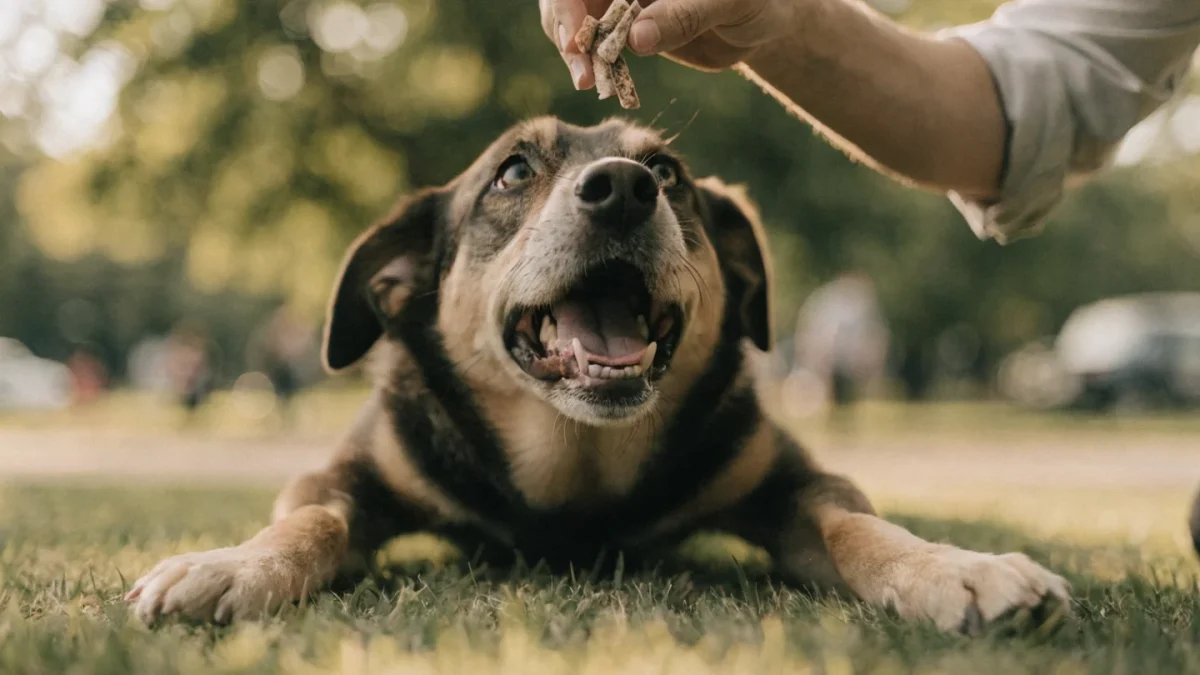
Every trainer I know has a different opinion on jackpots. Some swear by them. Some think they're overrated. Some use them constantly and accidentally teach their dogs to expect a party after every other rep.
Here's what I've found actually works — and more importantly, what doesn't.
What a Jackpot Is
A jackpot reward is a larger-than-usual or qualitatively better reward delivered after an exceptional response. Instead of your normal single pea-sized treat, you might toss five treats rapidly, produce a piece of real chicken, or do a big play session.
The idea is that the unusually high payout signals to the dog that whatever just happened was especially worth repeating.
The Science Is Mixed
If you've read about positive reinforcement basics, you know rewards increase behavior. What's less clear is whether a jackpot does anything beyond what a normal well-timed reward does. A review of jackpot reinforcers published in Behavior Analysis in Practice (2020) found the concept "rife with a lack of definitional and procedural clarity" and noted that few experimental analyses have produced consistent evidence of systematic effects from reward magnitude — past a minimum motivating threshold, bigger rewards don't reliably accelerate learning.
What seems to matter more is consistency of timing and rate of reinforcement rather than size.
That said, most experienced trainers use jackpots in specific situations where the psychological effect — surprise, high engagement, ending on a massive win — seems to matter practically.
When Jackpots Actually Help
First correct response on a new behavior
When a dog figures out something new for the first time — a real lightbulb moment — a jackpot can mark that event distinctly. The higher payout may help the dog "remember" what they did better than a single ordinary treat.
Exceptional responses in difficult conditions
Your dog comes back to you immediately after spotting a squirrel. That recall under pressure deserves more than a standard kibble. The reward should reflect the difficulty of what just happened.
Breaking through a training plateau
Sometimes dogs seem stuck. They're performing a behavior, but it's tentative or slow. When you get one clean, confident rep, a jackpot can reset their enthusiasm and help tip them over the plateau.
End-of-session close
Some trainers give a bigger reward at the very end of a session — not necessarily for exceptional performance, but as a pattern cue that the session is ending well. This builds positive association with training sessions as a whole.
When Jackpots Backfire
Using them too often
If every third rep gets a jackpot, you stop having jackpots — you just have an unpredictable rate of reinforcement, which is fine but not the same thing. Reserve jackpots for genuinely exceptional moments.
Using them as consolation prizes
Some handlers give jackpots when they feel bad about a hard session. That's not how reinforcement works. You're not rewarding the dog's emotional state — you're marking their last behavior. A jackpot given because you feel guilty doesn't help the dog understand what it was for.
Replacing good timing with big rewards
A jackpot doesn't fix late timing. If your mechanical timing is off, a handful of treats marks the wrong thing just as surely as a single one does. Understanding rate of reinforcement and variable reinforcement schedules matters more than treat quantity.
How to Deliver a Jackpot
Rapid-fire delivery works best — toss three to five small treats quickly one after another, or produce a large piece of high-value food with clear excitement in your voice. The energy of the delivery communicates that this was special.
Keep it brief. A jackpot isn't a five-minute party — it's a moment of outsized reward followed by a clean end to the session or a reset for the next rep. Dragging it out dilutes the effect.
Pick something. One jackpot style per session. Mixing high-value food with play during a jackpot can muddy what the reward actually is.
The Bottom Line
Jackpots are a tool. Used deliberately in the right moments, they punctuate breakthrough performances and add variety that keeps training interesting. Used reflexively or too often, they lose their meaning and create handlers who think they need to bring steak to every session.
Your standard training treats and good timing will do most of the work. Save the jackpot for when your dog does something that genuinely earns it.