

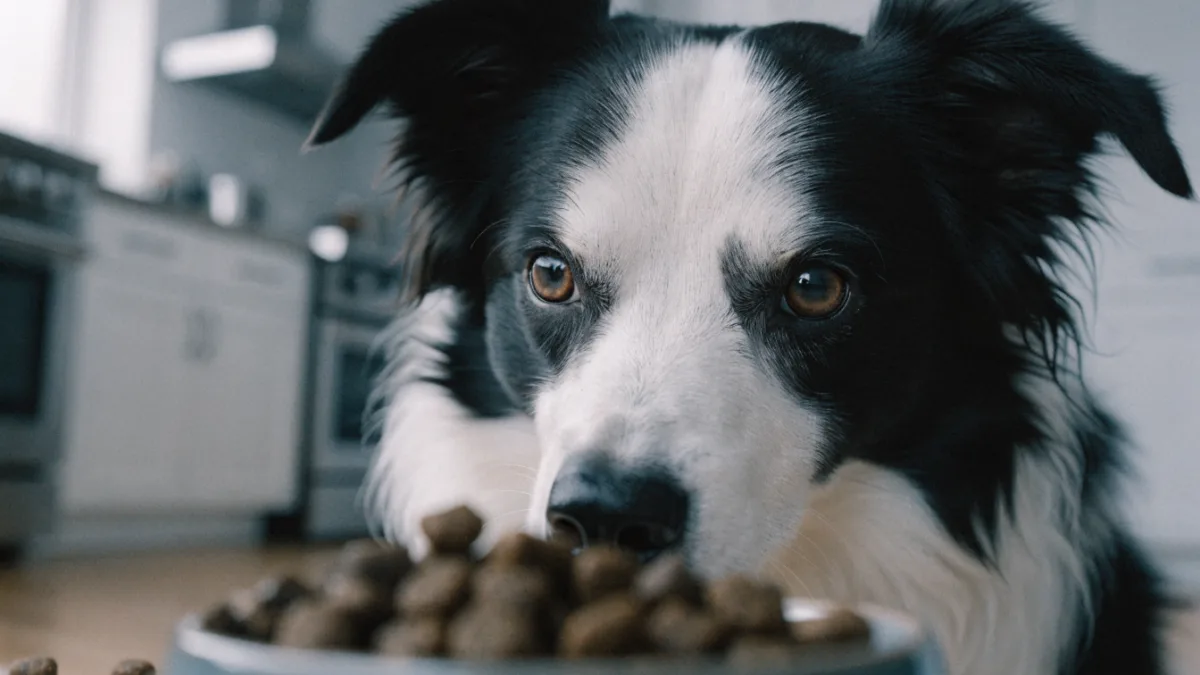
At Juniper’s wellness visit last month, her owner Dani skipped the small talk. She held up her phone, showed me a bag of kibble made from black soldier fly larvae, and asked, “Is this actual nutrition or just really good marketing?” Juniper, a three-year-old Border Collie mix, was more interested in the treats on the counter. But Dani’s question is the right one, and I’m hearing versions of it every week now. Between the UK approving cultivated meat for pets, the EU registering its first lab-grown pet protein, and insect-based diets moving from niche boutiques to mainstream shelves, the humble food bowl has quietly become food tech’s next frontier. So let’s separate the science from the slogans.
Why the Bowl Became Food Tech’s Testing Ground
Here’s the number that started all of this: a widely cited UCLA analysis found that if America’s dogs and cats were counted as their own country, they’d rank fifth in global meat consumption. Pets eat the same chicken, beef, and fish we do — they’re not getting the leftovers. Add in the fact that a significant slice of the global wild fish catch gets ground into fishmeal for animal feed, some of it landing in kibble, and you can see why conservation-minded researchers started eyeing the pet bowl.
There’s also a strategic reason the bowl comes first. Pet food faces lighter regulatory hurdles than human food in many jurisdictions, which means.[1] Some critics call this a “trojan horse” strategy — using Fido as the proving ground. I’d frame it more charitably: owners like Dani who’d hesitate to eat a lab-grown burger themselves are often willing to experiment on behalf of their dog’s carbon pawprint.,[2] that willingness is exactly what manufacturers are counting on.
What’s Actually Going Into the Bowl
Cultivated meat: chicken without the bird
Cultivated meat is made by growing animal cells in large steel tanks called bioreactors, fed a nutrient-rich growth medium. No animal is slaughtered; you get real chicken muscle protein without the bird. In 2024, a UK company called Meatly became the first to receive British regulatory approval for cultivated meat in pet food — a cultivated chicken protein for dogs — with products aimed at retailer shelves. Not long after, Czech firm Bene Meat Technologies secured an EU feed-material registration for cultivated protein for cats and dogs, a first for Europe. The US path has been slower, with companies working through state feed regulators. I’m naming these as milestones, not endorsements — but the direction of travel is clear.
Insects: the quiet veteran
While lab-grown meat grabs headlines, insect protein has been quietly passing its commercial exam. The EU authorized insect proteins in pet food back in 2017, and in the US, black soldier fly larvae were approved for adult dog food in 2018. The black soldier fly (Hermetia illucens) is the workhorse: its larvae reach harvest size in roughly 10–14 days, can be raised on food waste streams, and convert feed into protein far more efficiently than cattle. Crickets and mealworms play supporting roles. When Mars launched an insect-based cat food in the UK in 2021 — the first from a major manufacturer — what was once fringe officially went mainstream in Europe.
The Nutrition Science: Encouraging but Incomplete
So is it real food? Peer-reviewed digestibility trials generally show insect protein performs comparably to conventional proteins in dogs. The historical worry was chitin — the tough fiber in insect exoskeletons, the same stuff your fingernails’ cousin is made of — but at the inclusion levels actually used in pet food, it appears to have minimal impact on digestion.
The harder case is cats. They’re obligate carnivores, meaning they must get certain nutrients from animal tissue: taurine (an amino acid critical for heart and vision), arachidonic acid, and preformed vitamin A. Insect amino acid profiles vary depending on what the larvae were fed — what researchers call the substrate — so feline diets need careful formulation and, often, supplementation. If you see insect-based cat food, check that it’s formulated to meet feline requirements, not just adapted from a dog recipe.
Novel proteins also have a clinical niche. I once managed Otis, a four-year-old French Bulldog with chronic itchy skin, through an elimination trial using an insect-based diet — his owner’s face when the chewing finally stopped said everything. “I thought he’d hate it,” she told me. “He inhaled it.” That tracks with palatability trials: the “ick factor” lives entirely in human heads. Dogs and cats eat bug-based kibble readily.
But here’s where my hard-won humility kicks in. A decade ago I confidently told owners grain-free diets were harmless; then the investigation into diet-associated heart disease taught me how much we can miss when a novel diet lacks long-term feeding data. I’ve changed my mind before, and no multi-year trials exist yet for cultivated meat diets. Promising digestibility numbers are not the same as a decade of evidence.
Where the Marketing Outruns the Math
The sustainability claims sound dazzling — up to 90% less land, 50% less water than beef. But many of those figures come from industry-funded life-cycle assessments (studies that tally a product’s environmental footprint from farm to bowl). Independent analyses of cultivated meat remain limited, and here’s the catch: bioreactors are power-hungry.,[3] growing meat in a lab can end up being “extra work that would be more inefficient than simply processing plant protein” — unless the electricity comes from low-carbon sources. The footprint depends on the grid, not the concept.
A few more honesty checks before you swipe your card:
- The blend trick. A product containing 2% cultivated meat can legally make a lot of noise while displacing almost zero livestock demand. Small percentages can be more marketing than meat.
- The waste-stream caveat. Some insect farms feed larvae dedicated crops rather than food waste, which weakens those circular-economy claims considerably. Look for transparency about what the insects actually eat.
- The label that matters. Regardless of protein source, look for a complete-and-balanced statement from AAFCO in North America or FEDIAF in Europe, matched to the right life stage — and ask whether the company ran actual feeding trials. And talk to your vet before switching, especially for cats, puppies, or pets with health conditions.
The price tag deserves a mention too: cultivated meat still costs significantly more than conventional protein, which is why early products lean on blends and premium positioning.
Where I land after Dani’s question: insect protein has earned cautious optimism — eight years on European shelves, solid digestibility data, genuine resource savings when done well. Cultivated meat is a genuine scientific achievement whose environmental promise hinges on cheap clean energy and honest accounting. Curiosity is warranted; certainty isn’t.
And for the wildlife lovers reading: this matters beyond the bowl. Every ton of protein shifted away from fishmeal relieves pressure on anchovies and sardines — the forage fish that anchor marine food webs and feed everything from seabirds to tuna. Every acre of soy we don’t need for feed is an acre that can stay forest in South America. Our pets’ dinner bowls are connected to ocean fisheries and rainforests in ways most of us never see. Choosing a protein that’s genuinely — not just rhetorically — sustainable is one of the quieter ways a dog owner in any country can help protect the wild places we all depend on.
Sources
- cultivated meat may reach our pets years before it reaches our plates — news.vin.com
- As the New York Times recently reported — nytimes.com
- As one skeptic put it bluntly — facebook.com