

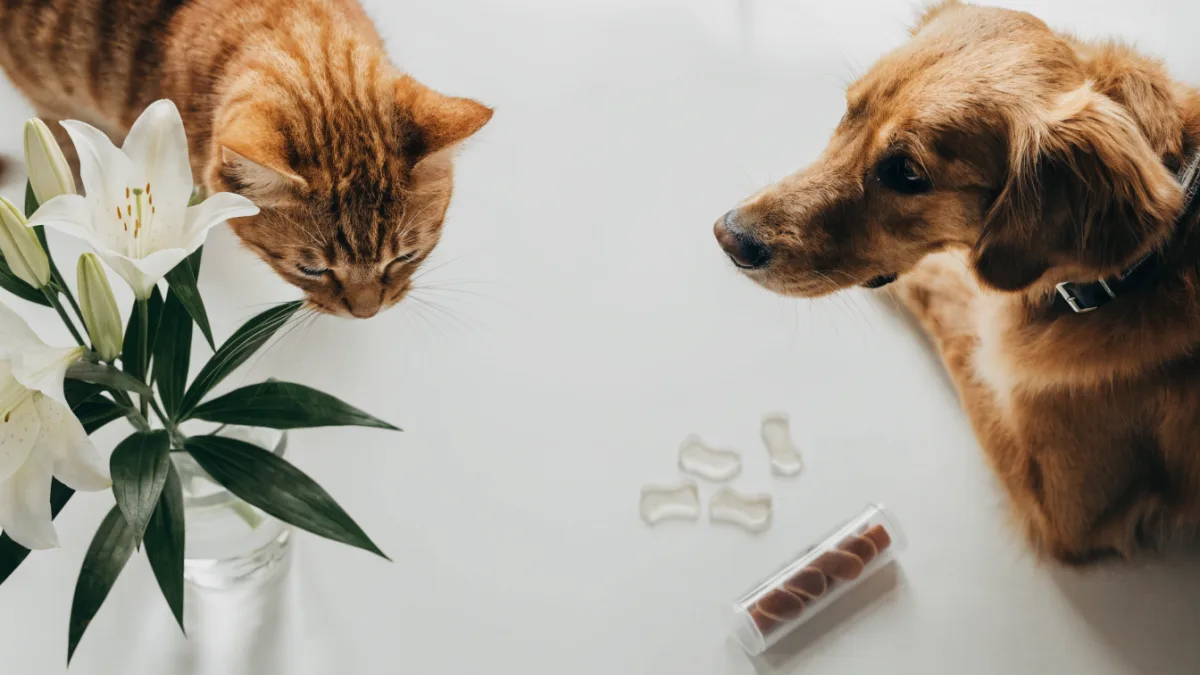
Picture a Sunday afternoon at a clinic: a woman named Maria arrives holding a slightly chewed Easter lily and her terrified seven-year-old tabby, Mr. Whiskers. “He just bit the stem once,” she keeps saying. “Surely that’s not enough to hurt him.” The disbelief is understandable — a single bite of plant matter sounds so innocent. But within hours, Mr. Whiskers’ kidneys would begin to shut down without immediate treatment. The contrast is striking: that same lily sitting on her dining table would have been completely harmless to her golden retriever, Mabel, lounging underneath it. And yet Maria’s pantry contained sugar-free peanut butter that could have put Mabel in the emergency room while Mr. Whiskers could have licked the jar clean without consequence. This is the strange and frightening reality of species-specific toxins — substances that target one type of animal while leaving others untouched. Understanding which dangers apply to which pets isn’t just interesting veterinary trivia. It can be the difference between life and death.
Why Species Matters: The Strange Logic of Toxins
We tend to think of poisons as universally dangerous. Rat poison hurts everything. Antifreeze is toxic across the board. But some of the most alarming household toxins operate through biological mechanisms that only affect certain species. A cat’s body processes compounds differently than a dog’s, and sometimes those differences are extraordinary. Cats lack specific liver enzymes that dogs possess. Dogs have insulin responses that cats don’t share. These physiological quirks mean that a substance can slide harmlessly through one animal’s system while destroying another’s from the inside out. For households with both dogs and cats — which, according to the American Veterinary Medical Association, describes roughly a quarter of all pet-owning families — this creates a particular challenge. You’re essentially running two completely different safety calculations for every item you bring through your front door.
Lilies: A Perfect Storm for Feline Kidneys
The True Lily Problem
When we talk about lily toxicity in cats, we’re talking specifically about plants in the Lilium and Hemerocallis genera. This includes Easter lilies, tiger lilies, Asiatic lilies, Japanese show lilies, and daylilies. Every single part of these plants — petals, leaves, stems, roots, pollen, even the water sitting in the vase — contains water-soluble toxins that attack the proximal renal tubules, the microscopic filtering tubes inside a cat’s kidneys. Cats are uniquely vulnerable because their bodies simply cannot metabolize and clear these compounds the way other species can. Within forty-eight to ninety-six hours of exposure, a cat can develop acute renal failure, a condition where the kidneys abruptly stop filtering waste from the blood. Without immediate intervention, the mortality rate is devastating.
I remember treating a Bengal cat named Suki whose owner had received a gorgeous bouquet for her birthday. The owner swore Suki never chewed the plants — and she was probably right. But Suki had brushed against the arrangement, gotten pollen on her coat, and then done what cats do: she groomed herself meticulously. That tiny amount of ingested pollen was enough to send her into renal crisis. We caught it early because the owner called poison control after noticing pollen dust on Suki’s face, and after three days of aggressive intravenous fluids, Suki pulled through. Not every cat is that lucky.
The “Lily” Misnomer
Here’s where things get genuinely confusing, even for seasoned gardeners. Plenty of plants have “lily” in their name but aren’t true lilies at all. Peace lilies, calla lilies, and Peruvian lilies contain calcium oxalate crystals — tiny, needle-shaped structures that cause intense burning and swelling in the mouth and throat when chewed. These reactions are painful and certainly warrant a veterinary visit, but they rarely cause the catastrophic kidney failure associated with true lilies. Lily of the Valley is its own separate problem entirely, containing cardiac glycosides that can affect the heart. The naming overlap creates real danger, though. A well-meaning friend might assure you that “lilies aren’t that bad” because their own peace lily only made their cat drool briefly, and that false confidence can be deadly if a true lily ever enters the picture. When in doubt, check the scientific name, not the common one.
Veterinary organizations have been pushing for clearer labeling at florists and garden centers, especially around Easter and Mother’s Day when lily sales spike dramatically. Some shops now include warning tags, but adoption is far from universal. If you have cats, my advice is simple and uncompromising: assume every unidentified lily is a true lily until proven otherwise, and keep it out of your home entirely.
Xylitol: The Sweetener That Targets Dogs
A Dramatic Insulin Spike
Xylitol is a sugar alcohol used as an artificial sweetener in everything from sugar-free gum to peanut butter to baked goods. In humans, it’s perfectly safe and even has dental benefits. In dogs, it’s a biochemical disaster waiting to happen. When a dog ingests xylitol, their pancreas misinterprets it as real sugar and releases a massive, rapid flood of insulin — far more than the body needs. This causes profound hypoglycemia, meaning the blood sugar drops to dangerously low levels, sometimes within thirty minutes of ingestion. Affected dogs become weak, disoriented, and uncoordinated. They may collapse or suffer seizures. In severe cases, xylitol can also cause liver necrosis — actual death of liver tissue — which can progress to irreversible liver failure.
A client of mine named James learned this the hard way when his beagle, Copper, got into a purse containing a pack of sugar-free gum. Copper had eaten maybe six or seven pieces, which doesn’t sound like much. But xylitol is concentrated, and for a twenty-five-pound dog, that was enough to trigger a crisis. James noticed Copper stumbling in the kitchen, acting drunk and confused, and rushed him in. We started IV dextrose immediately and monitored Copper’s liver values for three days. He survived, but James now checks every label in his house obsessively — and he should.
The Hidden Xylitol Problem
What makes xylitol particularly insidious is that it’s increasingly turning up in products nobody associates with sweets. Toothpaste, chewable vitamins, melatonin gummies, nasal sprays, some protein bars — I’ve seen xylitol listed in the fine print of products that look completely innocuous. There’s an ongoing debate in the pet and consumer industries about whether xylitol, sometimes labeled as “birch sugar,” should carry clearer warning labels. Advocacy groups argue that the current labeling is inadequate and inconsistent, leaving dog owners to play detective with every product that enters their home. I tend to agree with them. Until labeling improves, the burden falls on owners to scrutinize ingredient lists, and that’s an unreasonable expectation for most busy people.
And here’s the twist that surprises most owners: cats appear to be essentially immune to xylitol’s effects. Studies have shown that domestic cats can consume xylitol without experiencing the dangerous insulin spike that dogs suffer. This doesn’t mean you should feed xylitol to your cat — there’s no reason to add artificial sweeteners to a carnivore’s diet — but it does illustrate how dramatically species-specific this toxin truly is.
Other Household Dangers Worth Knowing
While lilies and xylitol represent two of the most dramatic examples of species-specific toxicity, they’re far from the only household hazards. Sago palms contain cycasin, a compound that causes liver failure in dogs. Azaleas and rhododendrons contain grayanotoxins that affect the heart and nervous system. Tulip and daffodil bulbs can cause severe gastrointestinal distress and, in concentrated amounts, more serious systemic effects. The FDA maintains a helpful resource on [1] that’s worth bookmarking.
Common human foods round out the list: grapes and raisins can cause kidney failure in dogs through a mechanism we still don’t fully understand. Onions and garlic damage red blood cells in both dogs and cats. Chocolate contains theobromine, which dogs process far more slowly than humans. The ASPCA’s [2] is an excellent reference for checking specific plants before bringing them home.
Practical Steps for a Safer Home
Pet-proofing your home doesn’t require paranoia — it requires information and a few consistent habits. Check ingredient labels for xylitol or birch sugar on anything sugar-free, and assume it’s present in any product where you can’t verify otherwise. Research every plant before purchasing it, using scientific names rather than common ones. If you have cats, I strongly recommend simply declaring your home a lily-free zone. The risk is too high and the margin for error too narrow. Keep human medications, vitamins, and supplements in closed cabinets, not on countertops where curious noses can find them. And program the number for your local emergency veterinary clinic and a pet poison control hotline into your phone right now, before you ever need it.
If you suspect your pet has ingested something toxic, don’t wait for symptoms to appear. Call your veterinarian or poison control immediately. With lily exposure in cats, the window for effective treatment is roughly eighteen hours — after that, kidney damage becomes significantly harder to reverse. With xylitol ingestion in dogs, symptoms can appear within thirty minutes, and early intervention dramatically improves outcomes. You can find comprehensive information about [3] through emergency veterinary resources, but nothing substitutes for a direct conversation with a veterinary professional in an actual emergency.
I think about Mr. Whiskers often. He survived his lily encounter because Maria acted quickly and didn’t wait to see if symptoms developed. She called before she was sure there was a problem, and that phone call saved his life. The most important thing I can leave you with is this: when it comes to potential toxin exposure, you are never overreacting by calling your vet. The best outcome is always the one where we tell you everything is fine, and you go home relieved with a pet who never got sick in the first place. Knowing which threats apply to which species — and acting decisively when those lines get blurred — is one of the most powerful forms of protection we can offer the animals who share our homes.
Sources
- potentially dangerous items for pets — fda.gov
- toxic and non-toxic plant database — aspca.org
- household toxins for dogs and cats — friscoemergencypetcare.com