

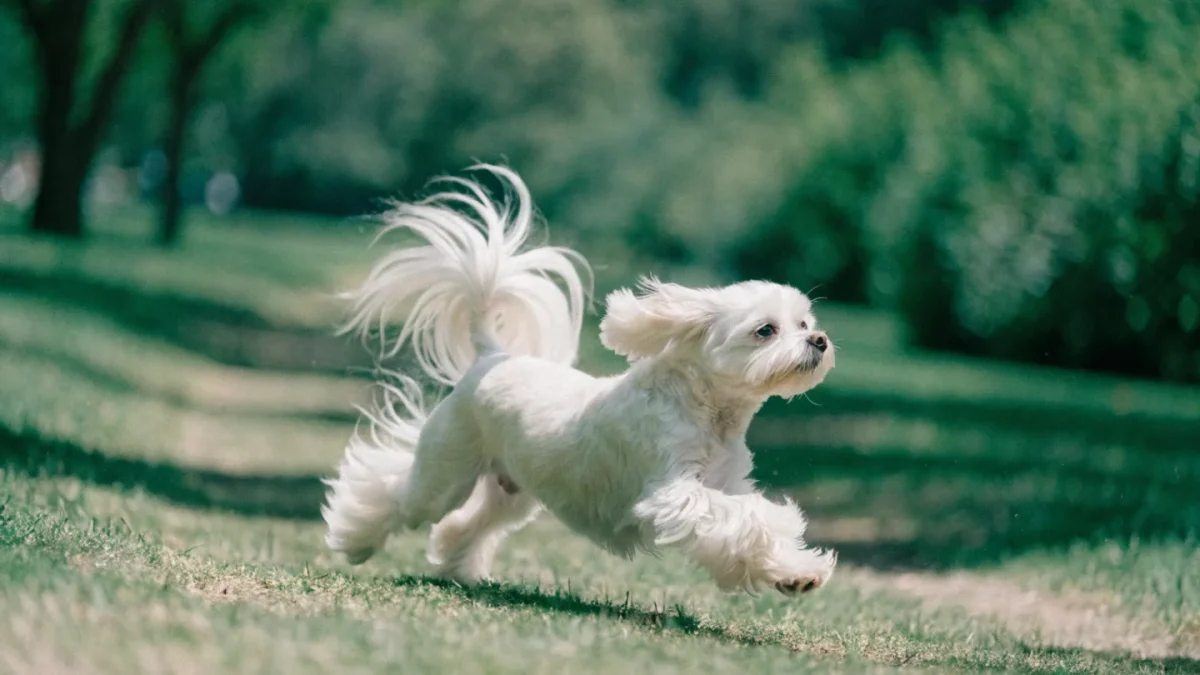
Aristotle mentioned a small white dog from the island of Malta around 350 BCE, describing it as belonging to the "Melitaei catelli" type. More than 2,300 years later, the Maltese still wears that same white coat — a remarkably stable color phenotype that has persisted through millennia of breeding, crossing, and genetic drift. The white coat isn't an accident or a recent fashion. It's one of the oldest fixed color traits in any domestic dog breed, and the genetics behind it are more interesting than the simplicity of the color suggests.
This article covers maltese genetics white coat tear staining and the related topics of size inheritance and breed-specific genetic health conditions — the four areas of Maltese genetics that matter most for owners and breeders.
The White Coat: Genetics of Color Absence
The Maltese appears white, but it's not unpigmented. The distinction is important. An albino animal lacks melanin entirely — no pigment in the skin, eyes, or hair. A Maltese has richly pigmented dark eyes, a jet-black nose, black lip margins, and dark skin beneath the white coat. The melanin production pathway is fully functional. The coat is white because specific genetic mechanisms prevent pigment from expressing in the hair shafts.
The primary mechanism is believed to involve extreme white spotting at the S locus, controlled by the MITF gene. Dogs homozygous for the extreme white spotting allele (sw/sw) have dramatically reduced melanocyte migration during embryonic development, resulting in a coat that is predominantly or entirely white. The pigmented areas — nose, lips, eye rims, paw pads — retain melanocytes because those tissues develop through different pathways or receive melanocytes from different embryonic sources than the coat.
An additional layer may involve the E (extension) locus. Some researchers have proposed that many Maltese carry the recessive e/e genotype, which prevents eumelanin expression in the coat regardless of other color genes — research shows that dogs with e/e coloration tend to have more white on average, which could act as a secondary reinforcement of the white coat phenotype. If present, this would act as a secondary lock on white coat expression — even if white spotting alleles were incomplete, the extension locus would prevent non-white pigment from appearing.
The practical result of this genetic architecture is remarkable color stability. The Maltese breeds true for white coat with almost no exceptions. Occasional lemon or light tan tinting — particularly on the ears — appears in some puppies and usually fades with maturity. This slight warmth likely reflects residual phaeomelanin (yellow-red pigment) expression that's nearly, but not completely, suppressed.
Tear Staining: Porphyrins, Not Genetics
Tear staining — the reddish-brown discoloration that appears beneath many Maltese dogs' eyes — is one of the breed's most visible cosmetic concerns. It's frequently attributed to genetics or poor breeding, but the mechanism is biochemical rather than hereditary.
Tears contain porphyrins — iron-containing waste molecules produced as a byproduct of red blood cell breakdown and excreted through various body fluids including tears, saliva, and urine. When porphyrins contact hair and are exposed to light, they oxidize and turn a rust-brown color. Every dog's tears contain porphyrins. The staining is simply more visible on white hair than on darker coats.
Factors that increase tear staining include epiphora (excessive tearing from tear duct obstruction, eye irritation, or structural causes), shallow eye sockets that reduce tear drainage efficiency, and hair growth patterns around the eyes that wick tears onto the face rather than allowing drainage through the nasolacrimal duct.
Maltese may be predisposed to epiphora at higher rates than some other breeds due to their facial structure, but the porphyrin chemistry itself is universal to all dogs. The complete breed guide addresses tear stain management in the grooming section. The genetics relevant to tear staining are structural — facial conformation, nasolacrimal duct patency, eye socket depth — rather than color-related.
Keeping the eye area clean and dry, trimming facial hair to reduce wicking, and addressing any underlying eye irritation are the management approaches. The staining itself is cosmetic, not a health indicator.
Size Genetics
The Maltese is a toy breed with a standard adult weight of approximately 3 to 4 kilograms. Size in dogs is polygenic — controlled by multiple genes, each contributing a portion of the overall effect — but a few genes carry outsized influence.
IGF1 (insulin-like growth factor 1) is the single most significant gene associated with small body size in dogs. A 2007 study published in Science by an international team led by researchers at the National Human Genome Research Institute identified a specific IGF1 haplotype that is present in virtually all small dog breeds and nearly absent from large breeds. Maltese carry this small-size haplotype, and it accounts for a substantial portion of the breed's size difference from larger dogs.
Additional contributors include IGF1R (the IGF1 receptor gene), STC2 (stanniocalcin 2), GHR (growth hormone receptor), and HMGA2 — each identified in genome-wide association studies as influencing body size in dogs. The Maltese likely carries small-favoring alleles at multiple of these loci, producing the cumulative effect of toy-breed stature.
Size inheritance in Maltese follows general quantitative genetics principles: offspring size tends to fall between the parental sizes, with regression toward the breed mean. Breeding two unusually small Maltese does not reliably produce proportionally smaller offspring — it may instead produce puppies at the low extreme of the normal distribution, where structural soundness and health become compromised.
This is the genetic basis for why "teacup" breeding is problematic. Deliberately selecting for dogs below the breed standard's weight range concentrates alleles associated with extreme small size, which can co-segregate with alleles linked to open fontanelles, hydrocephalus, hypoglycemia susceptibility, and tracheal weakness.
Breed-Specific Genetic Health Conditions
Portosystemic Liver Shunt
Congenital portosystemic shunts — abnormal blood vessels that divert blood around the liver rather than through it — occur at elevated rates in several toy breeds, including the Maltese. The condition impairs the liver's ability to filter toxins from the bloodstream, resulting in elevated blood ammonia, poor growth, neurological signs (hepatic encephalopathy), and urinary crystals.
The inheritance pattern for liver shunts in Maltese is complex — research suggests it is most consistent with autosomal dominance with incomplete penetrance, though polygenic inheritance has not been ruled out. Bile acid testing in parent dogs provides a functional assessment of liver processing capacity and helps identify dogs that may carry genetic predisposition.
Patellar Luxation
Medial patellar luxation — the kneecap slipping out of its femoral groove toward the inside of the leg — is common across toy breeds and has a significant genetic component in the Maltese. The heritability involves skeletal geometry: the depth of the trochlear groove, the alignment of the quadriceps mechanism, and the angle of the tibial tuberosity all contribute.
Screening breeding stock through standardized patellar evaluation and excluding affected dogs from breeding programs are the primary tools for reducing prevalence, though the polygenic nature of the condition means progress is gradual.
Progressive Retinal Atrophy (PRA)
PRA — progressive degeneration of the retinal photoreceptors leading to eventual blindness — has been documented in Maltese, though at lower frequency than in some other breeds. The specific genetic variant or variants involved in Maltese PRA are not yet fully characterized, and breed-specific DNA tests are not universally available. Annual ophthalmoscopic examination by a veterinary ophthalmologist remains the primary screening tool.
The Genetic Picture
The history of the Maltese traces a breed that has been selectively bred within a closed population for longer than almost any other companion dog. That long history as a small, white, companion breed means that the Maltese genome is highly homogeneous — the alleles for white coat, small size, and companionable temperament are effectively fixed.
The flip side of that homogeneity is reduced genetic diversity, which concentrates deleterious recessive alleles. Every health predisposition on this list reflects, at least partially, the genetic consequences of a narrow gene pool maintained over centuries.
Understanding Maltese genetics doesn't require a molecular biology degree. It requires knowing that the white coat is a deliberate, stable, healthy genetic trait; that tear staining is chemistry, not pathology; that size inheritance has limits that should be respected; and that health screening addresses the predictable consequences of a breed's genetic history. That knowledge is the foundation of responsible ownership.